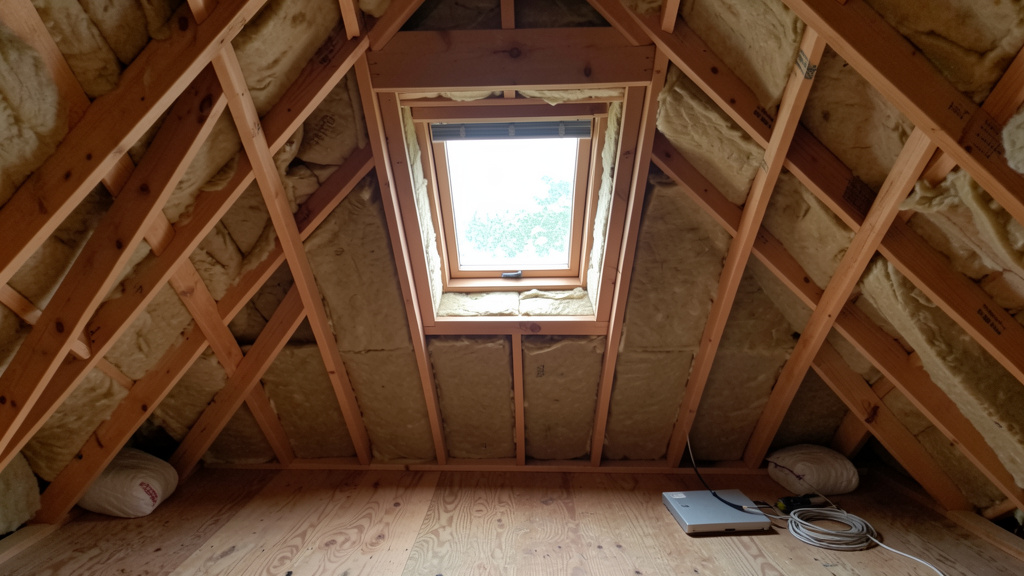
Transform Unused Space Thoughtfully—Prioritizing Safety, Comfort, and Long-Term Performance
Converting an attic into functional living space offers meaningful potential for expanding your home’s utility. Yet two interrelated challenges consistently shape project success: achieving adequate headroom while installing effective insulation. This guide provides a clear, integrated approach grounded in building science principles, current code frameworks, and adaptable solutions. You’ll learn how to assess constraints realistically, navigate regulatory expectations, select materials suited to spatial limitations, and implement strategies that balance comfort, efficiency, and structural integrity—without overpromising outcomes or overlooking critical details.
Introduction
Attic conversions present a compelling opportunity to enhance livable square footage, often with less disruption than ground-level additions. However, success hinges on respecting the physical and regulatory boundaries inherent to these spaces. Headroom and insulation are not isolated concerns; they function as interdependent systems. Adding insulation without accounting for its dimensional impact can compromise required ceiling heights. Conversely, maximizing vertical space by compressing insulation risks thermal inefficiency, moisture accumulation, and long-term durability issues. This guide synthesizes widely accepted building practices, international code frameworks (including IRC and UK Building Regulations), and climate-responsive strategies to help you navigate these decisions with clarity. Whether your attic currently serves as storage or feels underutilized, progress begins by treating constraints not as obstacles, but as design parameters guiding intelligent, sustainable choices.
The Headroom-Insulation Balance Framework
Effective attic conversions follow a deliberate sequence that treats spatial and thermal goals as unified objectives. The Headroom-Insulation Balance Framework offers a structured pathway to avoid common pitfalls—like solving for height only to undermine insulation performance, or vice versa. This five-step methodology emphasizes assessment before action, integration over isolation, and adaptability across diverse home types and regional requirements. Each phase builds logically on the last, creating a cascade of informed decisions that support safety, comfort, and regulatory compliance. The goal is not perfection in every dimension, but optimization within your specific context—recognizing that thoughtful trade-offs, clearly understood, yield more satisfying results than rigid adherence to idealized standards.
Step 1: Assessing Your Attic’s Structural Reality
Begin with objective measurement, not assumption. Clear the space of stored items and insulation debris. Using a reliable tape measure or laser tool, record vertical distances from the top of the existing ceiling drywall below (your future floor substrate) to the underside of the roof sheathing. Take measurements at the ridge, then every 12 inches moving toward exterior walls. Note variations caused by knee walls, collar ties, dormers, chimneys, plumbing stacks, or HVAC ducts. Document roof pitch (rise over run), rafter size and spacing, and any visible signs of prior moisture, structural movement, or aging systems (e.g., knob-and-tube wiring, which requires professional evaluation before proceeding).
Why this step matters: Initial visual impressions often overestimate usable volume. A measured assessment prevents costly mid-project discoveries—such as realizing only a portion of the floor area meets minimum height thresholds for intended use.
How to execute thoroughly:
– Create a scaled elevation sketch. Shade zones: below 5 feet (storage-only), 5–7 feet (limited-use), above 7 feet (primary activity).
– Calculate square footage per zone. This reveals your true functional footprint.
– Account for future layers: subtract approximately 1.5 inches for subfloor + finish flooring, plus insulation and drywall thickness (varies by material choice).
– Photograph all angles, especially complex junctions (valleys, hips, penetrations).
– Consult a qualified structural professional if you observe sagging, widespread staining, insect damage, or irregular framing.
Common oversights to avoid:
– Measuring from stored items or loose insulation instead of structural surfaces
– Ignoring service elements (wiring, vents, ducts) that consume space or require rerouting
– Assuming uniform rafter depth—older homes frequently feature inconsistent framing
– Overlooking clearance needs for future stairs, doors, or egress windows
Insight: In some older homes, non-structural framing elements (like supplemental sistered rafters) may occupy space unnecessarily. Verification by a qualified professional can sometimes reveal minor adjustments that recover critical inches—without compromising safety.
Step 2: Mapping Minimum Headroom Requirements (Code and Comfort)
Building regulations establish legal baselines; human experience defines comfort. Understanding both layers ensures your design is both permissible and pleasant.
In jurisdictions following the International Residential Code (IRC):
– Habitable rooms require a minimum 7-foot ceiling height over at least 50% of the floor area (which must exceed 70 sq ft total).
– Areas between 5 and 7 feet may contribute to total area but cannot serve as the primary activity zone.
– Stairways require 6 feet 8 inches of headroom measured vertically from tread nosing along the entire path.
– Bedrooms require egress windows meeting specific size, sill height (≤44″ above finished floor), and operability criteria.
UK Building Regulations (Approved Document K) generally require:
– Minimum 1.9 meters (≈6′ 3″) headroom across habitable areas, with 2.0 meters (≈6′ 7″) over stair centers.
– Specific allowances for sloped ceilings and usable floor area calculations.
Always verify requirements with your local building authority. Municipalities may adopt amendments, and historic districts often impose additional constraints. Climate, era of construction, and intended use further influence applicability.
Practical application:
Overlay your assessment sketch with these thresholds. If the ≥7-foot zone falls short of 50%:
– Option A: Explore structural modifications (dormers, knee wall adjustments) where feasible and permitted.
– Option B: Redefine the space’s purpose (e.g., dedicated office, library nook, storage) where lower heights are acceptable.
– Option C: Implement hybrid zoning—placing desks or beds in taller zones, using sloped areas for built-in storage or seating.
Beyond code—comfort considerations:
– Stair geometry significantly impacts perceived space. Model headroom along the entire stair path early.
– Psychological spaciousness improves with intentional design: vertical lines on walls, consistent light-colored finishes, strategic lighting placement.
– Door selections matter: pocket or barn-style doors conserve clearance in tight zones.
Critical reminder: Measurements must reflect finished conditions. A structural height of 7’1″ may become 6’10” after flooring, insulation, and drywall—failing compliance. Always deduct finish-layer thickness during planning.
Insight: Early consultation with your local building department—presenting scaled drawings and specific questions—builds rapport, clarifies jurisdictional nuances, and prevents rework. Many departments offer pre-application review services.
Step 3: Selecting Insulation Strategies That Maximize Usable Space
Insulation depth directly competes with headroom. Standard batts often require 10–12 inches to reach recommended R-values (R-38 to R-60 in many climate zones), which many attics cannot accommodate post-conversion. The solution lies in selecting materials and methods optimized for constrained geometries—prioritizing R-value per inch, moisture resilience, and integration with air sealing.
Material comparison for space-limited applications:
| Insulation Type | Approx. R-value per Inch | Space Efficiency | Key Considerations |
|---|---|---|---|
| Closed-Cell Spray Foam | R-6.0 to R-7.0 | Highest | Professional installation required; acts as air/vapor barrier; requires thermal barrier (drywall); higher initial cost |
| Rigid Foam Boards (Polyiso/XPS) | R-4.5 to R-6.5* | High | DIY-friendly panels; excellent for layering; seal seams meticulously; fire-rated assemblies required |
| Mineral Wool Batts | R-4.0 to R-4.3 | Moderate | Fire-resistant; moisture-tolerant; maintains performance if slightly compressed; heavier than fiberglass |
| High-Density Fiberglass Batts | R-3.7 to R-4.3 | Moderate | Cost-effective; widely available; loses effectiveness if compressed; requires precise fit |
| Hybrid Systems | Varies | Adaptive | Combines materials (e.g., thin foam layer + batts) to balance performance, cost, and space |
*Polyiso performance varies with temperature; use manufacturer’s aged/LTTR value for cold-climate planning.
Space-conscious installation approaches:
– Between-and-Over Rafters: Install rigid boards between rafters flush with the bottom chord, then add a perpendicular layer over rafters. Reduces thermal bridging; requires furring strips for drywall.
– Exterior Roof-Deck Insulation: Apply rigid foam above existing sheathing during re-roofing. Preserves all interior headroom; creates a continuous thermal layer; requires careful eave/ridge detailing and engineering input for structural loads.
– Service Cavities: Frame a shallow (1.5–2″) non-structural layer below the insulated plane for wiring, lighting, and future access—protecting the primary insulation layer from penetrations.
Critical integration points:
– Maintain a continuous 1-inch ventilation channel from soffit to ridge using rigid baffles where vented assemblies are used.
– Address thermal bridging at structural junctions (knee walls, dormers) with continuous insulation layers.
– Plan all electrical, plumbing, and HVAC routing before insulation installation.
Common missteps:
– Compressing batt insulation to fit—this significantly reduces effective R-value
– Blocking soffit vents during installation, disrupting airflow
– Installing vapor barriers on both sides of an assembly (traps moisture)
– Neglecting air sealing around penetrations prior to insulation
Insight: In tight rafter bays, a hybrid approach—such as 1.5 inches of closed-cell foam (for air sealing and dew point control) paired with mineral wool batts—can deliver strong thermal performance within limited depth. Pair this with high-performance windows and a properly sized HVAC solution for holistic efficiency.
Step 4: Integrating Structural Modifications with Insulation Planning
When structural changes are needed to gain headroom (dormers, knee wall adjustments, ridge lifts), insulation strategy must be designed concurrently—not sequentially. Disconnected planning creates thermal weak points precisely where assemblies join, increasing condensation risk and energy loss.
Dormer integration essentials:
– Frame walls with deeper studs (2×6 or 2×8) to accommodate robust insulation.
– Apply continuous rigid foam sheathing to the exterior before siding to minimize thermal bridging.
– Extend insulation seamlessly from the main roof plane into the dormer roof cavity.
– Install site-built ventilation baffles at the dormer-main roof junction to maintain airflow.
– Flash all intersections meticulously with ice-and-water shield and step-flashing.
Knee wall optimization:
– Insulate the cavity thoroughly, but equally important: insulate the attic-side triangular space behind the wall with rigid boards to prevent it from becoming a cold sink.
– Consider angling the wall slightly inward (following roof slope) to improve spatial flow without sacrificing support.
– Seal the top plate and all edges with appropriate gaskets or foam to block air movement.
Roof-raise considerations:
– Increasing ridge height often allows deeper rafters, creating opportunity for thicker insulation.
– Coordinate with roofing replacement to explore exterior insulation options.
– Re-evaluate ventilation pathways—raised roofs may alter airflow dynamics.
Universal junction principles:
– Seal gaps >1/4 inch with expanding foam rated for the application.
– Tape sheathing seams at transitions with high-quality, durable tape.
– Maintain ventilation channels uninterrupted across modification zones.
– Consult qualified professionals for engineering review—especially where loads shift or historic fabric is involved.
Insight: Structural changes without thermal continuity planning often create localized cold spots. Integrating insulation details during the framing phase—not as an afterthought—ensures performance, comfort, and durability across the entire assembly.
Step 5: Executing the Plan with Precision
Meticulous sequencing transforms planning into lasting results. Rushing phases or skipping verification steps undermines prior effort.
Recommended workflow:
1. Structural & Rough-Ins: Complete framing modifications. Install all electrical, plumbing, and HVAC conduits before insulation. Label wires clearly. Avoid notching structural members; drill holes per code allowances.
2. Air Sealing & Ventilation: Seal every penetration (top plates, wiring holes, vent pipes) with appropriate sealants. Install ventilation baffles along the full roof slope. Verify airflow continuity with a smoke pencil test.
3. Insulation Installation: Follow manufacturer specifications precisely. For spray foam: confirm ambient conditions and installer certification. For batts: cut to fit snugly without compression; use supports on slopes. For rigid boards: stagger seams, seal edges.
4. Interior Finishes: Install furring strips if needed. Use moisture-resistant drywall. Apply mold-inhibiting primer. Choose low-VOC paints for indoor air quality.
Pre-drywall verification checklist:
– [ ] All air leaks sealed (test with incense on a breezy day)
– [ ] Ventilation channels clear and continuous
– [ ] Insulation depth consistent with design intent
– [ ] No wiring or plumbing compressed by insulation
– [ ] Vapor control layer (if used) correctly positioned and intact
– [ ] Structural elements inspected per local requirements
Why precision matters: Industry observations indicate that installation errors—gaps, compression, missed air seals—can significantly diminish insulation effectiveness. Careful execution ensures you realize the full benefit of your material choices.
Frequently overlooked details:
– Use IC-rated (Insulation Contact) recessed light housings to prevent fire risk and air leakage
– Select drywall screws long enough to anchor securely through insulation assemblies
– Install humidity-sensing exhaust fans in any added bathroom, vented directly outdoors
– Consider an energy recovery ventilator (ERV) or heat recovery ventilator (HRV) for balanced fresh air in tightly sealed conversions
The Guiding Principle: Every decision affects multiple systems. Preserving headroom supports daily comfort; optimizing insulation supports efficiency and durability. True success lies in honoring both—through integrated design, not compromise.
Navigating Regional Code Variations Thoughtfully
Building regulations vary globally and locally. While this guide references common frameworks (IRC, UK Approved Documents), your project’s requirements depend entirely on your jurisdiction. Key patterns to recognize:
- United States: IRC sets baselines, but states and municipalities adopt amendments. Coastal, seismic, or historic zones often have stricter rules. Egress window requirements for bedrooms are non-negotiable.
- United Kingdom: Building Regulations emphasize usable floor area calculations and stair safety. Planning permission may be needed for dormers altering roof profiles, especially in conservation areas.
- European Context: Standards like Germany’s DIN or France’s RT emphasize minimum room heights and stringent energy performance. Local commune rules may add layers.
- Universal constants: Stair headroom, egress provisions, and structural safety are consistently prioritized. “Grandfathered” non-conforming spaces do not exempt conversions from current standards.
Actionable steps:
1. Obtain your local building department’s adopted code version and amendment list.
2. Schedule a pre-application meeting with plans and specific questions.
3. Document all guidance received (names, dates, references).
4. For structural changes, engage a licensed engineer early—especially in older homes or complex roof geometries.
Note: Variances or alternative compliance paths may exist for unique constraints. These typically require engineering documentation and formal review—not assumptions. Early dialogue is invaluable.
Moisture Management: The Non-Negotiable Partner to Insulation
Moisture is the most frequent cause of long-term attic conversion issues. When warm, humid interior air contacts cold surfaces (like under-insulated sheathing), condensation occurs—potentially leading to mold, rot, and degraded materials. Risk intensifies because conversions move insulation to the roof line, placing the dew point within the assembly, and introduce new moisture sources (occupants, potential bathrooms).
A layered defense strategy:
– Source Control: Limit interior humidity generation. Use exhaust fans vented outdoors in bathrooms. Avoid unvented combustion appliances.
– Air Sealing: Block moisture-laden air movement. Seal top plates, electrical boxes, penetrations, and knee wall edges thoroughly. Blower door testing (post-seal, pre-drywall) identifies leaks.
– Vapor Control: Select vapor retarder class per climate zone guidance (IRC R702.7). In cold climates, semi-impermeable or smart membranes on the interior side are typical. In hot-humid zones, vapor control may belong on the exterior. Never install two vapor barriers.
– Ventilation: Maintain soffit-to-ridge airflow in vented assemblies (net free area per code). For unvented “hot roof” assemblies (using air-impermeable insulation like spray foam directly on sheathing), engineering review is essential. Consider ERVs/HRVs for balanced fresh air in tight spaces.
Climate-responsive adjustments:
– Cold Climates: Prioritize air sealing and interior vapor control. Ensure insulation thickness keeps the dew point outside the assembly.
– Mixed-Humid Climates: Smart vapor retarders (adjusting permeability with humidity) offer seasonal adaptability. Monitor indoor humidity; aim for <50% in winter.
– Hot-Humid Climates: Focus on keeping exterior moisture out. Exterior insulation layers help; interior finishes should allow inward drying.
Early warning signs: Musty odors, water stains, peeling paint, or visible mold. Address immediately: identify source, dry thoroughly, replace damaged materials, remediate properly. Prevention through design is vastly more effective than correction.
Insight: Ventilation channels must remain physically unobstructed. Baffles should be secured to resist displacement during insulation installation. Verify airflow before covering with insulation—a simple smoke test provides critical assurance.
Budget-Conscious Pathways: Prioritizing Value and Safety
Attic conversions span a wide cost spectrum. Strategic prioritization ensures resources focus on foundational elements that protect safety, compliance, and long-term performance.
Phase 1: Foundational Investments (60–70% of budget)
– Structural integrity verification and required engineering
– Permits, inspections, and code compliance measures
– Air sealing, moisture control, and minimum code-compliant insulation
– Safe, code-compliant staircase with verified headroom
Why prioritize: Compromising here risks safety, failed inspections, or costly repairs later. These elements are difficult or impossible to retrofit effectively.
Phase 2: High-Impact Comfort Upgrades (20–25% of budget)
– Dedicated HVAC solution (e.g., ductless mini-split) sized for the space
– Layered lighting design (ambient, task, accent) with dimmers
– Sound control: mineral wool insulation, resilient channels, sealed gaps
– Quality windows with low-e glazing appropriate to climate
Why prioritize: These directly influence daily usability, thermal comfort, and perceived value.
Phase 3: Aesthetic and Functional Finishes (10–15% of budget)
– Flooring selection (engineered hardwood, quality laminate)
– Paint, trim, and basic built-ins (floating shelves, prefab closets)
– Hardware upgrades
Why phase: These enhance enjoyment but can be refined over time without compromising core performance.
Smart cost-management practices:
– DIY where appropriate and permitted: Demolition, painting, flooring installation. Avoid structural, electrical, plumbing, or insulation work requiring precision or licensing.
– Material sourcing: Compare quotes. Consider builder-grade windows with upgraded hardware later. Explore Habitat for Humanity ReStores for fixtures.
– Phased implementation: Complete structural, insulation, drywall, stairs, and basic climate control first. Add custom storage or premium finishes in later phases.
– Bid evaluation: Request detailed line-item quotes from licensed, insured contractors. Verify references. The lowest bid often omits critical scope items.
Budget illustration for a typical conversion (approximate ranges only):
| Category | Budget-Conscious Path | Balanced Approach | Premium Execution |
|———-|————————|——————-|——————-|
| Structural/Permits | Minimal modifications | Small dormer + engineering | Roof raise + dormer |
| Insulation/Air Seal | Batts + diligent sealing | Hybrid foam/batts system | Spray foam + ERV |
| Stairs | Refurbished/custom basic | Space-saving winder design | Architectural feature stairs |
| HVAC/Lighting | Extended ducts (if feasible) | Ductless mini-split + LED layers | Zoned ducted system + smart lighting |
| Finishes | Standard materials | Mid-grade selections | Premium/custom elements |
| Contingency (15%) | Included | Included | Included |
| Note: All costs vary significantly by region, home condition, and project scope. Always budget for unforeseen conditions. | | | |
Insight: Investing slightly more in the building envelope (air sealing, insulation continuity) often yields greater long-term value than premium visible finishes. Reduced energy use, enhanced comfort, and avoided moisture repairs deliver compounding benefits.
Common Pitfalls and Proactive Prevention
Learning from frequent challenges builds confidence. These patterns emerge across projects—address them deliberately during planning.
Pitfall: The Measurement Mirage
Issue: Measuring from debris or ignoring finish-layer thickness leads to finished heights below code minimums.
Prevention: Measure from true structural surfaces. Create a “finished height” calculation: Structural Height – (Subfloor + Flooring + Insulation + Drywall + Furring). Model this early.
Pitfall: Blocked Ventilation
Issue: Insulation packed against sheathing blocks soffit vents, causing condensation.
Prevention: Install rigid baffles before insulation. Verify continuous airflow from soffit to ridge. If space is too tight for vented assembly, pursue an engineered unvented solution.
Pitfall: Staircase Headroom Miscalculation
Issue: Standard stair plans fail to provide required clearance along the entire path.
Prevention: Model stair geometry in 3D or use string to simulate headroom clearance at multiple points. Consult stair design resources early.
Pitfall: Egress Window Oversights
Issue: Window meets size requirements but has a sill too high, or lacks required operability.
Prevention: Print your local egress requirements. Verify net opening size, minimum dimensions, sill height (≤44″ above finished floor), and tool-free operation. Mock up the opening before ordering.
Pitfall: Ignoring Thermal Bridging
Issue: Cold spots develop at knee walls, dormer junctions, or structural penetrations.
Prevention: Specify continuous insulation layers at transitions. Use insulated headers. Request thermal detail review for critical junctions.
Pitfall: Proceeding Without Permits
Issue: Work halted mid-project, requiring tear-out, fines, and delays.
Prevention: Contact your building department before finalizing plans. Understand required permits, submissions, and timelines. Permits protect safety and future resale value.
Pitfall: Underestimating Moisture Risks
Issue: Condensation appears months later due to inadequate air sealing or vapor control.
Prevention: Treat air sealing as equally critical as insulation. Install hygrometers post-conversion. Monitor closely during the first year of seasonal changes.
Recovery Insight: When moisture issues arise, swift action is key: identify the root cause (blocked vents? air leak?), correct the assembly flaw, dry thoroughly, replace damaged materials, and verify resolution. Early detection prevents escalation.
Your Questions, Answered
Q: My attic ridge height is under 7 feet. Is conversion still feasible?
A: Yes—for uses that don’t require full standing height across the entire area. Spaces under 7 feet cannot typically be classified as habitable bedrooms or living rooms per most codes, but they excel as home offices (with seated workstations), reading nooks, meditation spaces, libraries, or children’s play areas. Focus on psychological spaciousness: light monochromatic finishes, vertical wall elements, strategic lighting along the highest point, and low-profile furniture. Always confirm allowable uses with your local building authority.
Q: Can I use existing attic floor joists for living space?
A: Existing joists are typically designed only for light storage loads (10–20 psf), not the live loads required for habitable spaces (30–40+ psf). Do not assume adequacy. Engage a structural engineer to assess current joists against required loads for your intended use. Solutions may include sistering new joists, adding support beams, or full replacement. This step is non-negotiable for safety.
Q: What’s the most frequent insulation mistake in attic conversions?
A: Compressing batt insulation to fit limited depth. This significantly reduces its effective R-value and creates cold spots. The solution isn’t forcing more material in—it’s selecting higher-performance materials (like rigid foam or spray foam) suited to the available space, or accepting a lower—but uncompressed—R-value and compensating with enhanced air sealing and efficient HVAC.
Q: Is dedicated HVAC necessary for a converted attic?
A: Strongly recommended. Attics experience greater temperature extremes than lower floors. Extending existing ductwork often proves inadequate due to duct losses and system sizing. A ductless mini-split offers precise temperature and humidity control, high efficiency, quiet operation, and avoids duct-related energy loss. For very small spaces in mild climates, supplemental solutions might suffice—but consult an HVAC professional for sizing and strategy.
Q: How do I install lighting in sloped ceilings without losing headroom?
A: Plan electrical rough-in before insulation. Use ultra-thin IC-AT rated LED recessed kits (requiring minimal depth). Consider surface-mounted low-profile fixtures in tight zones. For future flexibility, frame a shallow service cavity (1.5–2″) below the insulated plane to run wiring—preserving full insulation depth. Always comply with local electrical code requirements.
Q: Is spray foam insulation worth the investment here?
A: In space-constrained conversions, closed-cell spray foam often delivers strong value despite higher initial cost. It achieves high R-value per inch (preserving headroom), seals air leaks inherently, resists moisture, and adds structural rigidity. Evaluate total project impact: the headroom preserved and performance gained may justify the cost. Request comparative quotes for hybrid approaches (thin foam layer + batts) to assess options.
Q: What signals an attic may not be suitable for conversion?
A: Proceed with extreme caution—or reconsider—if you observe: significant structural issues (sagging ridge, widespread rot, insect damage), persistent moisture history without root-cause resolution, roof pitch too shallow to achieve required headroom even with modifications, or inability to meet egress requirements due to site constraints. A qualified structural engineer and building professional should assess feasibility early.
Q: How does climate affect my insulation and moisture strategy?
A: Critically. Cold climates demand robust interior air sealing and vapor control to keep moisture away from cold sheathing. Hot-humid climates require strategies to manage exterior moisture drive and promote drying potential. Mixed climates benefit from adaptable solutions like smart vapor retarders. Always align your assembly design with your specific climate zone’s requirements and consult resources like the Building Science Corporation guidelines.
Q: Can I convert the attic myself?
A: Scope determines feasibility. Tasks like demolition, painting, or installing flooring may be DIY-appropriate where permitted. However, structural modifications, electrical, plumbing, insulation installation requiring precision, and roofing work typically require licensed professionals for safety, code compliance, and warranty protection. Verify local regulations—many jurisdictions mandate licensed trades for specific work. Partnering with qualified professionals for complex phases reduces risk significantly.
Q: How long does a typical attic conversion take?
A: Timelines vary widely based on scope, structural needs, permitting processes, and contractor availability. A straightforward conversion (no dormers, minimal structural work) may take 6–10 weeks. Projects involving dormers, roof modifications, or complex systems can take 12–20+ weeks. Factor in permit review time (often 2–6 weeks) and potential weather delays. A detailed project schedule from your contractor provides the most reliable estimate.
Conclusion and Your Next Step
Attic conversion success rests on respecting interdependence: headroom decisions affect insulation performance; insulation choices impact thermal comfort and moisture safety; structural changes influence spatial flow and regulatory compliance. There are rarely universal “best” answers—only context-appropriate solutions shaped by your home’s unique conditions, local requirements, budget, and intended use.
Recap of core principles:
1. Measure meticulously and plan for finished dimensions—not structural heights alone.
2. Treat headroom and insulation as integrated systems, not competing priorities.
3. Prioritize air sealing and moisture management equally with R-value.
4. Engage qualified professionals early for structural, code, and complex system decisions.
5. Design for human experience—light, proportion, and flow matter as much as measurements.
Your 24-Hour Action Step:
Clear a small section of your attic floor. Take three precise measurements: ridge height, height at the wall plate, and height midway down the slope—all from the top of the ceiling drywall below. Sketch these on paper. This tangible data replaces speculation with clarity and forms the foundation for your next conversation—whether with a contractor, engineer, or building official.
The Bigger Perspective:
A thoughtfully executed attic conversion does more than add square footage. It enhances how you live within your existing footprint—honoring your home’s structure while adapting it to evolving needs. By proceeding with patience, precision, and respect for building science, you create space that feels intentional, performs reliably, and serves your household for years to come.
Explore Further Guidance:
Understanding Building Permits: A Homeowner’s Roadmap | Stair Design Solutions for Tight Spaces | Climate-Zone Insulation Guidelines Simplified | Moisture Management in Home Renovations | Historic Home Upgrades: Balancing Preservation and Performance | HVAC Sizing Fundamentals for Additions | Sustainable Material Choices for Interior Projects