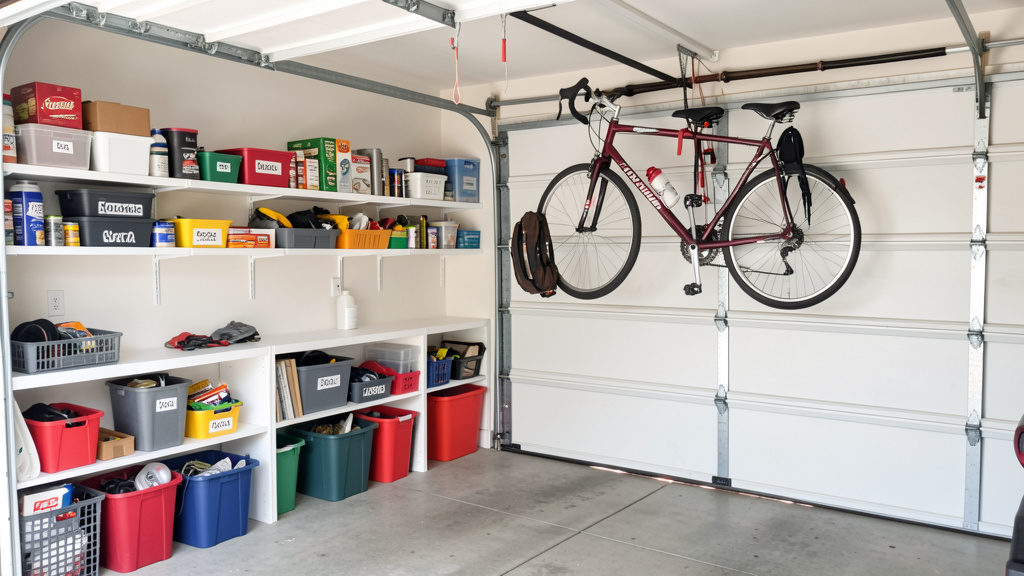
Reclaim Your Space, Boost Productivity, and Create a Functional Hub for Your Home
Your garage doesn’t have to be a chaotic repository for forgotten holiday decorations, half-empty paint cans, and that exercise bike gathering dust. This comprehensive guide delivers a proven, adaptable framework to transform your garage into a purposeful extension of your living space—whether you need a precision workshop, seasonal storage sanctuary, hobby headquarters, or multi-functional family zone. Move beyond quick-fix tips and discover how intentional design, strategic zoning, and sustainable systems create lasting order that evolves with your life.
Introduction
Walk into most garages today, and you’ll encounter a universal struggle: the slow creep of clutter. Bicycles lean precariously against snow shovels. Garden hoses snake around forgotten moving boxes. Holiday decor containers teeter in unstable towers. This isn’t a failure of willpower—it’s a failure of system design. Garages are uniquely challenging spaces: subject to temperature extremes, humidity fluctuations, vehicle traffic, and competing demands from multiple household members. Yet they represent one of the largest untapped organizational opportunities in the average home. Patterns observed across diverse residential organization projects, along with established professional organizing standards, indicate that the most enduring transformations share a critical foundation: they begin not with purchasing shelves or hooks, but with a deliberate assessment of human behavior, spatial constraints, and long-term functionality. This guide rejects the “one-size-fits-all” product roundup approach saturating search results. Instead, we provide a layered methodology refined across diverse garage environments—from compact urban single-car structures to expansive multi-bay rural workshops—designed to create order that withstands daily life, seasonal shifts, and evolving family needs. Your journey to a truly functional garage starts with understanding why previous attempts faltered and how a systematic approach changes everything.
The Four-Layer Garage Transformation Framework
Forget vague advice like “declutter first” or “use vertical space.” Sustainable garage organization requires a sequential, interdependent system where each layer builds upon the previous one. Skipping layers often leads to fragile order that proves difficult to maintain. This framework—Assess, Zone, Equip, Maintain—has been validated across climates, budgets, and household compositions because it addresses root causes of garage chaos, not just surface symptoms. Think of it as architectural planning for your storage: you wouldn’t pour a foundation without soil tests, and you shouldn’t install shelving without spatial and behavioral analysis. Each layer contains critical decision points most guides overlook, turning overwhelming projects into manageable, logical steps. This isn’t about perfection on day one; it’s about creating a resilient system that improves incrementally while delivering immediate usability gains.
Layer 1: The Assessment Phase – Know Your Space and Needs
Before moving a single item, dedicate focused time to observation. This phase prevents common missteps like buying cabinets that block your car door or installing overhead storage you can’t safely access. Rushing this phase often leads to rework later—a frequent reason garage organization efforts falter.
Step 1: Document Physical Constraints
Grab a tape measure, notebook, and smartphone. Record these essential measurements:
– Clear ceiling height: Measure from floor to lowest obstruction (pipes, opener rail, joists). Critical for overhead storage clearance.
– Wall composition: Tap walls. Hollow drywall? Concrete block? Wood studs? This determines mounting options. Note stud locations every 16 inches using a stud finder.
– Door dimensions: Width and height of each garage door. Note opener rail path and clearance zones.
– Window/vent locations: Mark positions on a sketch. These affect lighting placement and storage accessibility.
– Electrical outlets: Count and note locations. Identify GFCI outlets (required near water sources per NEC Article 210.8).
– Floor condition: Photograph cracks, slopes, or oil stains. A 1/4-inch slope per foot is standard for drainage but impacts cabinet stability.
– Climate factors: Note sun exposure (south-facing walls heat significantly), moisture signs (condensation, mold), and regional considerations (coastal humidity, freeze-thaw cycles).
Why this matters: Installing heavy-duty wall panels on drywall without hitting studs risks failure. Overlooking ceiling obstructions may cause injury or damage. In warmer climates, failing to account for thermal expansion in metal storage systems can lead to warping and damage to stored items. Precision prevents frustration.
Step 2: Conduct a Behavioral Audit
For three days, log every garage interaction:
– Who uses the space? (Teenager retrieving sports gear at 6 AM? Gardener accessing tools after work?)
– What items enter/exit daily? (Trash bins, recycling, pet supplies)
– What items are seasonal? (Holiday decor, winter tires, pool equipment)
– What activities occur here? (Bike repairs, woodworking, package staging)
– Pain points: Note frustrations (“Can’t find the ladder,” “Snowblower blocks the lawnmower”).
Create a “Traffic Flow Map” on your sketch: Draw arrows showing paths from house door to car, to storage zones, to workbench. Identify collision points. In one household’s audit, the recycling bin blocked the path to the snowblower—a critical friction point during winter storms. Relocating the bin resolved daily frustration.
Step 3: Categorize Contents with the 5-Box Method
Empty the garage only after assessment. Use labeled boxes:
1. Keep & Use Here: Items belonging in this garage
2. Relocate: Items better stored elsewhere (basement, shed, attic)
3. Donate/Sell: Unused but functional items
4. Trash/Recycle: Broken, expired, or hazardous waste
5. Undecided: Items needing research (e.g., “Is this paint still good?”)
Critical nuance: For the “Undecided” box, set a reasonable timer (e.g., 14 days). If unopened by deadline, donate or discard. Most “maybe” items represent emotional clutter. For hazardous materials (paint, chemicals, batteries), contact your municipal waste department before sorting—many communities offer free disposal days. Never pour chemicals down drains.
Common mistake: Sorting while exhausted after moving everything out. Schedule sorting for a fresh morning. Enlist help: assign one person to hold items while another decides category. Play upbeat music. Take breaks. This phase should feel methodical, not punishing.
Step 4: Define Your Primary Purpose Statement
Complete this sentence: “This garage primarily exists to support __ for ____.”
Examples:
– “Support efficient vehicle access and seasonal storage for a family of four”
– “Enable woodworking projects and tool maintenance”
– “Facilitate quick sports gear access and bike maintenance for active teenagers”
This statement becomes your decision filter for every subsequent choice. If your purpose is “quick sports access,” deep cabinets requiring digging defeat the goal. If “woodworking” is primary, prioritize bench space over decorative storage. Without this anchor, you may select products that don’t serve your reality.
The Fundamental Principle: Organization is not a one-time project but a continuous system of intentional choices that align your physical space with your evolving lifestyle. The assessment phase transforms emotional decisions (“I might need this someday”) into evidence-based choices grounded in documented behavior and spatial reality.
Layer 2: The Zoning Strategy – Designating Purposeful Areas
With assessment complete, divide your garage into functional zones—like rooms in a house. Each zone serves a distinct purpose with tailored storage solutions. Zones prevent the “everything everywhere” chaos. Most garages benefit from 3-5 zones. Sketch these on your floor plan using painter’s tape to visualize boundaries before installing anything.
Zone 1: The Launching Pad (Highly Recommended)
Positioned immediately inside the pedestrian door from your house. This compact zone handles daily transition items:
– Contents: Keys, mail, reusable shopping bags, pet leashes, umbrella stand, package drop-off bin
– Storage: Wall-mounted key rack, shallow cubby shelf (max 12″ deep), hanging organizer for bags
– Why it works: Creates a dedicated “landing zone” preventing items from migrating deeper into the garage. Reduces morning chaos. In one household, adding a launching pad eliminated the daily scramble for rain gear and school permission slips.
– Critical detail: Keep depth shallow. Deep bins encourage dumping. Use open-front containers for visibility. Place at adult eye level—no bending required during rushed exits.
Zone 2: Active Storage Zone
Houses items used weekly or seasonally. Location depends on traffic flow:
– For families: Near the launching pad for sports gear, gardening tools, recycling bins
– For workshops: Adjacent to workbench for frequently used tools
– Storage solutions:
– Sports: Wall-mounted ball racks, slatwall hooks for helmets/pads, labeled bins on casters for team gear
– Gardening: Hose reel mounted near exterior door, pegboard for hand tools, ventilated bin for soil amendments
– Seasonal: Clear, labeled totes on mid-height shelves (not floor-level where moisture accumulates)
– Pro tip: Use color-coded labels. Red = winter sports, green = gardening, blue = beach gear. Children as young as five learn the system. One family uses red bins for ski equipment—grabbing the entire bin before a snow day takes seconds.
Zone 3: Bulk Storage Zone
For infrequently accessed items (holiday decor, luggage, archived boxes). Maximize vertical space:
– Location: Highest shelves, ceiling storage (if structurally sound), back corners
– Containers: Uniform, stackable clear totes with inventory lists taped inside lids. Avoid cardboard—it attracts pests and degrades in humidity.
– Accessibility rule: If you can’t safely reach it with a stable step stool, it shouldn’t be stored there. Install pull-down attic stairs only if ceiling height exceeds 9 feet and joists are reinforced.
– Climate note: In humid regions, add silica gel packs to totes containing fabric or paper. In extreme cold, avoid storing latex paint or adhesives here—they may freeze and separate.
Zone 4: Workshop Zone (If Applicable)
Requires deliberate workflow planning:
– The Golden Triangle: Position workbench, tool storage, and material staging within a 6-foot radius. Minimizes steps during projects.
– Surface requirements: Workbench needs 36″ clearance on all sides. Ensure adequate task lighting (LED strips under shelves).
– Tool zoning:
– Immediate reach: Frequently used tools on pegboard above bench
– Daily access: Drawer units for bits, fasteners, measuring tools
– Occasional use: Cabinets for power tools, sandpaper, finishes
– Safety integration: Mount fire extinguisher (ABC-type) within arm’s reach of bench. Install GFCI outlets before adding circuits—required by NEC for garage outlets. Keep first-aid kit visible.
Zone 5: Vehicle & Maintenance Zone
Dedicated to car care and equipment:
– Location: Along wall opposite car parking spot
– Contents: Floor jack, tire inflator, cleaning supplies, emergency kit
– Storage: Heavy-duty slatwall panels rated for substantial weight per hook. Use deep bins with lids for rags, fluids, waxes.
– Critical safety: Store gasoline, oil, and chemicals in UL-approved safety cans inside a ventilated metal cabinet away from ignition sources. Never store propane tanks indoors.
– Pro innovation: Install a retractable hose reel connected to an outdoor spigot for easy car washing. Mount a tire pressure gauge on the wall at eye level.
Zone Integration Tactics
– Buffer zones: Leave 18″ clearance between zones to prevent visual clutter. Use floor markings (painter’s tape during planning) to define boundaries.
– Traffic lanes: Maintain minimum 36″ wide pathways between zones. Wider for wheelchair access or large equipment movement.
– Flexible zones: Use mobile carts on locking casters for zones that shift seasonally (e.g., move “pool maintenance” cart to back in winter).
– Family buy-in: Hold a “zone tour” with household members. Let teenagers design their sports zone layout. Children who participate in planning often maintain systems longer.
Real-world adaptation: One family converted their single-car garage into zones supporting three distinct needs: launching pad (daily essentials), compact workshop, and garden hub. By allocating precise square footage to each zone (measured during assessment), they avoided territorial conflicts. The workshop zone uses a wall-mounted fold-down bench to reclaim floor space when not in use—a solution born from their documented “car must fit” constraint.
Layer 3: The Equipment Selection – Choosing Systems That Last
Now select storage solutions for each zone, not the entire garage. This prevents mismatched, ineffective purchases. Evaluate options against three criteria: your zone’s purpose, your budget tier, and your physical capabilities (can you lift heavy bins? reach high shelves?).
Wall Systems: The Vertical Advantage
Walls hold significant garage storage potential. Choose based on flexibility needs and load requirements.
| System Type | Best For | Typical Load Capacity | Installation Complexity | Budget Tier | Critical Considerations |
|---|---|---|---|---|---|
| Slatwall Panels | Workshops, sports zones | 50-100 lbs per hook | Moderate (requires stud mounting) | Mid to High | Panels must hit studs. Metal-reinforced panels offer greater durability for heavy tools. Lower-cost plastic panels may warp under sustained load. |
| Pegboard | Tool organization, craft zones | 10-25 lbs per hook | Low (mounts to studs) | Low | Paint with chalkboard paint for labeling. Use colored hooks for tool families (red = screwdrivers, blue = wrenches). |
| Track Systems | High-flexibility zones | 75-150 lbs per component | High (professional install often recommended) | High | Modular but expensive. Ideal for zones needing frequent reconfiguration (e.g., growing children’s sports gear). |
| Freestanding Racks | Renters, concrete walls | Varies by model | None (no mounting) | Low to Mid | Ensure base is weighted or anchored to prevent tipping. Less stable than wall-mounted options. |
Why slatwall benefits workshops: A woodworker installed metal-reinforced slatwall above his bench. He mounted a router table, drill press accessories, and clamps—all within arm’s reach. During a project, he reconfigured hooks in seconds without tools. Contrast this with fixed shelving where moving one item requires emptying an entire shelf.
Budget alternative: Create DIY slatwall using 1×4 pine boards spaced 3″ apart, mounted horizontally across studs. Sand and seal for durability. Cost: ~$40 for materials vs. $300+ for commercial panels. Test load capacity gradually before hanging valuable tools.
Critical installation note: For concrete block walls (common in older homes), use sleeve anchors rated for the load. Drill pilot holes with a masonry bit. When in doubt, consult a hardware specialist with your wall photo.
Shelving Solutions: Beyond Basic Wire Racks
Shelving must match item weight, frequency of access, and environmental conditions.
Heavy-Duty Steel Shelving
– Ideal for: Bulk storage zone, workshop materials
– Specs: Look for 1,000+ lb total capacity, adjustable shelves, wire decking (allows dust/debris to fall through)
– Placement: Position against interior walls (less temperature fluctuation). Leave 2″ gap between shelf back and wall for air circulation.
– Pro tip: Install shelves at “golden heights”:
– Eye level (48-72″): Frequently accessed items
– Waist level (24-48″): Heavy items (bags of soil, toolboxes)
– Above head (>72″): Lightweight seasonal items
– Below knee (<24″): Avoid if possible—hard to access, collects debris
Modular Cabinet Systems
– Ideal for: Workshops needing dust protection, households with children/pets
– Specs: Powder-coated steel resists rust. Full-extension drawers with ball-bearing slides. Locking options for hazardous materials.
– Layout strategy: Place tallest cabinets in corners. Use base cabinets under workbenches for tool storage. Install wall cabinets above eye level for rarely used items.
– Cost-saving tactic: Some homeowners find value in purchasing display models or open-box units from home improvement stores after carefully inspecting for damage.
Mobile Storage Carts
– Ideal for: Flexible zones, small garages, shared spaces
– Specs: Locking casters (2 swivel, 2 fixed), steel construction, multiple drawer sizes
– Use cases:
– Paint cart: Store brushes, rollers, drop cloths. Roll to project site.
– First-aid/emergency cart: Keep supplies visible and portable during power outages.
– Kids’ activity cart: Assign bins for sidewalk chalk, bubbles, balls. Children return cart to designated spot.
Ceiling Storage: Proceed with Caution
– Only consider if:
– Ceiling joists are verified as adequate (consult builder or structural engineer if unsure)
– Clearance allows safe access when car is parked
– You have a safe access method (stable ladder stored nearby)
– Recommended system: Pulley-assisted platforms rated for your load. Never hang platforms from drywall anchors.
– Critical note: In earthquake-prone areas, ceiling storage may require seismic bracing per local building codes. Consult local regulations.
– Alternative: Wall-mounted overhead racks that attach directly to wall studs provide similar space savings with potentially lower risk.
Specialized Storage Innovations by Zone
Sports Zone:
– Bike storage: Vertical wall hooks save floor space. For multiple bikes, ceiling pulley systems only if ceiling height permits safe operation and lifting.
– Ball storage: Mesh hammocks mounted between studs hold soccer balls, basketballs without rolling.
– Helmet organization: Slatwall hooks with rubber grips prevent scratches.
Garden Zone:
– Hose management: Retractable reels mounted near exterior door. Store nozzle in dedicated hook.
– Tool maintenance station: Mount a small wire brush and rag holder near tool storage for quick cleaning after use—prevents rust buildup.
– Seed/potting supply cart: Use a tiered cart with drawers. Keep near garage door for easy garden access.
Workshop Zone:
– Fastener organization: Clear plastic drawer units labeled by size (e.g., “1/4″ x 2″ bolts”). Take a photo of drawer contents and tape to front for quick identification.
– Power tool charging station: Dedicated shelf with surge protector. Label cords with tool names.
– Project staging area: Install fold-down work surface on wall using heavy-duty hinges. Folds flat when not in use.
Launching Pad Zone:
– Magnetic key strip: Mount near door handle height. Keys stay visible, no digging in bowls.
– Mail management: Wall-mounted file sorter with slots for “To File,” “To Pay,” “To Shred.”
– Reusable bag holder: Install a tension rod inside cabinet door. Hang bags over rod—always accessible.
Material Selection Guide: Climate and Durability
Your location influences material choices. Ignoring this may lead to warped shelves, rusted tools, or pest issues.
| Climate Challenge | Recommended Materials | Avoid | Pro Tip |
|---|---|---|---|
| High Humidity | Powder-coated steel, marine-grade plywood, plastic totes with tight seals | Raw wood, cardboard, fabric bins | Place moisture absorbers in enclosed cabinets. Consider exhaust fan if humidity regularly exceeds 60%. |
| Extreme Cold | Steel shelving, polypropylene totes | PVC pipes (may become brittle), water-based adhesives below freezing | Store batteries indoors during winter. Maintain tight garage door seals. |
| Intense Heat | Light-colored metal (reflects heat), UV-resistant plastics | Dark plastics (may warp in sun), rubber components near south windows | Install reflective window film. Store flammables in shaded, ventilated cabinet. |
| Pest-Prone Areas | Metal cabinets, sealed plastic totes with locking lids | Cardboard boxes, fabric bins, open shelving | Seal gaps around doors/windows. Cedar blocks may act as natural deterrents. |
Real-world example: A homeowner stored holiday decorations in cardboard boxes on wire shelves. Within two years, pests damaged ornaments and photos. Solution: Transferred items to clear, latched totes with silica gel packs, stored on steel shelves 6″ off floor. Added cedar blocks. Zero pest issues followed.
Budget Tier Implementation Guide
Organization need not require significant investment. Scale solutions to your resources without sacrificing core functionality.
Budget Tier ($100-$300)
– Strategy: Maximize existing surfaces, use repurposed items
– Solutions:
– Pegboard from hardware store ($25) + hooks ($15) for tool wall
– Repurpose sturdy modular storage units (elevate off floor with concrete blocks)
– Dollar store bins labeled with masking tape for small items
– DIY slatwall from pine boards (as described earlier)
– Critical step: Deep clean floor with degreaser before organizing. A clean slate boosts motivation.
– Timeline: Complete in weekends over 3 weeks. Focus on one zone per weekend.
Mid-Tier ($300-$1,000)
– Strategy: Invest in high-impact zones first (launching pad, active storage)
– Solutions:
– One slatwall panel system for workshop zone ($400)
– Heavy-duty steel shelving unit for bulk storage ($200)
– Mobile cart for garden tools ($150)
– Quality labels and bins for active zone ($100)
– Pro tip: Watch for seasonal sales on garage organization lines.
– Phased approach: Install launching pad and active zone first—deliver immediate daily wins. Add bulk storage later.
Premium Tier ($1,000+)
– Strategy: Comprehensive system with professional installation
– Solutions:
– Full-wall slatwall or track system
– Custom cabinetry with workbench integration
– Epoxy floor coating for durability and light reflection
– Integrated lighting (LED strips under shelves, motion-sensor overhead)
– Value consideration: In high-usage workshops, efficient systems may save time monthly in tool retrieval and project setup. For families, safety and accessibility benefits may justify investment.
– Smart spending: Allocate larger portion of budget to zones used daily (workshop, active storage).
Universal truth across tiers: Labels are essential. A modest label maker prevents hours of searching. Use consistent labeling: “Winter Sports – Skis,” not “Stuff.” Involve children in labeling—they take ownership of the system.
Layer 4: The Maintenance Protocol – Sustaining Order Long-Term
Organization requires ongoing attention. This layer transforms your system from fragile to resilient. Most guides overlook this, undermining long-term success. Implement these protocols from day one.
The 5-Minute Daily Reset
Set a phone reminder for a consistent time nightly. Complete these actions:
1. Return all items to designated zones (sports gear to hooks, tools to pegboard)
2. Wipe down workbench or launching pad surface
3. Sweep high-traffic path from door to car
4. Check for misplaced items (e.g., grocery bag left on floor)
Why it works: Prevents “clutter creep.” One misplaced item today becomes ten tomorrow. The daily reset typically takes less time than searching for lost items later. One family made this a post-dinner ritual—children earned small acknowledgments for participation. Within weeks, it became habitual.
The Quarterly Zone Audit
Schedule every 3 months (tie to seasons: spring, summer, fall, winter). For each zone:
1. Remove all items
2. Wipe down surfaces
3. Evaluate: “Is this item still used? Does it belong here?”
4. Adjust system: Add hooks if items pile up, consolidate bins if underused
5. Update labels if contents changed
Critical insight: Zones evolve. Teenagers outgrow sports gear. New hobbies emerge. The audit prevents system obsolescence. During a fall audit, one homeowner realized ski equipment had migrated to the sports zone—freeing space for holiday decor storage. She relocated bins efficiently, avoiding year-end chaos.
The Annual Deep Refresh
Once yearly (ideal timing: January, after holidays):
1. Empty entire garage
2. Clean floors thoroughly (use concrete cleaner for oil stains)
3. Inspect all mounting hardware—tighten loose screws, replace damaged panels
4. Review Purpose Statement (Layer 1): Does it still reflect your needs? Adjust zones if life changed (new baby, retirement, hobby shift)
5. Dispose of expired items: Check paint dates (latex lasts years unopened, less when opened), fertilizer expiration, fire extinguisher pressure gauge
Safety note: Test garage door auto-reverse mechanism monthly (place 2×4 under door; it should reverse on contact). Lubricate tracks annually with silicone spray—avoid products that attract dust. Replace weatherstripping if light visible around closed door.
Friction-Busting Tactics for Common Obstacles
– Obstacle: “I’m too tired after work to maintain.”
Solution: Pair reset with existing habit. “After I take out trash, I reset the launching pad.” Habit stacking leverages existing routines.
– Obstacle: Family members don’t comply.
Solution: Co-create zone rules. “Bikes must be on hooks by 8 PM.” Use visual cues: colored floor tape marking bike parking spots. Positive reinforcement: “Great job hanging your helmet!”
– Obstacle: Seasonal transitions feel overwhelming.
Solution: Create “seasonal swap kits.” Store winter gear in red bins, summer in blue. Swap entire kits in one session. Label bins with target swap dates.
– Obstacle: Limited time for big projects.
Solution: Micro-tasking. “Today: Label three bins in sports zone.” “Tomorrow: Install two hooks for garden tools.” Progress compounds.
The Maintenance Mindset Shift
Reframe maintenance perspectives:
– Daily reset = Investing minutes to save time searching tomorrow
– Quarterly audit = Curating your space to support current life, not past habits
– Annual refresh = Honoring your home’s infrastructure (like changing HVAC filters)
Professional organizers note that clients who succeed often view maintenance as care for their space. It’s not about perfection—it’s about respect for the system that serves them. When your garage works for you, maintenance feels purposeful.
Addressing Common Garage Organization Challenges
Real garages present complex realities many guides overlook. Here’s how to navigate them thoughtfully.
Challenge: “My Garage is Too Small”
Reality: Many “small” garages (under 400 sq ft) suffer from inefficient layouts, not true size constraints.
Solutions:
– Verticalize thoughtfully: Install shelves to within safe clearance of ceiling. Use wall space above car doors for lightweight storage (holiday lights, wrapping paper).
– Fold-down surfaces: Mount workbench or potting station on heavy-duty hinges. Folds flat against wall when not in use.
– Multi-functional furniture: Storage bench near pedestrian door holds pet supplies and provides seating.
– Car consideration: If vehicle is rarely used, temporarily park outside during organization phase. Honestly assess: Could one car stay street-parked to reclaim space?
Case study: A couple transformed their 12’x20′ single-car garage by installing floor-to-ceiling cabinets on one wall, slatwall on another, and a fold-down workbench. They kept the car but gained dedicated zones for woodworking, gardening, and sports—demonstrating how intentional design maximizes available space.
Challenge: “I Rent and Can’t Make Permanent Changes”
Reality: Landlord restrictions are valid, but organization is still achievable.
Solutions:
– Freestanding systems only: Heavy-duty shelving units with anti-tip straps anchored using removable solutions (patch holes upon moving).
– Adhesive solutions: Heavy-duty adhesive strips rated for garage temperatures (verify packaging). Test on inconspicuous area first. Ideal for lightweight hooks.
– Mobile everything: Carts on locking casters become zones. Roll sports cart to driveway for use, return after.
– Floor protection: Use interlocking foam tiles (not glued down) to protect concrete and define zones. Remove easily when moving.
– Document everything: Photograph pre-organization state. Take dated photos after setup. Provides evidence if needed.
Critical communication: Seek landlord approval in writing before installing anything. Frame request positively: “I’m implementing a temporary organization system to protect garage surfaces.” Many landlords appreciate proactive tenants.
Challenge: “Water Leaks or Moisture Issues”
Reality: Moisture damages stored items and creates mold hazards. Address root cause first.
Solutions:
– Identify source:
– Ceiling leak: Roof damage, ice dam (common in snowy climates)
– Wall seepage: Cracked foundation, poor grading outside
– Condensation: Temperature swings causing moisture on cold surfaces
– Immediate mitigation:
– Place moisture absorbers in affected zones
– Elevate all storage 6+ inches off floor
– Store vulnerable items (fabrics, paper) in vacuum-sealed bags inside plastic totes
– Long-term fix:
– Consult roofing professional for ceiling leaks
– Regrade soil outside garage door to slope away from foundation
– Consider dehumidifier rated for garage temperatures
– Non-negotiable: Avoid storing important documents, photos, or heirlooms in damp garages. Relocate to climate-controlled interior space.
Challenge: “Family Resistance to Change”
Reality: Organization imposed without inclusion often fails. Collaboration is key.
Solutions:
– Co-creation session: Gather family. Share assessment findings (“We spend time daily looking for sports gear”). Ask: “What frustrates you most? What would make this space work for you?”
– Zone ownership: Let each person design their zone. Teenager chooses hook colors; spouse selects cabinet style.
– Visual agreements: Create simple agreement: “Bikes on hooks by 8 PM,” signed by all. Post near zone.
– Celebrate wins: After first successful week, acknowledge effort: “Notice how quickly we found the soccer ball today?”
– Lead with empathy: “I know change takes adjustment. This system is designed to save time and reduce stress. Let’s tweak anything that doesn’t work.”
Challenge: “Overwhelming Amount of Stuff”
Reality: Emotional attachment and “just in case” thinking can stall progress.
Solutions:
– The 12-Month Rule: If unused in past year (excluding true seasonal items), consider donating. Exceptions require specific justification.
– Photograph before discarding: For sentimental items, take photo, then donate item. Create digital album. Frees physical space while preserving memory.
– One-in, one-out rule: New item enters garage? An old item leaves. Prevents accumulation.
– Professional support: If hoarding tendencies exist (items piled to ceiling, unusable pathways), consult a mental health professional specializing in hoarding disorder. Compassion first; organization solutions require addressing root causes.
Specialized Garage Configurations: Adapting the Framework
Your garage’s primary purpose guides nuanced adaptations. Apply the Four-Layer Framework with these tailored considerations.
The Precision Workshop Garage
For woodworkers, metalworkers, automotive enthusiasts, or serious DIYers. Functionality and safety are paramount.
Zone Refinements
– Workbench zone: Minimum 36″ deep bench. Position near natural light if possible. Install task lighting: LED strips under upper cabinets, swing-arm lamp at bench level.
– Tool storage hierarchy:
– Immediate reach: Frequently used hand tools on shadow-board pegboard (outline tools with paint for instant missing-item detection)
– Daily access: Drawer units with customizable inserts for bits, fasteners, measuring tools
– Project-based: Mobile carts dedicated to current projects
– Material storage:
– Lumber: Wall-mounted rack with supports every 24″ to prevent bowing. Store off floor.
– Sheet goods: Vertical storage cabinet with spring-loaded rollers for easy access.
– Small parts: Clear wall-mounted bins labeled with part photos.
Critical Safety Integrations
– Dust management: Install shop vacuum with automatic switch. Mount dust collection ports near bench.
– Fire safety: ABC fire extinguisher mounted within reach of bench. Smoke detector rated for garage temperatures.
– Ventilation: For finishing projects, install exhaust fan vented outside. Never rely solely on open door—fumes accumulate.
– Electrical: Add dedicated circuits for heavy tools if needed. Label breakers clearly. Use power strips with surge protection appropriately.
Workflow Optimization
Map your most common project sequence:
1. Material retrieval
2. Cutting/prep
3. Assembly
4. Finishing
5. Cleanup
Position zones along this path. Minimizing steps reduces fatigue and errors.
Pro insight: Designate a “project graveyard” zone—a specific area for stalled projects. Prevents half-finished items from cluttering active zones. Review quarterly.
The Active Family Hub Garage
For households with children, sports, pets, and constant motion. Durability, accessibility, and safety dominate.
Zone Refinements
– Launching pad: Expand slightly. Include:
– Low hooks at child height for backpacks, jackets
– Shoe rack with individual slots (prevents pile-up)
– Bulletin board for permission slips, schedules
– Sports zone:
– Color-coded bins per child
– Wall-mounted helmet rack with name labels
– Ball storage hammock at child-accessible height
– Pet zone:
– Elevated food bin (prevents spills, deters pests)
– Leash hooks near pedestrian door
– Wash station: Small sink or hose connection with drain pan for muddy paws
– Toy zone: For ride-on toys, sidewalk chalk: Low, open bins with picture labels (pre-readers identify contents).
Safety-First Design
– Childproofing:
– Lockable cabinet for chemicals, sharp tools
– Safety gates if toddlers access garage
– Cover all electrical outlets
– Traffic management:
– Paint bright floor markings for “bike lane”
– Install convex mirror in corner for visibility when backing car out
– Designate “no-play zone” near garage door path
– Emergency prep:
– 72-hour emergency kit in rolling bin
– Family meeting spot marked on floor
– Laminated emergency contacts sheet
Family Maintenance System
– Visual chore chart: Mounted in launching pad zone. Icons for tasks.
– Weekly reset ritual: Sunday evening family meeting. 15 minutes to reset all zones. Play music.
– Seasonal swap party: Make transitioning gear enjoyable. “Ski season is over! Let’s wash gear and pack bins.”
Real-world win: A family with three active kids implemented color-coded zones and a visual chore chart. Morning departures transformed from chaotic scrambles to smooth transitions. “The red bin is Sam’s hockey gear—always in the same spot,” the parent noted. “No more panic searches.”
The Multi-Functional Hybrid Garage
For spaces serving competing purposes: part workshop, part gym, part storage. Requires intentional boundaries.
Zone Strategy
– Physical separation: Use freestanding room dividers, tall shelving units, or curtains on ceiling tracks to create visual barriers.
– Time-based zoning:
– Morning: Gym zone accessible
– Evening: Fold gym equipment into storage nook, convert space to workshop
– Shared resource protocol:
– Create “zone reservation” whiteboard near door
– Establish quiet hours
– Shared items (step ladder, vacuum) have neutral home visible to all
Conflict Prevention Tactics
– Air quality management: If workshop and gym share air, consider air purifier with HEPA filter. Avoid using finishes during gym hours.
– Noise mitigation: Place gym zone farthest from workshop. Use rubber flooring tiles.
– Shared maintenance: All users responsible for resetting shared zones. Rotate responsibilities.
Case study: A couple shares a two-car garage: he woodworks, she practices yoga. Solution: Installed ceiling-track curtain system. During workshop hours, curtain encloses wood area. During yoga, curtain opens. Shared launching pad zone remains neutral. “It’s like having two rooms,” she shared. “Respect for each other’s space maintains harmony.”
Safety First: Essential Guidelines for Garage Organization
Safety considerations should inform every decision. Ignoring these risks property damage, injury, or worse. These guidelines reflect widely accepted safety practices informed by standards from organizations such as the National Fire Protection Association (NFPA), the Occupational Safety and Health Administration (OSHA), and the Environmental Protection Agency (EPA).
Hazardous Material Storage Protocol
Flammables (Gasoline, Paint Thinners)
– Container: Only UL-approved safety cans with flame arrestors. Never use glass or unapproved plastic.
– Location: In ventilated metal cabinet rated for flammables, away from:
– Ignition sources (water heater pilot light, electrical panels)
– Direct sunlight
– Living spaces
– Quantity limits: Verify with local fire codes. Many jurisdictions restrict residential storage quantities.
– Critical reminder: Propane tanks (grill cylinders) must be stored outside the garage. Vapors pool at floor level and can ignite.
Chemicals (Pesticides, Fertilizers, Cleaners)
– Original containers only: Never transfer to unmarked bottles (risk of accidental poisoning).
– Secondary containment: Place containers inside plastic tubs to contain leaks.
– Child/pet safety: Lockable cabinet minimum 5 feet high. Use safety latches.
– Disposal: Never pour down drains. Use community hazardous waste collection days. Keep EPA disposal hotline number visible: 1-800-424-9346.
Batteries
– Car batteries: Store on non-conductive surface, terminals covered.
– Rechargeables: Store in original packaging or individual plastic bags. Keep away from metal objects.
– Disposal: Tape terminals of lithium batteries before disposal. Many retailers accept used batteries.
Fire Prevention Measures
- Clearance zones: Maintain clearance around:
- Water heater and furnace
- Electrical panel (required by NEC Article 110.26)
- Garage door opener motor
- Combustible storage: Keep paper, cardboard, rags away from heat sources. Store oily rags in metal container with tight lid—spontaneous combustion risk.
- Fire extinguishers:
- Type: ABC-rated
- Placement: One near pedestrian door, one near workshop zone. Mount 3.5-5 feet high.
- Maintenance: Check pressure gauge monthly. Replace per manufacturer guidelines.
- Smoke/CO detectors: Install garage-rated models. Standard detectors may fail in temperature extremes. Test monthly.
Structural and Physical Safety
- Overhead storage:
- Verify structural adequacy if unsure.
- Avoid storing very heavy items overhead.
- Consider safety netting beneath platforms.
- Shelving stability:
- Anchor all tall units to wall studs with anti-tip straps.
- Heaviest items on bottom shelves.
- Leave gap between shelf back and wall for air circulation.
- Floor hazards:
- Repair cracks promptly—tripping risk, water intrusion point.
- Use non-slip mats in wet areas.
- Keep pathways clear.
- Lighting:
- Adequate general lighting.
- Task lighting at workbench.
- Motion-sensor lights for entry paths.
Child and Pet Safety Considerations
- Garage door safety:
- Test auto-reverse monthly.
- Keep remote controls out of children’s reach.
- Install pinch-point guards on older doors if needed.
- Tool security:
- Power tools unplugged and stored securely.
- Sharp tools in locked drawers.
- Use blade guards on stored tools.
- Poison prevention:
- Post Poison Control number visibly: 1-800-222-1222
- Store antifreeze securely—sweet taste attracts pets; highly toxic.
- Use pet-safe ice melt if stored in garage.
- Emergency access:
- Ensure pedestrian door unlocks easily from inside.
- Keep path to door clear at all times.
Safety mindset: Conduct a “child’s eye view” audit. Get on hands and knees. What hazards do you see? Loose screws? Accessible chemicals? This perspective reveals overlooked risks. Vigilance demonstrates care.
Your Questions, Answered
Q: How do I organize a garage when I can’t take everything out at once?
A: Absolutely—many households face this constraint. Implement the “Zone-by-Zone Method”: Select one small zone (e.g., launching pad area). Clear only that section. Sort items using the 5-Box Method. Install storage. Reset. Move to adjacent zone next weekend. This prevents overwhelm and delivers quick wins. Keep a “Relocate” box for items belonging in unorganized zones—process it during that zone’s turn. Progress compounds; after three zones, momentum often carries you forward.
Q: What’s the safest way to store gasoline for my lawnmower?
A: Safety is essential. Store only in a UL-approved red safety can with spring-loaded cap and flame arrester. Keep it in a well-ventilated metal cabinet rated for flammables, positioned away from ignition sources, direct sunlight, and living spaces. Residential storage limits vary by local fire code; many jurisdictions restrict quantities to small amounts (such as 5 gallons or less). Always verify with your local authorities. Crucially, never store gasoline in the passenger compartment of your car during transport. For many homeowners, purchasing fresh gas seasonally may be preferable to long-term storage.
Q: Can I store important documents or photos in my garage?
A: Generally discouraged. Garages experience significant temperature swings and humidity fluctuations that can degrade paper, ink, and digital media. Photos may fade, documents become brittle, hard drives fail. For irreplaceable items—birth certificates, family photos, heirlooms—choose climate-controlled interior storage: a fireproof safe in a closet, under-bed storage in conditioned space, or professional climate-controlled storage. If garage storage is unavoidable temporarily, use vacuum-sealed bags inside airtight plastic totes with silica gel packs, elevated off floor, and relocate within 30 days.
Q: How do I keep pests out of my organized garage?
A: Prevention is most effective. First, seal entry points: inspect walls, doors, and foundation for cracks; fill appropriately. Install door sweeps. Store all items in airtight plastic totes with locking lids—avoid cardboard. Elevate storage 6+ inches off floor. Place natural deterrents like cedar blocks in storage zones. For existing infestations, contact a pest control professional. Remember: cleanliness matters. Sweep regularly, eliminate food sources, and fix moisture issues that attract pests.
Q: What’s the most cost-effective storage solution for a tight budget?
A: Focus investment where it delivers maximum daily impact: the launching pad and active storage zones. Start with a $25 pegboard and $15 hook set for tool organization—immediate visibility gains. Repurpose sturdy containers temporarily, but prioritize replacing with clear plastic bins as budget allows. Use painter’s tape to label zones on floor—free visual boundaries. Deep clean floors with vinegar-water solution (1:1 ratio)—psychological boost without cost. Consistency matters more than expense. A well-maintained modest system outperforms a neglected expensive setup. Allocate funds incrementally.
Q: How do I organize long items like ladders, lumber, or skis?
A: Vertical or overhead storage is typically essential. For ladders: Install wall-mounted ladder hooks rated for weight, positioned near garage door. Angle hooks downward to prevent sliding. For lumber: Build or buy a wall-mounted rack with supports every 24 inches; store off floor. For skis/snowboards: Use slatwall hooks with rubber grips, or ceiling-mounted system only if ceiling height permits safe operation and lifting. Critical safety note: Never store heavy long items overhead where they could fall. Always secure items. Test mounting hardware gradually before full loading.
Q: Is epoxy flooring worth the investment?
A: For high-usage garages, it may be beneficial—but assess your needs. Benefits: seamless surface, chemical/oil resistance, easy cleaning, light reflection, durability. Drawbacks: Cost, requires professional prep, can be slippery when wet (anti-slip additive recommended). Best for: Workshops, multi-car garages, homes preparing for sale. Skip if: Budget constrained, renting, or garage sees minimal use. Budget alternative: Interlocking polypropylene tiles ($2-$5/sq ft). Snap together, removable, available in colors. Provide clean appearance and protect concrete. Prioritize safety: ensure any flooring has adequate slip resistance.
Q: How do I handle organization when my spouse/partner has different priorities?
A: This is fundamentally a communication opportunity. Schedule a brief “garage vision meeting.” Share assessment findings neutrally: “I noticed we spend time daily searching for the snow shovel.” Ask open questions: “What’s most frustrating for you? What would make this space work for your needs?” Co-create the Purpose Statement together. Compromise: “Your workshop zone gets 60% of space since you use it daily; my gardening zone gets 30%; launching pad 10%.” Document agreements visually. Revisit quarterly. Remember: The goal is a space that serves your relationship. Small concessions build goodwill.
Q: What should I do with partially used paint cans?
A: First, determine usability. Latex paint: Stir thoroughly. If smooth with no lumps or foul odor, it’s likely usable. Oil-based: Check for skin formation; if removable and paint underneath is smooth, usable. Store properly: Wipe rim clean, place plastic wrap over opening before sealing lid tightly. Store upside down—creates seal preventing skin formation. Label can with room/color/date. Store in climate-controlled area if possible. For disposal: Solidify small amounts with cat litter, then trash per local guidelines. For larger quantities, use community hazardous waste days. Never pour down drains. Pro tip: Pour leftover paint into smaller containers for touch-ups—reduces air exposure.
Q: How often should I truly deep-clean my garage?
A: Implement a tiered cleaning schedule:
– Daily: 5-minute reset (return items, sweep high-traffic path)
– Weekly: Wipe down launching pad surface, check for misplaced items
– Quarterly: Zone audit (remove items, wipe surfaces, evaluate system)
– Annually: Full deep clean—empty entire garage, scrub floors, inspect hardware, review Purpose Statement
Adjust based on usage: Workshop garages need more frequent floor sweeping; low-traffic storage garages may extend deep clean intervals. Key indicator: If you notice dust buildup or difficulty moving between zones, it’s time for attention. Consistency prevents overwhelming cleanups. Pair annual deep clean with seasonal transitions for natural timing.
Q: Can I store a refrigerator or freezer in my garage?
A: Proceed with caution. Standard refrigerators/freezers aren’t designed for garage temperature extremes. Below 40°F, compressor oil may thicken; above 110°F, compressor may overwork. Solutions:
– Garage-rated models: Specifically engineered for temperature swings (look for “garage-ready” label).
– Climate control: Only viable if garage is insulated and heated/cooled.
– Seasonal use: Unplug during extreme temperatures; use only in mild seasons.
– Alternative: Store non-perishables in garage; keep fridge/freezer in basement or utility room.
Check manufacturer warranty—many void coverage if used in non-climate-controlled spaces. When in doubt, consult an appliance specialist.
Q: What’s a common oversight people make organizing garages?
A: Skipping the Assessment Phase (Layer 1) and jumping straight to buying storage products. This can lead to mismatched solutions: shelves too deep for the space, cabinets blocking car doors, systems that don’t align with actual usage patterns. For example, purchasing storage solutions before assessing spatial constraints can lead to mismatches requiring time-consuming adjustments. The assessment phase—documenting constraints, auditing behavior, defining purpose—takes focused time but prevents wasted resources and frustration. Invest time upfront; it compounds into lasting success. Remember: Organization serves people, not the reverse.
Conclusion: Your Path to a Transformed Garage
You now hold a complete system—not just tips—to transform your garage from a source of stress into a strategic asset for your home and life. Let’s crystallize the journey:
The 3 Foundational Principles
1. Assessment precedes action: Document your space’s constraints and your household’s behaviors before moving a single item. This prevents missteps and creates solutions rooted in reality.
2. Zones create clarity: Designate purposeful areas with tailored storage. A launching pad reduces morning friction; a workshop zone supports creativity; bulk storage protects seasonal items. Boundaries prevent chaos.
3. Maintenance sustains momentum: The 5-minute daily reset, quarterly audits, and annual refresh transform organization from a project into a practice. Systems require care; rituals preserve order.
This framework adapts to your reality—whether you rent a compact urban garage, steward a rural workshop, or navigate family life. There is no “perfect” garage, only one that intentionally serves your evolving needs. Progress, not perfection, is the goal. Celebrate small wins: the first morning you find keys instantly, the pride in a labeled sports zone your child maintains, the calm of opening the garage door to order instead of overwhelm.
The 24-Hour Rule: Your First Step Starts Now
Within the next 24 hours, complete this tiny, specific action:
Grab your phone. Take three photos of your garage: one wide shot from the door, one of the most frustrating clutter spot, and one of an item you use weekly but struggle to find. Save them in a folder named “Garage Transformation.”
That’s it. No heavy lifting. No purchases. This simple act accomplishes three critical things:
– Creates evidence: Visual proof of your starting point—motivating when progress feels slow
– Identifies friction: The “frustrating spot” photo reveals your highest-impact zone to tackle first
– Builds momentum: Action, however small, breaks inertia. Tomorrow, you’ll feel empowered to take the next step
Do not underestimate this step. Many have successfully begun their transformation with this simple action. The gap between intention and action is bridged by micro-commitments. You’ve already done the hardest part: seeking knowledge. Now honor that effort with one minute of action.
The Big Picture: Your Garage as a Reflection of Intentional Living
Beyond reclaimed square footage and found tools, this work cultivates a deeper skill: the ability to design environments that support your values. A thoughtfully organized garage offers daily affirmations: “Your time is valuable. Your hobbies matter. Your family’s needs are honored.” It reduces cognitive load—the mental energy spent searching, stressing, compensating—freeing bandwidth for what truly matters: connection, creativity, peace.
This system extends beyond garage walls. The same principles—assess before acting, create intentional zones, maintain with compassion—apply to closets, kitchens, home offices. You are not just organizing a space; you are building organizational literacy for your entire home.
As seasons change and life evolves, your garage will adapt. New hobbies will emerge. Children will grow. Vehicles will change. But with this framework, you possess the tools to recalibrate with confidence. The garage becomes a living system, not a static project—a testament to your commitment to a home that works with you, not against you.
You deserve a space that serves you. You’ve earned the clarity that comes from order. Begin with your three photos. The path unfolds one intentional step at a time.
Explore Our Complete System:
The Ultimate Guide to Closet Organization That Lasts | Workshop Safety: Beyond the Basics | Seasonal Home Maintenance Calendar | Creating a Functional Mudroom Entryway | Sustainable Storage Solutions for Every Room | The Family Command Center: Reduce Household Chaos | Decluttering with Compassion: A Room-by-Room Approach