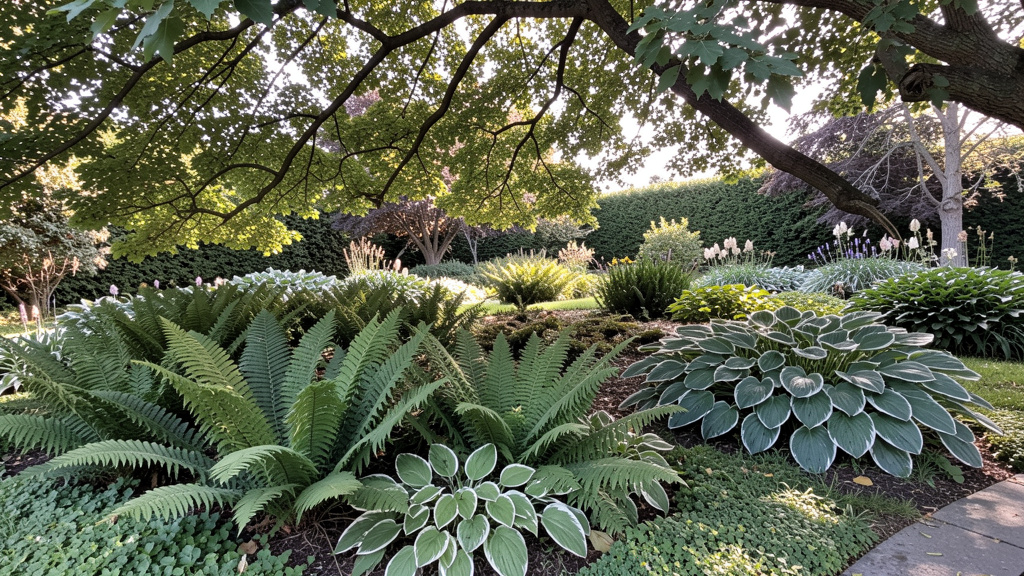
Discover How to Work With Your Space—Not Against It—Using Ecological Principles, Adaptive Strategies, and Plants That Flourish Where Sunlight Is Scarce
Shade is not a limitation to overcome but a distinct ecological condition with its own rhythms, opportunities, and quiet beauty. Where direct sun rarely touches the ground, ferns unfurl with intricate grace, hostas offer living tapestries of texture and hue, and mosses create emerald carpets that invite mindful pauses. This guide walks you through a grounded, adaptable process: learning to read your specific shade conditions, preparing soil that supports life beneath the canopy, and selecting plants aligned with your site’s moisture, light, and seasonal patterns. Whether you steward a dappled woodland edge, a cool north-facing wall, or the deep shadow beneath mature evergreens, a vibrant, resilient shade garden is within reach.
Introduction
Walk into most garden centers in spring, and the sun-loving plants dominate—tomatoes reaching for light, marigolds in bold primary colors, lavender bundles drying by the register. The shade section often feels like an afterthought: a few hostas labeled vaguely as “shade-tolerant,” with little guidance on which kind of shade they truly need. This reflects a broader cultural narrative: sun equals vitality; shade equals compromise. Yet step into a mature woodland after a gentle rain. Moss softens fallen logs. Solomon’s seal arches over damp soil. Wild ginger carpets the ground. These spaces pulse with life—not despite the shade, but because of it. Decades of horticultural research and documented patterns across diverse regional gardens—from Pacific Northwest ravines to Appalachian hollows to urban courtyards—reveal that shade ecosystems operate on unique biological rhythms. Success begins not with plant catalogs, but with perception: learning to see shade as a spectrum of opportunity. This guide reframes your approach using observable patterns, ecological relationships, and adaptable strategies grounded in how shade environments actually function.
The Shade Spectrum Framework: Decoding Light Beyond “Sunny or Shady”
Most gardening advice collapses shade into a single category. This oversimplification leads to repeated disappointment. A plant thriving under the filtered light of a honey locust may struggle beneath the dense canopy of a Norway maple. True alignment begins with precise light assessment. The Shade Spectrum Framework identifies four distinct shade types, each requiring tailored strategies. This methodology aligns with light-evaluation practices used by botanical institutions and landscape professionals to match plants with microenvironments—a process validated through documented plant performance across varying light conditions.
Type 1: Dappled Shade (The Golden Zone)
Definition: Sunlight filters through open-branched trees (birches, honey locusts, redbuds), creating a shifting mosaic of light and shadow. Direct sun reaches the ground intermittently for roughly 3–6 hours total, rarely intense.
Why it matters: This is the most versatile shade type. Photosynthetically active radiation reaches plants in gentle pulses, supporting energy production without leaf scorch. Soil moisture remains relatively stable—less evaporation than full sun, yet not stagnant like deeper shade.
How to identify it: On a clear summer day between 10 AM and 4 PM, place a white sheet of paper on the soil. If distinct, moving circles of light cover 30–70% of the paper over an hour, you have dappled shade. Trees with “see-through” canopies (you glimpse sky through branches) typically create this condition.
Plant implications: Supports the widest range of shade-adapted species. Most flowering perennials (astilbe, bleeding heart, foamflower) perform well here. Even some “partial sun” plants like coral bells (Heuchera) or Japanese anemone often adapt successfully. Root competition is usually moderate, making soil preparation more straightforward.
Common mistake: Overplanting aggressive spreaders like Lamium or Ajuga, which can dominate this fertile zone. Instead, embrace intentional layering: tall structural plants (goatsbeard), mid-height bloomers (astilbe), and delicate groundcovers (sweet woodruff).
Type 2: Partial Shade / Afternoon Shade (The Strategic Retreat)
Definition: Direct sun for approximately 3–6 hours, but only in the morning. Afternoon sun (post-1 PM) is consistently blocked by structures, terrain, or vegetation. Morning light is cooler, less intense, and less dehydrating.
Why it matters: This is often ideal for plants labeled “partial shade.” Morning sun provides sufficient energy for photosynthesis and flower production, while afternoon shade prevents heat stress, leaf bleaching, and rapid soil drying. Many plants marketed for “full shade” actually produce more abundant blooms here.
How to identify it: Track sunlight over three clear days. Note exact times sun hits the area. If sun disappears consistently by early afternoon (especially critical between 1–5 PM in summer), you have afternoon shade. South- or west-facing walls/buildings casting shadows create this pattern.
Plant implications: This zone unlocks flowering potential. Consider it a “sweet spot” for:
– Coral Bells (Heuchera): Foliage colors often intensify with gentle morning light; afternoon shade helps prevent fading.
– Japanese Painted Fern (Athyrium niponicum): Silver highlights gleam without risk of burning.
– Bleeding Heart (Dicentra): Blooms may persist longer than in deeper shade.
– Hellebores: Often produce more abundant flowers with this light pattern.
Critical distinction: Afternoon shade (morning sun) is fundamentally different from morning shade (afternoon sun). Afternoon sun in warm climates carries significantly higher heat and light intensity. A plant thriving in morning sun/afternoon shade may struggle in the reverse scenario.
Type 3: Full Shade (The Consistent Canopy)
Definition: Less than 3 hours of direct sun daily, typically weak morning light. No harsh midday or afternoon sun penetrates. Common under dense deciduous canopies (maple, beech) or north-facing walls.
Why it matters: Photosynthesis operates at lower efficiency. Plants often prioritize foliage development over flowering. Soil tends to stay cooler and moister longer but may face root competition or drainage challenges. Success hinges on selecting species evolved for forest-floor conditions.
How to identify it: The white paper test shows minimal direct light—perhaps faint, diffuse patches totaling under 3 hours. Shadows remain soft and indistinct all day. Temperatures feel noticeably cooler than nearby sunlit areas.
Plant implications: Focus shifts to foliage texture, form, and subtle seasonal interest. Prioritize:
– Ferns: Ostrich fern, lady fern, Christmas fern.
– Hostas: Especially blue or gold varieties (green hostas often tolerate deeper shade).
– Native Woodlanders: Wild ginger (Asarum), mayapple (Podophyllum), trilliums.
– Groundcovers: Pachysandra, Vinca minor (use cautiously where invasiveness is a concern).
Important nuance: “Full shade” under deciduous trees differs from “full shade” under evergreens. Deciduous shade allows a spring window of light before leaf-out—ideal for spring ephemerals like trout lily or bloodroot. Evergreen shade remains consistently dim year-round; choose only the most shade-adapted species.
Type 4: Deep Shade (The Challenge Zone)
Definition: Virtually no direct sun year-round. Light is diffuse, reflected, or filtered through multiple layers. Common under dense evergreen thickets, between tall buildings, or in narrow north-facing urban spaces.
Why it matters: Light levels may approach thresholds where only highly specialized plants thrive. Survival depends on adaptations: larger leaves to capture scarce photons, slower growth rates to conserve energy, or tolerance for specific soil conditions. Soil is often compacted, dry (due to tree root competition), or perpetually damp.
How to identify it: White paper remains uniformly gray all day. No distinct shadows form. Moss often grows readily on soil and nearby surfaces. Light meters (if accessible) typically register very low readings.
Plant implications: Manage expectations thoughtfully. Success requires patience and alignment with site realities:
– Mosses: Embrace them! Cultivate a moss tapestry with species like Thuidium delicatulum or Plagiomnium affine.
– Hardy Ferns: Christmas fern (Polystichum acrostichoides) shows notable tolerance for dry deep shade.
– Cast Iron Plant (Aspidistra elatior): Highly resilient to low light, variable moisture, and urban conditions (hardy in zones 7–10; grow as a container plant in colder zones).
– Japanese Spurge (Pachysandra terminalis): Spreads slowly but reliably in contained settings.
Adaptive strategies: If feasible and safe, consider selective pruning of lower tree branches (“limbing up”) to allow gentle morning light penetration. A securely mounted mirror can reflect ambient light into the space. Alternatively, shift focus: use this zone for non-plant elements—a weathered bench, a path lined with light-colored stone, or a subtle water feature whose sound enriches the sensory experience.
The Fundamental Principle: Shade is not absence—it is transformation. Light changes quality, moisture changes behavior, time changes pace. Your role shifts from director to interpreter: listening to what the space offers, then selecting partners who speak its language.
Step-by-Step: Assessing Your Shade Garden Site with Clarity
Guessing leads to frustration. Precision builds confidence. Follow this systematic assessment process—adapted from landscape diagnostic approaches used by cooperative extension services—to move from uncertainty to informed action. Allocate 60–90 minutes on a clear day between late spring and early fall (when foliage is fullest).
Phase 1: The Light Journal (24-Hour Tracking)
Materials needed: Notebook, pencil, watch/timer, white paper, camera (phone is sufficient).
- Map Your Space: Sketch a simple overhead diagram of your yard. Mark structures, trees, fences, and the area in question.
- Hourly Check-Ins: Starting at 7 AM, visit the site every hour until 7 PM. At each interval:
- Note exact time.
- Place white paper on soil. Sketch the pattern of light/shadow on your map.
- Record intensity: “bright direct spot,” “soft diffuse glow,” “deep shadow.”
- Take a quick photo facing north (for seasonal comparison later).
- Key Questions to Answer:
- Total hours of direct sun? (Count only when paper shows sharp, defined edges of light)
- When does sun occur? (Morning? Afternoon? Scattered?)
- Does the pattern shift noticeably between seasons? (Revisit in winter if deciduous trees are present)
Why this works: Human memory often misjudges light patterns. Documentation reveals truths intuition misses—like a “shady” corner receiving two intense hours of afternoon sun in July. This journal becomes your reliable planting guide.
Phase 2: Soil Intelligence Gathering
Shade significantly influences soil behavior. Move beyond basic pH testing.
- Moisture Assessment: Dig a small hole 6 inches deep. Squeeze a handful of soil.
- Stays in a tight ball, water oozes: Poor drainage (common under roofs or compacted areas). Amendment is advisable.
- Holds shape but crumbles easily: Ideal moisture retention (typical under healthy tree canopies with organic matter).
- Falls apart immediately: Dry shade (common under shallow-rooted trees like maples or near foundations). Needs moisture-retentive amendments.
- Root Competition Scan: Gently dig a 12-inch test hole. Note:
- Density and depth of tree roots (fine feeder roots vs. large structural roots)
- Depth of workable topsoil before hitting roots or hardpan
- Presence of earthworms or organic matter (indicates biological activity)
- pH Test: Use an affordable kit. Many shade-loving natives (azaleas, rhododendrons) prefer acidic soil (pH 4.5–6.0). Hostas and ferns generally prefer neutral to slightly acidic (6.0–7.0). Alkaline soil (above 7.5) narrows plant options.
Illustrative example: A gardener observed hostas struggling under a silver maple. Her light journal revealed only one hour of weak morning sun—true deep shade. Soil testing showed alkaline pH and dense, dry maple roots. She transitioned to cast iron plants (Aspidistra) and Lenten roses (Helleborus), which tolerate alkalinity and dry shade better, and added a thin annual layer of compost to gradually improve moisture retention. Over two growing seasons, the area transformed.
Phase 3: Microclimate Mapping
Shade interacts with other environmental factors. Note these on your sketch:
- Wind Exposure: Is the area sheltered or exposed to drying winds? (Increases moisture loss even in shade)
- Heat Reflection: Does nearby light-colored pavement, wall, or water feature reflect heat or light? (Can create unexpected stress points)
- Water Flow: Where does rain runoff collect? (Low spots may stay soggy; slopes may drain too quickly)
- Human Use: Is this a quiet retreat or a pathway? (Influences plant durability choices)
This holistic assessment prevents the common error of selecting plants based only on light. A moisture-loving fern will struggle in dry shade under a maple regardless of perfect light conditions. Your completed site map becomes the foundation for every subsequent decision—soil preparation, plant selection, maintenance planning. It transforms gardening from hopeful guessing into an informed partnership with your landscape.
Soil Foundations for Shade: Nurturing the Ground Beneath
In sun-drenched beds, soil is sometimes an afterthought—plants leverage solar energy to push through marginal conditions. In shade, soil is the primary engine of vitality. With less photosynthetic energy available above ground, plants depend heavily on efficient nutrient and moisture uptake below. Yet shade soils present unique dynamics: cooler temperatures slowing microbial activity, competition from tree roots, altered drainage under dense canopies, or acidity shifts beneath certain evergreens. Transforming shade soil requires understanding these specific conditions and applying targeted, gentle amendments—not generic solutions.
Why Shade Soil Behaves Differently: A Practical Overview
Sunlight warms soil. Shaded soil stays cooler longer into spring, delaying the microbial activity that breaks down organic matter and releases nutrients. Cooler soil also retains moisture longer, benefiting moisture-loving plants but increasing risks for others. Under dense canopies, rainfall may not penetrate effectively (“interception loss”), creating paradoxically dry conditions despite shade. Simultaneously, established tree roots actively compete for water and nutrients. Finally, decomposing leaves from certain trees (like black walnut) release compounds that inhibit some plants. Recognizing these dynamics is the first step toward working with your soil, not against it.
A Gentle Four-Step Soil Approach for Shade
Follow this sequence thoughtfully. Rushing or skipping steps can undermine results.
Step 1: Minimal Disturbance Clearance
Why: Tilling severs beneficial fungal networks (mycorrhizae) that help many shade plants absorb nutrients. It also risks damaging tree roots and bringing dormant weed seeds to the surface. In established shade areas, minimal soil disturbance is generally preferable.
How to proceed:
– Remove only surface debris like dead leaves or twigs on top of the soil. Leave a thin layer (½ inch) of decomposing leaves—they mimic natural forest duff and feed soil life.
– Work carefully around visible roots. Avoid removing more than 1 inch of soil depth at once in sensitive areas.
– If preparing a new bed, slice horizontally just below grass roots with a sharp spade. Roll up sod sections. Avoid deep digging near tree trunks.
Common pitfall: Over-cleaning the area, stripping away the organic layer that sustains soil biology. Bare, exposed soil in shade becomes compacted and less hospitable over time.
Step 2: Targeted Amendment (Right Material, Right Depth)
Why: Shade plants generally thrive in soil rich in organic matter that retains moisture yet allows drainage—mimicking a healthy forest floor. Amendment type and depth should align with your soil assessment.
How to proceed:
– For Dry Shade (common under maples, beeches): Spread 2–3 inches of composted pine bark fines or coconut coir. These materials hold moisture without becoming waterlogged. Gently work into the top 4–6 inches only where no major tree roots are visible. Avoid peat moss—it can become hydrophobic when dry and raises sustainability concerns.
– For Wet/Heavy Shade (low spots, clay soils): Spread 3 inches of composted leaf mold (fully decomposed leaves) mixed with a small amount of perlite or coarse sand. Leaf mold improves structure and biology; perlite enhances aeration. Work gently into the top 5 inches.
– For Alkaline Soil (pH >7.5): Incorporate elemental sulfur (follow package rates based on test results) plus composted oak leaves, which gradually encourage acidity. Re-test pH in 6–12 months.
– Critical Guideline Under Trees: Avoid adding more than 2 inches of total amendment. Raising soil grade around tree trunks can suffocate roots and invite disease. For severely compacted soil under trees, consider professional air-spading (a tool that fractures soil with compressed air without cutting roots) or focus amendments only within individual planting holes.
Illustrative example: A gardener faced soggy clay soil under a dense Douglas fir. Instead of attempting to amend the entire area, she created raised planting pockets: digging individual holes 18 inches wide and deep, filling them with a mix of 60% native soil, 30% leaf mold, and 10% perlite. She planted moisture-tolerant ferns (Dryopteris) and Carex sedges. The pockets drained independently, thriving while the surrounding soil remained challenging.
Step 3: The Living Mulch Layer (Highly Recommended)
Why: Mulch in shade serves triple duty: conserves moisture, suppresses weeds that compete fiercely in low-energy environments, and slowly decomposes to feed soil biology. Material choice matters.
How to proceed:
– Preferred Choice: Shredded native hardwood bark (undyed). Shreds interlock, resist washing away, and decompose at a beneficial rate. Apply 2–3 inches deep.
– Excellent Alternative: Leaf mold (fully decomposed leaves). Closely mimics natural forest conditions. Apply 3 inches.
– Generally Avoid: Rock/gravel (retains cold, reflects little useful light, heats unnaturally), raw wood chips (can temporarily tie up nitrogen), or thick mats of whole leaves (may mat down, blocking water and air).
Application tip: Pull mulch 2–3 inches away from plant crowns and tree trunks to prevent moisture-related rot. Replenish annually in spring as decomposition occurs. Periodically check beneath mulch for slugs or snails, especially in damp climates, and remove by hand if needed.
Step 4: Supportive Nutrition (Feed the Soil Ecosystem)
Why: Cooler shade soil slows nutrient cycling. Plants may not access nutrients locked in undecomposed matter. Synthetic fertilizers often wash away before roots absorb them or can stress sensitive shade roots.
How to proceed:
– Spring (as growth begins): Top-dress with ½ inch of compost or worm castings. Gently scratch into the mulch surface. This provides slow-release nutrients and beneficial microbes.
– Mid-Summer (if plants show signs of fatigue): Apply compost tea (steep mature compost in water for 24 hours, strain, dilute 1:10). Water gently at soil level. Avoid foliar feeding in humid shade—it can encourage fungal issues.
– Fall: Return fallen leaves! Shred them with a mower and leave as mulch. This closes the nutrient loop nature intended.
Common pitfall: Over-fertilizing. Shade plants typically grow slower and require less nitrogen. Excess fertilizer can promote weak, leggy growth vulnerable to pests and may reduce flowering in species like hellebores. When uncertain, under-feed.
Special Consideration: Gardening Near Black Walnut Trees
Black walnuts (Juglans nigra) release juglone, a compound toxic to many plants (including tomatoes, azaleas, and peonies). Shade gardening here requires juglone-tolerant species. Soil amendment does not neutralize juglone; plant selection is key. Documented tolerant options include:
– Perennials: Hosta, many ferns (especially Osmunda), Solomon’s seal, lungwort (Pulmonaria), astilbe
– Groundcovers: Pachysandra, Vinca minor (where appropriate), wild ginger (Asarum)
– Shrubs: Euonymus, forsythia, rose of Sharon
Planting at greater distances from the trunk (where juglone concentration is lower) and promptly removing fallen leaves/nuts can further support success. Always verify local recommendations, as tolerance can vary.
Building healthy shade soil is a patient, iterative practice. Meaningful improvement may unfold over two or more growing seasons. Each thoughtful amendment, each layer of compost, each preserved leaf mold deposit strengthens the underground ecosystem that sustains your visible garden. This foundational work supports resilience far beyond the initial planting.
The Layered Planting Approach: Creating Depth, Harmony, and Ecological Connection
A flat carpet of a single groundcover or an isolated specimen plant represents missed potential. Nature rarely plants in monocultures beneath forest canopies. Observe a healthy woodland: ferns arch over mossy logs, Solomon’s seal leans between trilliums, wild ginger creeps beneath saplings. This vertical stratification maximizes light capture, conserves moisture, suppresses weeds, and creates resilient micro-ecosystems. The Layered Planting Approach translates this wisdom into intentional design, transforming sparse shade into immersive, multi-dimensional spaces. This method also reduces long-term maintenance by creating self-shading soil and plant communities that naturally limit weed establishment.
Layer 1: The Canopy Layer (Existing or Thoughtfully Added)
Role: Defines the shade type itself. You may work with existing trees or introduce small understory trees/shrubs to gently modify light.
Working with Existing Canopies:
– Deciduous Trees (Maple, Beech, Oak): Allow a spring light window for ephemerals. Consider selective pruning in the dormant season to raise the canopy (“limbing up”) for increased light penetration. Focus on removing crossing or diseased branches only—avoid “topping,” which stresses trees.
– Evergreen Trees (Hemlock, Spruce, Yew): Create consistent deep shade. Focus on plants adapted to perpetual low light. Consult a certified arborist about carefully thinning interior branches to allow dappled light without compromising tree health.
– Challenging Trees: Silver maple (aggressive surface roots), black walnut (juglone). Work with their constraints using documented tolerant species (see Soil Foundations section).
Adding Understory Trees/Shrubs (If Space and Conditions Allow):
– Purpose: Soften harsh edges, add seasonal interest (bark, berries, flowers), further filter light.
– Considerations:
– Japanese Maple (Acer palmatum): Creates dappled shade; offers stunning seasonal color. Dissectum varieties provide delicate texture.
– Redbud (Cercis canadensis): Pink spring blooms; open canopy allows light below.
– Serviceberry (Amelanchier): White spring flowers, edible berries, golden fall foliage.
– Fothergilla: Fragrant spring blooms, vibrant fall color; tolerates moist shade.
– Planting Tip: Place new trees at least 10–15 feet from existing large tree trunks to minimize root competition. Water deeply and consistently during the first two years of establishment.
Layer 2: The Structural Layer (Approx. 3–5 Feet Tall)
Role: Provides year-round form, defines the garden’s “bones,” creates visual anchors. These plants establish architecture when seasonal flowers fade.
Selection Considerations: Strong silhouette, interesting bark or stems, evergreen or persistent foliage, tolerance for site conditions.
Thoughtful Options:
– Goatsbeard (Aruncus dioicus): Feathery white plumes in early summer; bold, astilbe-like foliage. Tolerates moist shade. Reaches 4–6 ft. Why it works: Its height draws the eye upward, breaking horizontal monotony. Pair with lower ferns for contrast.
– Japanese Forest Grass (Hakonechloa macra): Arching golden or green blades; cascades like liquid. Evergreen in mild zones. Why it works: Adds movement and subtle sound. Use ‘Aureola’ to brighten deeper shade areas.
– Lenten Rose (Helleborus orientalis): Evergreen foliage; winter/early spring blooms in varied hues. Why it works: Provides critical off-season interest. Nodding flowers face downward—plant on slopes or raised areas for better viewing.
– Oakleaf Hydrangea (Hydrangea quercifolia): Large flower clusters (white aging to pink), spectacular fall color, exfoliating bark. Why it works: Four-season interest. Tolerates dry shade once established. Dwarf cultivars (‘Pee Wee’, ‘Sykes’) suit smaller spaces.
Design Tip: Place structural plants first using your site map. Space them asymmetrically but intentionally—avoid rigid rows. Consider how their shadows will fall at different times of day. Allow ample room for mature size; crowding increases disease risk in humid shade.
Layer 3: The Seasonal Interest Layer (Approx. 1–3 Feet Tall)
Role: Delivers color shifts, texture changes, and floral moments throughout the growing season. This layer creates focal points and guides the eye.
Spring Ephemerals (Leverage the Deciduous Tree Advantage):
– Trillium (Trillium grandiflorum): Three-petaled white flowers; requires patience (slow to establish). Planting note: Sow seeds in fall where desired; they need cold stratification. Source only nursery-propagated plants—never wild-dig.
– Bloodroot (Sanguinaria canadensis): White flowers with golden centers; distinctive lobed leaves. Spreads slowly by rhizomes.
– Virginia Bluebells (Mertensia virginica): Arching stems of sky-blue trumpet flowers. Dies back completely by early summer—plant behind later-emerging perennials to hide fading foliage.
Summer Bloomers & Foliage:
– Astilbe (Astilbe x arendsii): Feathery plumes in pink, red, white, lavender. Critical note: Requires consistently moist soil. ‘Sprite’ (pink) shows slightly better tolerance for less-than-ideal moisture than some varieties. Plant in groups of 3+ for visual impact.
– Bleeding Heart (Dicentra spectabilis): Arching stems of heart-shaped flowers. Dies back in summer heat—companion with hostas whose leaves expand as bleeding heart fades.
– Foamflower (Tiarella cordifolia): Spikes of frothy white/pink flowers; evergreen foliage with burgundy markings. Spreads gently by stolons. Tolerates drier shade than astilbe.
Fall/Winter Interest:
– Autumn Fern (Dryopteris erythrosora): New fronds emerge coppery-red, maturing to deep green. Evergreen in zones 5+.
– Hellebores: Some varieties continue blooming into early winter in mild climates.
– Coral Bells (Heuchera): Foliage often intensifies in cool weather—burgundy, purple, silver varieties glow in low autumn light.
Layer 4: The Groundcover Layer (Under 1 Foot)
Role: Knits the garden together, suppresses weeds, prevents soil erosion, retains moisture. This layer should feel intentional, not like filler.
Choosing Responsibly (Prioritize Non-Invasive Options):
– For Moist, Rich Soil: Sweet Woodruff (Galium odoratum): Starry white spring flowers; fragrant dried foliage. Spreads steadily but not aggressively. Wild Ginger (Asarum canadense): Heart-shaped leaves; hidden maroon flowers. Native; supports local ecology.
– For Dry Shade: Barren Strawberry (Waldsteinia fragarioides): Yellow spring flowers; strawberry-like leaves. Drought-tolerant once established. Canadian Wild Ginger (Asarum canadense): Also shows tolerance for dry conditions under trees.
– For Deep Shade: Japanese Spurge (Pachysandra terminalis): Reliable, but can be invasive beyond garden beds in some regions. Use only in contained settings. Preferred alternative: Allegheny Spurge (Pachysandra procumbens): Native; slower spreader; fragrant spring flowers.
– For Erosion Control on Slopes: Creeping Phlox (Phlox stolonifera): Lavender-blue spring blooms; semi-evergreen. Sedge (Carex pensylvanica): Grass-like; forms dense, erosion-resistant mats.
Planting Pattern: Adapt the “thriller, filler, spiller” concept:
– Thriller (focal point): One standout plant per small area (e.g., a variegated hosta)
– Filler (massing): Groups of 5–7 of the same groundcover for cohesion
– Spiller (edge softener): Trailing plants like Vinca minor (use cautiously where appropriate) or Lysimachia nummularia ‘Aurea’ at bed edges
Layer 5: The Moss & Micro Layer (The Subtle Finishing Touch)
Role: Adds primal texture, indicates healthy humidity levels, requires minimal intervention. Often overlooked, this layer completes the woodland impression.
Encouraging Moss Thoughtfully:
– Ideal Conditions: Consistently moist, slightly acidic soil (pH 5.0–6.0), compacted soil (moss often thrives where grass struggles), low fertility.
– Transplanting (Ethically): In early spring or fall, lift moss sheets from shady, damp areas on your own property. Press firmly onto prepared, moistened soil. Keep consistently damp for 4–6 weeks. Mist daily if rainfall is insufficient.
– Garden-Suitable Species: Thuidium delicatulum (fern moss—soft, feathery), Plagiomnium affine (flat moss—forms lush carpets), Climacium dendroides (tree moss—upright, miniature forest effect).
– Ethical Note: Never harvest moss from public forests, parks, or protected natural areas. Purchase from reputable moss farms or propagate from your own land.
Integrating Non-Plant Elements: Place moss between flagstones on a path. Let it creep over the north side of a weathered log. Frame a moss patch with smooth river stones. This layer invites closer observation—a place to kneel, notice tiny ecosystems, and reconnect with scale.
Bringing Layers Together: A Sample Planting Scheme
Site: 8′ x 12′ bed under a mature sugar maple (dappled shade, moist soil, USDA zones 5–7)
– Canopy: Existing sugar maple (limbed up to 6 ft with arborist guidance)
– Structural: 1 Oakleaf Hydrangea ‘Snow Queen’ (back left corner), 3 Japanese Forest Grass ‘Aureola’ (mid-bed)
– Seasonal: 5 Astilbe ‘Visions’ (pink plumes), 3 Bleeding Heart ‘Gold Heart’ (behind astilbe), 7 Foamflower ‘Crow Feather’ (front edge)
– Groundcover: Sweet Woodruff planted between perennials; Allegheny Spurge along shady edge near house
– Micro Layer: Moss encouraged between stepping stones; small log feature with Thuidium moss
This layered approach creates a garden that evolves throughout the day and across seasons. Morning light catches the gold grass; afternoon shade deepens the hydrangea’s green; evening reveals the foamflower’s delicate tracery. It requires thoughtful initial planning but rewards with decreasing maintenance needs and increasing complexity year after year. You are cultivating a living system, not just placing plants.
Plant Profiles: Shade-Adapted Choices for Diverse Conditions
Selecting plants is the rewarding culmination of your site assessment. Generic lists often fail because they ignore critical nuances: “shade-tolerant” means little without context of moisture, soil pH, root competition, and regional hardiness. Below, plants are grouped by primary function and cross-referenced with shade type suitability. Each profile includes why it works, key cultural needs, companion suggestions, and considerations—transforming selections from hopeful guesses into confident, site-aligned choices. Recommendations prioritize documented performance, disease resistance where noted, and ecological value. Always verify hardiness for your specific location.
Foliage Foundations: Texture and Form
Hosta (Hosta spp.)
- Why it works: Exceptional diversity in size (2″ to 4′ tall), leaf shape (heart, lance, cupped), color (blue, gold, green, variegated), and texture. Forms dense clumps that suppress weeds. Many modern cultivars show improved slug resistance.
- Best suited for: Dappled shade to full shade; moist, rich soil. Avoid intense afternoon sun (can scorch leaves).
- Notable Cultivars:
- ‘Blue Angel’: Massive blue leaves (3′ tall x 6′ wide); noted for slug resistance; zones 3–9
- ‘Guacamole’: Large gold leaves with fragrant white summer flowers; zones 3–9
- ‘Pandora’s Box’: Compact (12″ tall); dark green centers with wide white margins; zones 3–9
- Helpful Tip: Blue hostas often retain their color best with only morning light—the waxy coating that creates the blue hue can wash off with heavy rain or sun exposure, causing leaves to appear greener. Pair blue hostas with gold coral bells for striking contrast.
- Consideration: In areas with significant slug/snail pressure, select thick-leaved varieties (like ‘Halcyon’ types) and implement preventative measures (copper tape, diatomaceous earth).
Ferns (Multiple Genera)
- Why they work: Ancient plants exquisitely adapted to forest floors. Provide unmatched texture—lacy, arching, upright. Most are deer-resistant and low-maintenance once established.
- Best suited for: Full shade to dappled shade; consistently moist, humus-rich soil. Most tolerate dry shade once established except maidenhair fern.
- Options by Condition:
- Moist Shade: Ostrich Fern (Matteuccia struthiopteris) – Tall (3–5′), dramatic arching fronds; spreads by rhizomes (ideal for naturalizing); zones 3–8. Note: Can be vigorous—provide space or use edging.
- Dry Shade: Christmas Fern (Polystichum acrostichoides) – Evergreen; leathery dark green fronds (2′ tall); tolerates root competition; zones 3–9. Remains attractive through winter.
- Texture Focus: Japanese Painted Fern (Athyrium niponicum ‘Pictum’) – Silvery-gray fronds with purple-red stems; delicate appearance but resilient; zones 4–8. Glows in low light.
- Special Care: Maidenhair Fern (Adiantum pedatum) – Lacy, fan-shaped leaflets on black stems; requires consistent moisture and protection from wind; zones 3–8. Worth the effort for its magical effect.
- Planting Note: When planting bare-root ferns, position the rhizome horizontally just below the soil surface with growing tips pointing outward. Water deeply after planting.
Coral Bells (Heuchera spp.)
- Why they work: Foliage color rivals flowers—burgundy, lime green, peach, silver, purple. Compact mounds (12–18″ tall) fit into tight spaces. Many tolerate partial sun if soil stays cool.
- Best suited for: Dappled shade to partial shade (morning sun often enhances color); well-drained soil. Avoid heavy clay or soggy conditions (can lead to crown rot).
- Color Categories:
- Silver/White: ‘Silver Scrolls’, ‘Cajun Fire’ (new leaves silver)
- Purple/Burgundy: ‘Palace Purple’ (classic), ‘Black Pearl’ (near-black)
- Gold/Lime: ‘Lime Marmalade’, ‘Citronelle’
- Peach/Amber: ‘Marmalade’, ‘Caramel’
- Important Care Note: Heucheras often “lift” out of the soil over time as crowns rise. Every 2–3 years in early spring, dig up, reset the crown 1″ below soil level, and divide if needed. This prevents winter damage and rejuvenates plants.
- Companion Idea: Plant in front of dark green hostas or ferns—their bright foliage creates dramatic contrast. Group colors intentionally for a painterly effect.
Floral Highlights: Blooms for Lower Light
Lenten Rose / Hellebore (Helleborus orientalis and hybrids)
- Why it works: One of the earliest bloomers (late winter to early spring), often flowering through light snow. Nodding cup-shaped flowers in white, pink, purple, green, spotted, or double forms. Evergreen foliage provides year-round structure. Generally deer and rabbit resistant.
- Best suited for: Full shade to dappled shade; rich, well-drained soil (amend heavy clay). Tolerates dry shade under trees once established.
- Helpful Growing Tips:
- Plant with crown at soil level (burying too deep can cause rot).
- In late winter, cut back last year’s foliage to showcase new flowers and improve air circulation.
- Seedlings often appear nearby—transplant when small for additional plants.
- Notable Series: ‘Winter Thriller’ hybrids (upright flowers face outward), ‘Gold Collection’ (yellow forms), ‘Ivory Prince’ (large white blooms).
- Clarification: Hellebores are often perceived as difficult but typically fail only due to incorrect planting depth, soggy soil, or crown buried under mulch. Address these factors, and they can thrive for decades.
Astilbe (Astilbe x arendsii)
- Why it works: Feathery plumes (panicles) rise above fern-like foliage in shades of pink, red, white, lavender. Creates soft, cloud-like texture. Excellent for cutting (fresh or dried).
- Best suited for: Dappled shade to partial shade; consistently moist soil is essential. Ideal near downspouts, streams, or in low spots. Avoid dry shade.
- Size Considerations:
- Dwarf (12–18″): ‘Sprite’ (pink), ‘Cattleya’ (rose)
- Mid (2–3′): ‘Visions’ (rose-pink), ‘Fanal’ (deep red)
- Tall (3–4′): ‘Bridal Veil’ (white), ‘Rheinland’ (pink)
- Success Tip: Plant in groups of 3–5 of the same cultivar for visual impact. Divide clumps every 3–4 years in early spring to maintain vigor. If leaf edges brown in summer, soil is likely too dry—mulch heavily and water deeply.
- Companion Plants: Surround with hostas (whose leaves hide astilbe’s fading foliage) or foamflower. Avoid planting near aggressive spreaders.
Bleeding Heart (Dicentra spectabilis)
- Why it works: Romantic arching stems dangling heart-shaped pink or white flowers in spring. Evokes nostalgic charm.
- Best suited for: Dappled shade; moist, rich soil. Dies back completely by midsummer—plan for this.
- Strategic Planting: Place behind later-emerging perennials like hostas, ferns, or astilbe. As bleeding heart fades, neighbors expand to cover the space. Avoid planting where its disappearance creates a noticeable gap.
- Modern Alternative: ‘Luxuriant’ (a Dicentra formosa hybrid) – Repeat blooms sporadically through summer; fern-like blue-green foliage stays attractive all season; zones 3–9. Offers more continuous interest.
- Safety Note: All parts are toxic if ingested. Place thoughtfully if pets or young children frequent the garden. Not considered invasive like some older types.
Groundcovers & Spreaders: The Living Carpet
Allegheny Spurge (Pachysandra procumbens)
- Why it works: Native alternative to Japanese spurge. Evergreen leaves with silvery mottling; fragrant white bottlebrush flowers in early spring. Spreads slowly by rhizomes to form dense mats. Tolerates dry shade and deer browsing.
- Best suited for: Full shade to dappled shade; average to moist soil. Slower to establish than P. terminalis but more refined and ecologically responsible.
- Establishment Tip: Plant 6–8 inches apart. Water regularly the first year. Once established (2–3 years), forms an effective weed barrier. Appreciates a light top-dressing of compost each spring.
- Ideal Use: Under trees, on slopes for erosion control, as edging along shady paths. Avoid full sun or poorly drained sites.
Foamflower (Tiarella cordifolia)
- Why it works: Delicate spikes of white or pink starry flowers in spring; heart-shaped leaves often marked with burgundy. Spreads gently by stolons to form lush groundcover. Many cultivars offer extended seasonal interest.
- Best suited for: Dappled shade to full shade; moist, humus-rich soil. Tolerates dry shade better than astilbe but not as well as pachysandra.
- Notable Cultivars:
- ‘Crow Feather’: Deeply cut leaves resembling crow feathers; burgundy markings; zones 4–9
- ‘Jeepers Creepers’: Vigorous spreader; bright green leaves; zones 4–9
- ‘Sugar and Spice’: Pink flowers; bronze fall color; zones 4–9
- Design Use: Softens bed edges, cascades over rock walls, or fills spaces between stepping stones. Mix with wild ginger for contrasting textures. Deer resistant.
Sedge (Carex spp.)
- Why it works: Grass-like texture without grass’s sun requirements. Hundreds of species for varied shade conditions. Provides movement, subtle sound, and fine texture. Many are evergreen.
- Best suited for: Varies by species—see below. Generally adaptable.
- Top Species by Need:
- Dry Shade: Pennsylvania Sedge (Carex pensylvanica) – Forms dense, turf-like mats; tolerates light foot traffic; zones 3–8. Ideal native lawn substitute in shade.
- Moist Shade: Bowles’ Golden Sedge (Carex elata ‘Aurea’) – Bright gold arching foliage; needs consistent moisture; zones 5–9. Stunning near water features.
- Versatile: Japanese Sedge (Carex morrowii ‘Ice Dance’) – White-variegated evergreen leaves; tolerates dry shade once established; zones 5–9. Brightens dark corners.
- Maintenance: Cut back deciduous sedges in late winter. Evergreen types need only light grooming to remove damaged leaves. Divide clumps every few years if centers thin out.
Special Situations: Thoughtful Choices for Challenging Spots
Cast Iron Plant (Aspidistra elatior)
- Why it works: Lives up to its resilient reputation. Tolerates deep shade, variable moisture, urban pollution, and neglect. Glossy dark green leaves (18–24″ tall) add architectural simplicity.
- Best suited for: Deep shade under dense evergreens, north-facing foundations, urban courtyards. Zones 7–10 (grow as a container plant north of zone 7).
- Practical Use: Often used in landscapes under streetlights or in areas where other plants struggle. Ideal for “I’ve had difficulty growing anything here” spots. Very slow grower—plant 12″ apart for eventual coverage.
- Limitation: Flowers are insignificant and rarely seen. Purely a foliage plant. Not reliably deer-proof (deer may browse if food is scarce).
Wild Ginger (Asarum canadense)
- Why it works: Native groundcover with heart-shaped velvety leaves. Hidden maroon flowers at soil level (pollinated by ants). Spreads steadily to form dense mats. Supports local ecosystem.
- Best suited for: Full shade; moist, rich woodland soil. Tolerates dry shade under trees once established. Zones 3–8.
- Ecological Note: Provides habitat for beneficial insects. Source only nursery-propagated plants to protect wild populations.
- Planting Tip: Space plants 12 inches apart. Water regularly the first year. Avoid disturbing once established—it spreads via rhizomes.
Lungwort (Pulmonaria spp.)
- Why it works: Early spring blooms that may shift color (pink buds opening to blue flowers on the same plant). Speckled leaves add visual interest. Very early nectar source for emerging pollinators.
- Best suited for: Dappled shade to full shade; moist, rich soil. Avoid hot afternoon sun. Zones 3–8.
- Notable Cultivar: ‘Roy Davidson’ – Large blue flowers; silvery-spotted leaves; noted for mildew resistance.
- Care Consideration: Can be prone to powdery mildew in humid, stagnant air. Ensure good air circulation. Cut back foliage after flowering to encourage fresh growth. Water at soil level, not on leaves.
Quick-Reference Plant Selector Guide
| Challenge | Recommended Plant Choices | Plants to Approach Cautiously |
|---|---|---|
| Dry Shade | Christmas Fern, Cast Iron Plant, Lungwort, Allegheny Spurge | Astilbe, Maidenhair Fern, Impatiens |
| Wet/Moist Shade | Ostrich Fern, Astilbe, Sedge (Carex elata), Ligularia | Lavender, Rosemary, Sedum |
| Deep Shade | Cast Iron Plant, Allegheny Spurge, Mini Hostas, Moss | Most flowering perennials |
| Deer Pressure | Hellebore, Ferns, Lungwort, Daffodils (spring), Bleeding Heart (Dicentra) | Hostas (unless thick-leaved), Daylilies |
| Small Space | Mini Hostas (‘Blue Mouse Ears’), Coral Bells, Foamflower, Sedge | Ostrich Fern, Goatsbeard |
| Erosion Control | Pennsylvania Sedge, Sweet Woodruff, Creeping Phlox | Single specimen plants |
Selecting plants is deeply personal. Let your senses guide you. Notice which textures invite touch, which colors bring you peace. This emotional connection sustains gardeners through challenges. Combine this intuition with the site knowledge you’ve gathered, and you’ll build a shade garden that feels uniquely yours—a place of refuge that rewards attention with quiet, unfolding beauty.
Designing for Year-Round Engagement: Honoring Shade’s Seasonal Rhythm
Many shade gardens peak gloriously in spring with ephemerals and hellebores, then fade into monotonous green by midsummer—a “green desert” until fall. This cycle often stems from over-reliance on spring bloomers without planning for sequential interest. A truly resilient shade garden offers reasons to step outside across all seasons, providing subtle highlights that honor the quiet rhythm of low-light spaces. The goal isn’t constant floral explosion (an unnatural expectation for shade ecosystems) but a thoughtful progression of texture, form, and sensory detail. This requires intentional plant selection, strategic placement, and complementary non-plant elements.
Spring: The Ephemeral Window (March–May)
Design Philosophy: Celebrate the fleeting. Spring in deciduous shade offers a brief window of abundant light before canopy closure—a biological imperative for woodland plants. Lean into this urgency with layers of early interest.
Key Strategies:
– Leverage the Light Window: Under deciduous trees, plant spring ephemerals where they’ll receive sun before leaf-out. By the time tree roots actively compete for moisture in summer, ephemerals have stored energy and gone dormant.
– Sequence Bloom Times: Create a relay of interest:
– Very Early (Late Winter): Snowdrops (Galanthus), Winter Aconite (Eranthis hyemalis), Hellebores
– Early Spring: Crocus, Scilla, Trout Lily (Erythronium), Bloodroot
– Mid-Spring: Virginia Bluebells, Trilliums, Bleeding Heart, Lungwort
– Late Spring: Solomon’s Seal, False Solomon’s Seal, Foamflower
– Foliage as Feature: Before blooms appear, emerging foliage offers drama. Watch for:
– Hosta “spikes” unfurling like green cigars
– Fern “fiddleheads” coiled tightly, covered in silvery hairs
– Coral bells sending up new leaves in vibrant copper or lime
Practical Tip: Photograph your garden weekly in spring. You’ll capture rapid changes—and this record helps plan future additions. Place a small bench where you can sit and observe daily transformations. This season invites mindfulness.
Summer: The Texture Tapestry (June–August)
Design Philosophy: Shift focus from floral fireworks to foliage artistry. Summer shade is about coolness, depth, and intricate detail. Heat and humidity demand plants that thrive without constant intervention.
Key Strategies:
– Embrace Foliage Contrast: Combine plants with opposing textures:
– Bold vs. Fine: Hosta (broad leaves) beside Japanese Painted Fern (lacy fronds)
– Smooth vs. Textured: Lungwort (velvety spotted leaves) beside Astilbe (feathery plumes)
– Upright vs. Arching: Goatsbeard (vertical spikes) beside Solomon’s Seal (graceful arches)
– Strategic Color Accents: Use foliage color to create focal points:
– Gold plants (Hakonechloa, Heuchera ‘Lime Marmalade’) act as “light sources” in deep shade
– Purple/black plants (Heuchera ‘Black Pearl’, Actaea ‘Hillside Black Beauty’) add depth
– Variegated plants (Hosta ‘Patriot’, Carex ‘Ice Dance’) break up large green masses
– Summer Bloomers That Deliver: Select species documented for shade performance:
– Astilbe: Plumes last weeks if soil stays moist
– Foamflower: May repeat bloom if deadheaded
– Japanese Anemone: Late summer into fall; tall (3–4′); tolerates root competition
– Toad Lily (Tricyrtis): Orchid-like speckled flowers in late summer; thrives in moist shade
Essential Maintenance: Summer is peak season for slugs/snails in many regions. Inspect plants at dusk with a flashlight. Hand-pick or use iron phosphate bait (safe for pets/wildlife). Avoid overhead watering in the evening—it encourages fungal issues. Water deeply at soil level in the morning.
Autumn: The Subtle Shift (September–November)
Design Philosophy: Honor the quiet transition. Fall interest in shade is nuanced—less about fiery maples (which create the shade!) and more about structural bones, lingering blooms, and textural shifts as light angles change.
Key Strategies:
– Foliage Color Shifts: Many shade plants offer subtle autumn hues:
– Hostas: Gold varieties turn brilliant yellow; blue varieties fade to soft green
– Coral Bells: Burgundy types deepen to near-black; gold types glow amber
– Solomon’s Seal: Leaves turn golden yellow before fading
– Ferns: Autumn Fern (Dryopteris erythrosora) new growth is coppery-red all season
– Late Bloomers & Berries:
– Hellebores: Some varieties (like H. foetidus) may bloom in late fall
– Cyclamen: Hardy species (C. hederifolium) send up flowers after leaves die back
– Beautyberry (Callicarpa): If you have partial shade, this shrub offers striking purple berries in fall (zones 5–8)
– Seed Heads & Structure: Leave spent flower stalks on astilbe, goatsbeard, and Solomon’s Seal. Frosted seed heads catch morning light and provide winter interest for birds. Cut back only in early spring.
Design Enhancement: Place a small, securely mounted mirror on a shaded wall or fence. It captures low autumn sun angles, reflecting light deep into the garden and doubling the visual space. Position it to reflect a particularly beautiful plant grouping.
Winter: The Architectural Essence (December–February)
Design Philosophy: Reveal the skeleton. Winter strips away distraction, highlighting form, texture, and the interplay of light on bare branches. A well-designed shade garden remains compelling even under snow.
Key Strategies:
– Evergreen Anchors: These carry the garden visually:
– Hellebores: Fresh foliage and buds appear in late winter
– Christmas Fern: Leathery fronds stay green under snow
– Japanese Holly (Ilex crenata): Small boxwood substitute; tolerates shade (zones 6–8)
– Mosses: Glow emerald against snow or bare soil
– Bark & Stem Interest:
– Red Twig Dogwood (Cornus sericea): Needs partial sun but tolerates light shade; brilliant red stems in winter (zones 2–7)
– Paperbark Maple (Acer griseum): Exfoliating cinnamon bark; tolerates dappled shade (zones 5–7)
– Coral Bells: Bare stems of dark-leaved varieties create delicate tracery
– Non-Plant Elements Shine:
– A weathered stone bench dusted with snow
– Bare branches of Japanese maple etched against gray sky
– Path of pale gravel or crushed oyster shell reflecting minimal light
– Subtle solar path lights to highlight textures after dark
Winter Practice: After a snowfall, gently brush snow from hellebore leaves and fern fronds to prevent breakage. Notice how snow collects differently on various leaf shapes—a study in natural sculpture. This is also a season for reflection: sketch ideas for next year while the garden’s structure is visible.
Integrating Hardscape for Year-Round Appeal
Plants alone cannot carry four seasons. Thoughtful hardscape elements provide permanent anchors:
- Paths: Use materials that contrast with surroundings. Pale crushed stone or oyster shell reflects light in deep shade. Stepping stones set in moss create a journey. Curve paths to slow movement and reveal views sequentially.
- Seating: Place a single bench where it catches morning light in winter but stays cool in summer. Angle it to face the garden’s best feature. A small stool tucked under a tree invites quiet moments.
- Water: Even a tiny recirculating fountain (solar-powered) adds sound that masks urban noise. The movement attracts birds. Place where reflected light dances on nearby leaves.
- Art: Choose weather-resistant pieces. A simple iron sculpture, a piece of driftwood, or a cluster of interesting stones. Avoid bright colors that clash with shade’s muted palette—opt for rust, stone gray, weathered wood.
- Lighting (Subtle!): Solar path lights mark edges. A single low-voltage uplight beneath a small tree (like Japanese maple) creates dramatic shadow play on walls. Avoid over-lighting—shade gardens lose magic under harsh illumination. Aim for a “moonlight effect.”
The Seasonal Journal Practice
Transform observation into insight. Keep a dedicated notebook:
– Sketch the garden monthly (simple drawings are perfect)
– Note first/last bloom dates for key plants
– Record what delighted you each season (“Loved how the foamflower glowed at dusk in August”)
– Plan one small addition for next year based on observed gaps
This practice cultivates deep connection. You stop seeing “just shade” and start noticing how light shifts across the moss on December 21st versus June 21st. You anticipate the unfurling of fiddleheads like a cherished reunion. Year-round design isn’t about constant activity—it’s about cultivating presence. A shade garden teaches patience, rewards attention to detail, and offers sanctuary precisely because it operates on a different tempo than sun-drenched spaces. Its beauty unfolds slowly, revealing layers only to those who return again and again.
Maintenance: Aligned Care for Shade Gardens
Shade gardens are often described as “low maintenance,” but this can be misleading. They require different maintenance—less weeding than sunny beds (due to reduced weed seed germination), but more nuanced attention to moisture balance, air circulation, and seasonal cleanup. Neglect can lead to decline: soggy soil encourages root issues; stagnant air invites fungal challenges; accumulated debris may harbor pests. Conversely, over-maintenance (frequent shallow watering, excessive fertilizing, aggressive pruning) can stress plants adapted to stable woodland conditions. Mastery lies in rhythmic, observant care aligned with the garden’s natural cycles. This section provides seasonally adapted protocols grounded in plant physiology.
Watering Wisdom: The Moisture Balancing Act
Shade significantly alters evaporation rates. Soil stays wetter longer after rain, yet can be paradoxically dry under dense tree canopies where roots intercept rainfall. Guessing leads to stress. Adopt these evidence-based practices.
How to Assess True Soil Moisture:
– The Finger Test: Insert finger 2 inches into soil near plant roots (not at surface).
– Cool and damp: No water needed.
– Cool but not damp: Water lightly.
– Warm or dry: Water deeply.
– The Screwdriver Test: Push a long screwdriver into soil. If it meets resistance before 6 inches, soil is dry at root level. If it slides in easily, moisture is adequate.
– Observe Plant Cues: Hosta leaves may slightly droop when thirsty (they often recover quickly after watering). Fern fronds curl inward under drought stress. Intervene at first subtle sign—avoid severe wilting.
Watering Technique for Efficiency:
– When: Early morning (5–9 AM). Allows foliage to dry before evening, reducing disease risk. Avoid evening watering in humid climates.
– How:
– Soaker Hoses: Ideal for beds. Place under mulch, near plant bases. Run until soil is moist 6 inches deep (typically 30–60 mins).
– Drip Irrigation: Best for established gardens. Targets water directly to root zones.
– Watering Can: For small areas or new plantings. Apply slowly at soil level—avoid splashing soil onto leaves (can spread soil-borne issues).
– How Much: Deep and infrequent is generally better than shallow and frequent. Aim for the equivalent of 1 inch of water per week (including rainfall). Use a rain gauge. In dry shade under trees, you may need slightly more during peak summer heat.
– Critical Exception: Newly planted perennials (first 6–8 weeks) need consistent moisture—check every 2–3 days. Container-grown plants often dry out faster than bare-root; monitor closely.
Seasonal Adjustments:
– Spring: Water only if rainfall is insufficient (<1 inch/week). Cool soil holds moisture well. Focus attention on new plantings.
– Summer: Monitor closely during heatwaves. Plants under trees may need supplemental water even if surrounding lawn appears fine. Water deeply 1–2 times/week rather than daily sprinkles.
– Fall: Reduce frequency as temperatures drop. Ensure plants enter winter well-hydrated (dry roots are more susceptible to cold damage). Water deeply after deciduous trees drop leaves if rain is scarce.
– Winter: Water only during prolonged dry spells (>3 weeks without snow/rain) when soil isn’t frozen. Early morning on a relatively mild day (above 40°F). Critical for evergreens like hellebores and ferns.
Dry Shade Support Protocol: If plants show drought stress (brittle leaves, slow recovery):
1. Apply 2–3 inches of compost around roots (not touching stems)
2. Water deeply with compost tea (nutrient boost + moisture retention)
3. Mulch with shredded bark
4. Provide temporary shade cloth if exposed to unexpected sun
5. Avoid fertilizing stressed plants
Feeding Fundamentals: Nourishing the Soil Ecosystem
Shade plants generally grow slower than sun-loving counterparts. They typically require less nitrogen (which promotes leafy growth vulnerable to pests) and benefit more from soil biology support. Synthetic fertilizers often wash away before roots absorb them or may cause salt buildup in cool soil. Focus on feeding the soil ecosystem.
The Annual Feeding Calendar:
– Early Spring (as growth begins):
– Top-dress entire bed with ½ inch of high-quality compost or worm castings. Gently scratch into mulch surface.
– Why: Provides slow-release nutrients and beneficial microbes as soil warms. Mimics natural leaf litter decomposition.
– Late Spring (after spring ephemerals fade):
– For heavy bloomers (astilbe, goatsbeard): Apply a balanced organic fertilizer only if growth seems sluggish. Follow package rates—under-apply rather than over.
– Why: Supports energy-intensive flowering without promoting weak growth.
– Mid-Summer (if plants show fatigue):
– Apply compost tea (steep mature compost in water 24 hours, strain, dilute 1:10). Water gently at soil level.
– Why: Gentle nutrient boost during heat stress; introduces beneficial microbes.
– Fall (after leaf drop):
– Spread shredded leaves (from your own trees) 2–3 inches thick over beds.
– Why: Returns nutrients to soil, protects roots from freeze-thaw cycles, and feeds soil life over winter. Nature’s perfect cycle.
What to Avoid:
– High-Nitrogen Fertilizers: Can cause leggy growth in shade plants, reducing flowering and increasing pest susceptibility.
– Foliar Feeding: Spraying fertilizer on leaves in humid shade may encourage fungal issues. Always apply to soil.
– Fertilizing After Late July: Stimulates tender new growth vulnerable to early frosts in colder climates.
– Soluble “Quick-Feed” Fertilizers: Risk salt buildup in slow-draining shade soil. If used accidentally, flush soil deeply with water.
Special Situations:
– Under Heavy Tree Canopies: Tree roots absorb most nutrients. Focus amendments only in planting holes when installing new plants. Top-dressing primarily benefits the trees.
– Acid-Loving Plants (Rhododendrons, Azaleas): Use fertilizer formulated for acid-lovers in early spring. Maintain acidic mulch (pine needles, shredded oak leaves).
– Poor Soil: If soil tests show severe deficiencies, amend before planting (see Soil Foundations section). Correction is far more difficult after plants are established.
Pruning and Grooming: Precision Over Aggression
Shade plants generally require less pruning than sun-loving shrubs. Over-pruning creates wounds vulnerable to disease in humid conditions and removes precious photosynthetic tissue. Focus on selective removal for health and aesthetics.
Essential Tasks by Plant Type:
– Perennials (Hostas, Ferns, Astilbe):
– Spring: Remove all dead foliage from previous year before new growth emerges. Cut hosta stems to soil level; snip fern fronds at base.
– Summer: Deadhead spent astilbe plumes to encourage potential rebloom (foamflower) or tidy appearance. Remove yellowing lower leaves on hostas.
– Fall: Leave seed heads on astilbe, goatsbeard, and Solomon’s Seal for winter interest and wildlife. Cut back only if diseased.
– Hellebores:
– Late Winter (just before bloom): Cut all old leaves to the ground. This showcases flowers, improves air circulation, and removes potential disease spores. New leaves emerge simultaneously with flowers.
– Shrubs in Shade (Hydrangeas, Fothergilla):
– Oakleaf Hydrangea: Prune immediately after flowering (late summer). Remove oldest 1/3 of stems at base to encourage vigorous new growth. Never prune in fall/winter—you remove next year’s flower buds.
– Fothergilla: Requires minimal pruning. Remove crossing branches or weak growth in early spring if needed.
– Vines (Clematis in shade):
– Group 1 (early spring bloomers like C. alpina): Prune after flowering. Remove dead wood.
– Group 2 (large-flowered hybrids): Lightly prune in late winter to shape.
– Critical: Know your clematis type! Incorrect timing eliminates blooms.
Grooming for Health:
– Thinning: For dense plants like astilbe or goatsbeard, remove 1/3 of oldest stems at ground level in early spring. Improves air circulation.
– Dividing: Every 3–5 years for clump-formers (hostas, ferns, coral bells):
– Best Time: Early spring as “eyes” emerge, or early fall (4–6 weeks before first frost).
– How: Dig entire clump. Use sharp knife or spade to cut into sections with 3–5 growth points each. Replant immediately; water deeply.
– Why: Rejuvenates plants, controls size, provides new plants.
– Debris Management:
– Spring: Gently rake away matted leaves that smother emerging plants. Leave loose, decomposing leaves—they feed soil.
– Fall: Shred fallen leaves with mower; leave as mulch. Remove diseased leaves (hosta with petiole rot, lungwort with mildew) and discard in trash (not compost).
Pest and Disease Awareness: Prevention Over Reaction
Humid, still air in shade gardens can create conditions favorable for certain fungal issues and moisture-loving pests. Proactive strategies reduce the need for interventions.
Common Shade Garden Concerns & Thoughtful Responses:
– Slugs and Snails:
– Prevention: Water in morning (dry soil by evening); remove hiding spots (boards, dense debris); encourage predators (toads, birds, ground beetles).
– Organic Control: Iron phosphate bait (Sluggo); copper tape barriers around prized plants; hand-pick at dusk with flashlight.
– Avoid: Salt (harms soil), beer traps (may attract more slugs).
– Powdery Mildew (white powder on leaves):
– Prevention: Space plants for air flow; water at soil level; choose resistant varieties (‘Roy Davidson’ lungwort).
– Treatment: Spray affected leaves with diluted milk solution (1 part milk to 9 parts water); or neem oil (follow label). Remove severely infected leaves.
– Hosta Virus X (HVX):
– Symptoms: Ink-bleed patterns on leaves, distorted growth.
– Action: Dig up and destroy entire plant (bag and trash—do not compost). Disinfect tools with 10% bleach solution. Purchase only from reputable nurseries with HVX testing protocols.
– Deer and Rabbits:
– Deterrents: Commercial repellent sprays (reapply after rain); motion-activated sprinklers; fencing (8 ft high for deer).
– Plant Selection: Prioritize plants documented as less preferred (hellebores, ferns, lungwort, daffodils). No plant is 100% deer-proof when hungry, but these are often bypassed.
The 10-Minute Weekly Scan: Every Saturday morning, walk your shade garden with a small bucket. Remove spent blooms, yellow leaves, or debris. Check undersides of leaves for pests. This small, consistent investment prevents major problems. Notice what’s thriving—celebrate small victories. Maintenance in shade isn’t a chore; it’s a quiet conversation with your garden.
Troubleshooting Common Shade Garden Scenarios
Even well-planned shade gardens encounter challenges. Weather shifts, unexpected tree growth, or subtle soil changes can trigger issues that confuse gardeners. Panic leads to over-correction (dousing with fungicide, removing plants prematurely). Instead, adopt a diagnostic mindset: observe symptoms precisely, identify likely root causes (often environmental, not pest-related), and apply targeted, minimal interventions. Below, we address frequent scenarios with actionable steps grounded in plant physiology and documented patterns. Remember: in shade gardening, the challenge is rarely the plant itself—it’s a mismatch between the plant’s needs and current site conditions.
Scenario 1: “Plants Are Leggy, Sparse, or Not Flowering as Expected”
Symptoms: Stems elongated with wide spaces between leaves; few or no flowers; pale green or yellowish foliage; plants leaning toward light sources.
Likely Root Causes:
– Primary: Insufficient light for the plant’s documented requirements. A “partial shade” plant placed in deep shade stretches for light (etiolation).
– Secondary: Over-application of nitrogen-rich fertilizer (promotes leafy growth at expense of flowers); excessive moisture reducing root oxygen; overcrowding limiting light penetration.
Diagnostic Questions:
1. Has light exposure changed recently? (New tree growth, new structure built)
2. What does your Light Journal indicate about actual light exposure? (Revisit assessment)
3. When was fertilizer last applied? What type?
4. Are plants spaced according to their mature size?
Targeted Responses:
– If Light Is Truly Insufficient:
– Short-term: Consult an arborist about selective pruning of nearby branches to allow gentle morning light. Install a securely mounted mirror to reflect ambient light.
– Long-term: Accept the site’s shade level and replace plants with deeper-shade specialists (e.g., swap astilbe for Christmas fern; swap coral bells for cast iron plant). Working with the site is more sustainable than fighting it.
– If Over-Fertilized: Stop all feeding immediately. Flush soil deeply with water for 15 minutes to leach excess salts. Top-dress with plain compost (no added fertilizer) next spring.
– If Overcrowded: Thin plants in early spring. Remove weakest specimens. Divide clumps if needed (see Maintenance section). Space according to mature width.
– Important Note: Some plants naturally have open habits in shade (e.g., Solomon’s Seal arches gracefully). Legginess is only problematic if accompanied by poor health or lack of expected blooms.
Documented Example: A gardener planted ‘Fanal’ astilbe under a young maple. After three years, blooms diminished and stems stretched. Her light journal revealed the canopy had thickened—shifting the area from dappled to full shade. She transplanted the astilbe to a brighter location and replaced it with Dryopteris ferns and Tiarella foamflower, which thrived in the deeper shade. She also worked with an arborist to limb up the maple slightly. Within two seasons, both areas flourished.
Scenario 2: “Soil Is Either Soggy or Bone Dry Despite Efforts”
Symptoms: Wilting despite wet soil (possible root issues); yellowing leaves; plants failing to establish; moss or algae on soil surface (soggy); cracked soil pulling away from edges (dry).
Likely Root Causes:
– Soggy Soil: Poor drainage (clay soil, low spot); overwatering; lack of organic matter; soil compaction.
– Bone Dry Soil: “Rain shadow” under dense evergreen canopies; aggressive tree root competition (maple, beech); sandy soil draining too fast; slope causing runoff.
Diagnostic Protocol:
1. Dig a Test Hole: 12 inches deep, 6 inches wide. Fill with water.
– Drains slower than 1 inch/hour: Poor drainage likely.
– Drains completely in < 1 hour: Fast drainage likely.
2. Check Root Competition: Gently dig a small test hole. Note density of tree roots near the surface.
3. Review Watering Practices: Are you watering based on soil moisture tests or on a fixed schedule?
Targeted Responses:
– For Poor Drainage (Soggy Soil):
– Immediate: Stop watering. Improve air circulation around plants. Remove any thick, matted mulch layers temporarily.
– Medium-term: Create raised planting pockets (as described in Soil Foundations). Amend planting holes with compost and perlite. Select plants documented for wet shade (astilbe, ligularia, certain sedges).
– Long-term: Install French drains or redirect downspouts if water consistently pools. Avoid planting moisture