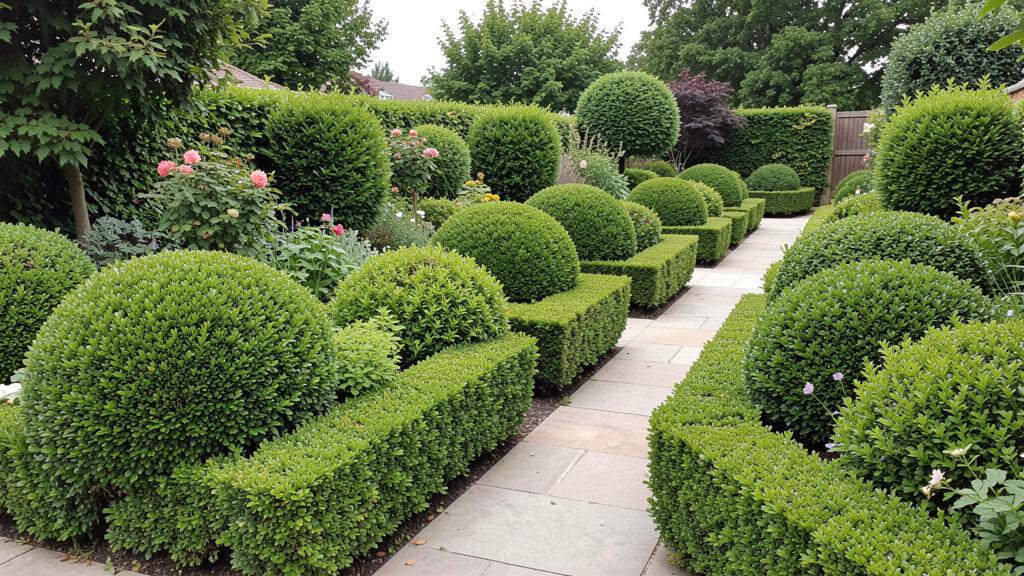
Stop guessing. Start designing. Transform your landscape with intentional shrub choices that create structure, beauty, and ecological harmony for decades—not just seasons.
Shrubs form the enduring skeleton of exceptional gardens, providing year-round structure, habitat, and visual rhythm that perennials and annuals alone cannot achieve. Yet countless landscapes suffer from impulsive selections—shrubs crammed against foundations, mismatched styles creating visual tension, or species struggling in unsuitable conditions. This comprehensive guide synthesizes established landscape architecture principles and horticultural knowledge into a systematic framework for selecting and positioning shrubs with precision. You’ll move beyond fragmented plant lists to understand why certain shrubs succeed in specific contexts, how to anticipate their mature form, and how to weave them into a cohesive, evolving ecosystem that rewards patience with enduring beauty.
Introduction: Why Shrubs Are Your Garden’s Silent Architects
Walk through celebrated public gardens—the structured borders of Sissinghurst Castle, the ecological plantings in Piet Oudolf’s designs, the contemplative spaces of Japanese stroll gardens—and a consistent pattern emerges: shrubs provide foundational rhythm. They act as quiet conductors orchestrating light, shadow, texture, and seasonal transition. Unlike fleeting annuals or slow-maturing trees, shrubs occupy the critical middle layer of the landscape, bridging groundcover and canopy. They soften architectural lines, define outdoor rooms, shelter wildlife, and offer multi-season interest when thoughtfully chosen.
Consider two suburban front yards. In one, a random assortment of boxwood, spirea, and hydrangea crowds the foundation, requiring constant pruning to avoid blocking windows. In the other, a deliberate sequence unfolds: low junipers frame the walkway, a sculptural Japanese maple anchors the corner, and a repeating trio of dwarf fothergilla provides spring fragrance, summer texture, and fiery autumn color without ever threatening the eaves. The distinction isn’t budget or space—it’s intentionality. This guide moves beyond “What shrubs grow here?” to “What role should these shrubs fulfill in this specific place, across decades of growth?” By embracing shrubs as permanent design elements rather than temporary decorations, you cultivate resilience, reduce long-term maintenance demands, and create a landscape that deepens in character with time.
The Four-Pillar Framework: Building Your Garden’s Structural Foundation
Professional designers rely on repeatable mental models ensuring every choice serves multiple purposes. This Four-Pillar Framework transforms complex decisions into a logical sequence. Master these pillars, and you’ll consistently select shrubs that harmonize with your space, purpose, and environment.
Pillar 1: Clarify Your Design Intent—Function Before Form
Before examining a single plant tag, define why you need shrubs. Ambiguity at this stage is a common source of placement challenges. Grab a notebook and answer these questions with specificity:
Define Primary Functions
List every practical need your shrubs must fulfill:
– Privacy: “Block neighbor’s second-story window view from my patio between 3–6 PM.”
– Windbreak: “Reduce northwest winter winds affecting the vegetable garden.”
– Erosion Control: “Stabilize the 15-foot slope beside the driveway after heavy rains.”
– Wildlife Support: “Provide dense nesting cover for songbirds and larval host plants for butterflies.”
– Architectural Enhancement: “Softening the sharp corner of the garage while complementing the home’s stone facade.”
– Seasonal Interest: “Ensure visual engagement every month—bark in winter, flowers in spring, berries in fall.”
A single shrub can serve multiple functions. Ilex verticillata (Winterberry Holly) offers winter berries for birds (wildlife), vibrant red fruit against snow (seasonal interest), and tolerates wet soil (erosion control on damp slopes). Documenting functions first helps avoid selections that look appealing at the nursery but struggle in your landscape’s reality.
Establish Your Garden’s Style Language
Shrubs should align with your home’s architecture and existing landscape. Mismatched styles create visual dissonance. Study these core style profiles:
| Style | Key Shrub Characteristics | Examples | Consider Avoiding |
|---|---|---|---|
| Formal/Traditional | Symmetrical shapes, clipped forms, evergreen structure | Boxwood (Buxus), Yew (Taxus), Privet (Ligustrum) | Wild, sprawling natives; irregular forms |
| Cottage Garden | Abundant flowers, relaxed forms, romantic texture | Lilac (Syringa), Rose of Sharon (Hibiscus syriacus), Spirea (Spiraea) | Rigid topiaries; sparse foliage plants |
| Modern/Contemporary | Architectural forms, bold textures, restrained palettes | Japanese Plum Yew (Cephalotaxus harringtonia ‘Prostrata’), Red Twig Dogwood (Cornus sericea), Boxleaf Euonymus (Euonymus japonicus) | Fussy flowers; chaotic multi-stemmed shrubs |
| Naturalistic/Native | Ecological function, habitat value, regional authenticity | Serviceberry (Amelanchier), Buttonbush (Cephalanthus occidentalis), Ninebark (Physocarpus opulifolius) | Non-native invasives; highly bred cultivars with low wildlife value |
| Mediterranean/Xeriscape | Drought tolerance, silver foliage, aromatic leaves | Rosemary (Salvia rosmarinus), Lavender (Lavandula), Rockrose (Cistus) | Water-loving species; delicate textures |
Application example: A homeowner in Santa Fe with an adobe-style home selected drought-tolerant Ceanothus (California Lilac) for its silvery foliage and blue spring blooms. It echoes regional flora, requires minimal water once established, and its informal mound complements the home’s organic lines—unlike rigid boxwoods, which would clash stylistically and demand excessive irrigation.
Set the Emotional Tone
What feeling should visitors experience? Serenity? Energy? Nostalgia? Shrubs shape atmosphere through form and movement:
– Tranquility: Low, flowing mounds (Dwarf Mugo Pine), subtle textures (Japanese Holly), restrained color palettes.
– Vibrancy: Bold contrasts (purple smoke bush against chartreuse juniper), dynamic forms (arching Forsythia branches).
– Nostalgia: Heritage plants like Lilac or Tree Peony (Paeonia suffruticosa) that evoke sensory memories.
– Wild Wonder: Native shrubs supporting pollinators and birds—celebrating ecological connection.
Document your intent: “My shrub border along the quiet reading nook should evoke calm through soft mounding forms, gentle rustling sounds in breeze, and subtle fragrance.” This clarity guides every subsequent choice.
Pillar 2: Conduct a Thorough Site Analysis—Listen to Your Land
Plants respond to the specific conditions of your soil, light, and microclimate. Skipping site analysis often leads to avoidable challenges. Become a landscape observer.
Map Sun and Shade with Precision
“Full sun” means 6+ hours of direct, unfiltered sun. Light quality shifts seasonally. Track patterns over one full day in late spring (when deciduous trees leaf out):
– Morning Sun (East): Gentle, cooler light. Ideal for hydrangeas, azaleas, camellias that may scorch in hot afternoon rays.
– Afternoon Sun (West/Southwest): Intense, heat-amplifying light. Requires heat/drought-tolerant species like Butterfly Bush (Buddleia), Russian Sage (Perovskia), or Juniper.
– Dappled Shade: Under open-branched trees (like Honey Locust). Suitable for Oakleaf Hydrangea (Hydrangea quercifolia) or Fothergilla.
– Deep Shade (North side, dense canopy): Challenging but possible. Seek Aucuba japonica, Leucothoe fontanesiana, or Sarcococca (Sweet Box).
Practical step: Use a compass app. Stand where you plan to plant at 9 AM, noon, and 3 PM. Note direction and duration of direct sun. Sketch this on a simple site map. A spot receiving intense western sun in July may be shaded by a neighbor’s tree in winter—critical for deciduous shrubs.
Decode Your Soil’s Story
Soil is a living ecosystem influencing plant health. Perform these accessible assessments:
1. Texture Test: Grab a moist handful. Squeeze:
– Sandy: Crumbles instantly. Drains fast, dries quickly. Consider: Amend with compost; select drought-tolerant shrubs (Lavender, Rosemary, Juniper).
– Clay: Forms a tight ball, sticky when wet. Poor drainage. Consider: Amend with gypsum and compost; avoid shrubs prone to root rot (standard Lilacs); choose Syringa pubescens subsp. patula ‘Miss Kim’ which tolerates heavier soil.
– Loam: Holds shape briefly, then crumbles. Ideal for most shrubs with minimal amendment.
2. pH Test: Use an inexpensive kit. Critical for acid-sensitive plants:
– pH < 6.0 (Acidic): Azaleas, Rhododendrons, Blueberries, Pieris thrive.
– pH 6.0–7.5 (Neutral): Most shrubs (Hydrangeas, Roses, Spirea) adapt well.
– pH > 7.5 (Alkaline): Lilacs, Viburnums, Cotoneaster excel. Note: Hydrangea macrophylla flower color shifts with pH (blue in acid, pink in alkaline)—a feature, not a flaw.
3. Drainage Test: Dig a 12″x12″ hole, fill with water. Time drainage:
– < 4 hours: Excellent drainage.
– 4–12 hours: Moderate (suitable for most).
– > 12 hours: Poor drainage. Consider: Raised beds or wet-site specialists (Buttonbush, Winterberry Holly, Summersweet Clethra alnifolia*).
Common challenge: Rhododendrons planted in heavy clay with alkaline pH often decline. Solution isn’t “better Rhododendrons”—it’s accepting site reality. Viburnum dentatum (Arrowwood) tolerates clay, neutral pH, provides berries for birds, and offers fall color. Working with the site saves resources and heartache.
Identify Microclimates—Your Secret Advantage
Your yard contains miniature climates. Leverage them:
– Heat Sinks: South-facing brick walls absorb heat, creating zones several degrees warmer. Marginally hardy shrubs (Fig Ficus carica, certain Crape Myrtles) may thrive here.
– Frost Pockets: Low-lying areas where cold air settles. Avoid early-blooming shrubs (Magnolia stellata) prone to frost damage.
– Wind Tunnels: Gaps between structures accelerate wind. Place windbreak shrubs (Arborvitae, Juniper) upwind of vulnerable areas.
– Protected Niches: North side of house, under eaves. Ideal for tender shrubs needing winter shelter (Camellias in Zone 6).
Document these on your site map. A “Zone 5” garden might successfully grow “Zone 6” shrubs in a protected microclimate—a nuance generic zone maps miss.
Measure Space with Mature Dimensions
This is frequently overlooked. Nursery tags list “mature size,” but interpret carefully:
– Width Matters Most: A shrub listed as “6 ft tall x 8 ft wide” will spread 4 feet in each direction from its center. Plant it 4 feet from a foundation? It will press against the wall at maturity.
– Calculate True Spacing: For a natural screen:
(Shrub Mature Width ÷ 2) + (Next Shrub Mature Width ÷ 2) = Minimum Center-to-Center Spacing
Example: Two Ilex crenata ‘Sky Pencil’ (2 ft wide each): (2÷2) + (2÷2) = 2 ft between centers. For a loose hedge: Add 1–2 ft extra.
– Account for Overhang: Will branches hang over a path? Subtract that overhang from usable width. A 10-ft-wide shrub planted 5 ft from a 3-ft path will block it when mature.
Visualize maturity: Drive stakes into the ground at calculated mature width points. Tie string between them. Stand back. Does this footprint feel right? Does it block a window? Crowd a walkway? This exercise helps avoid years of pruning frustration.
Pillar 3: Apply Plant Intelligence—Beyond the Pretty Picture
Nursery displays showcase peak bloom—a fleeting moment. True plant intelligence means understanding a shrub’s entire lifecycle, ecological role, and behavioral patterns.
Decode Growth Habits and Forms
Shrubs aren’t generic blobs. Their inherent architecture dictates placement:
| Growth Habit | Visual Character | Ideal Placement | Examples | Common Consideration |
|---|---|---|---|---|
| Upright/Columnar | Vertical emphasis, narrow footprint | Tight spaces, flanking entries, narrow screens | Juniperus scopulorum ‘Skyrocket’, Taxus baccata ‘Fastigiata’ | Ensure adequate vertical clearance; avoid under eaves |
| Mounding/Rounded | Soft, flowing silhouette | Foundation plantings, mixed borders, massing | Spiraea japonica ‘Gold Mound’, Potentilla fruticosa | Allow natural form; avoid over-pruning into balls |
| Arching | Graceful, fountain-like branches | Water features, gentle slopes, foreground of borders | Spiraea thunbergii, Deutzia gracilis | Position where branches won’t obstruct paths |
| Spreading/Suckering | Expands via underground runners | Erosion control on slopes, naturalized areas | Rosa rugosa, Cornus sericea (Red Twig Dogwood) | Plant away from lawns (may invade); contain with root barriers if needed |
| Vase-Shaped | Open center, branches curve upward | Specimen plantings, under small trees | Physocarpus opulifolius (Ninebark), Viburnum plicatum | Preserve open center; avoid crowding |
| Prostrate/Groundcover | Low, horizontal spread | Slopes, between pavers, under trees | Juniperus horizontalis ‘Wiltonii’, Euonymus fortunei ‘Coloratus’ | Verify light needs; many require sun |
Important nuance: Some shrubs change habit with age. Cornus florida (Flowering Dogwood) starts rounded but develops horizontal tiers. Hydrangea paniculata ‘Limelight’ begins vase-shaped but becomes rounded. Research growth trajectory over 10+ years.
Engineer Year-Round Interest—The Four-Season Strategy
Avoid the “June Glory, July Gone” trap. Build interest across all seasons:
– Spring: Flowers? Foliage color? (e.g., Kerria japonica ‘Pleniflora’—double yellow blooms)
– Summer: Flowers? Foliage texture/color? (e.g., Buddleia davidii—long bloom; Artemisia ‘Powis Castle’—silver foliage)
– Autumn: Leaf color? Berries? Bark? (e.g., Viburnum opulus ‘Roseum’—red berries; Acer griseum—peeling cinnamon bark)
– Winter: Bark? Structure? Berries? (e.g., Cornus sericea ‘Cardinal’—vibrant red stems; Ilex verticillata—persistent red berries)
Create a seasonal matrix: Sketch a table for your planned border. List shrubs down the left, seasons across the top. Mark where each provides interest. Aim for at least two seasons per shrub, ensuring something is notable every month. Example sequence:
– February: Red Twig Dogwood stems glow against snow
– April: Forsythia bursts with yellow
– June: Hydrangea blooms begin
– September: Oakleaf Hydrangea leaves turn crimson
– December: Winterberry Holly berries persist
This intentional sequencing creates a garden that tells a changing story.
Prioritize Ecological Value—Designing for Life
Shrubs are habitat engines. Maximize contribution:
– Pollinator Support: Choose species with accessible flowers. Clethra alnifolia (Summersweet) blooms late summer when few plants flower. Itea virginica (Virginia Sweetspire) offers fragrant summer flowers and fall color.
– Bird Resources: Berries should persist when needed. Winterberry Holly (Ilex verticillata) holds berries into winter—critical during scarcity. Avoid sterile cultivars that produce no fruit.
– Larval Host Plants: Lindera benzoin (Spicebush) hosts Spicebush Swallowtail butterflies. Viburnum species host Spring Azure butterflies.
– Layered Habitat: Combine dense evergreens (for shelter) with fruiting deciduous shrubs (for food). A thicket of Rosa virginiana (Wild Rose) provides thorny protection and winter hips.
Regional note: Consult local native plant societies or extension services. In the Pacific Northwest, Mahonia aquifolium (Oregon Grape) supports native bees. In the Southeast, Ilex vomitoria (Yaupon Holly) is a wildlife cornerstone. Regionally appropriate natives often require less water and support local ecosystems.
Evaluate Maintenance Realities Honestly
Match shrub needs to your available time:
– Pruning Frequency:
– Low: Most native shrubs, conifers, Viburnum, Ilex. Shape naturally; minimal pruning beyond deadwood removal.
– Moderate: Hydrangea macrophylla (deadhead spent blooms; protect buds in cold zones), Rosa (annual shaping).
– High: Formal hedges (Boxwood, Privet—require shearing 2–4x/year).
– Water Needs:
– Establishment Phase (1–2 years): All shrubs need consistent moisture.
– Mature: Drought-tolerant (Ceanothus, Artemisia, Juniperus) vs. moisture-lovers (Clethra, Itea, Hydrangea macrophylla). Group by water needs (“hydrozoning”).
– Pest/Disease Considerations: In humid regions, standard Buxus may suffer from Boxwood Blight—consider resistant alternatives like Ilex crenata (Japanese Holly). In deer-prone areas, prioritize less palatable species (Juniperus, Buxus, Ilex, Viburnum tinus).
Long-term perspective: A resilient native shrub requiring minimal care for 20+ years may offer better value than a high-maintenance option needing frequent intervention.
Pillar 4: Execute Strategic Placement—Weaving the Tapestry
Selection is only half the battle. Placement determines integration.
Master the Art of Layering
Create depth by arranging plants in horizontal layers, mimicking natural ecosystems:
1. Canopy Layer (Trees): Overhead framework.
2. Understory Layer (Large Shrubs): 6–15 ft tall. Placed beneath tree canopies or as specimens. Examples: Hamamelis (Witch Hazel), Stewartia pseudocamellia.
3. Shrub Layer (Medium Shrubs): 3–6 ft tall. Backbone of borders. Examples: Hydrangea, Viburnum, Spiraea.
4. Groundcover Layer: < 3 ft tall. Softens edges. Examples: Juniperus horizontalis, Pachysandra.
Placement guideline: Taller plants behind shorter ones from primary viewpoints (patio, windows). Avoid rigid “stair-step” lines. Allow some medium shrubs to peek through the understory layer for naturalism. Place one Fothergilla gardenii (4 ft) slightly forward of a Stewartia (15 ft) so its spring flowers are visible.
Calculate Spacing for Health and Aesthetics
Crowding invites disease and weak growth. Use these spacing guidelines:
| Purpose | Spacing Approach | Example |
|---|---|---|
| Natural Specimen | Mature Width + 1–2 ft clearance | Hydrangea arborescens ‘Annabelle’ (5 ft wide) → Plant 6–7 ft from structures |
| Informal Hedge | Mature Width x 0.75 | Two Viburnum dentatum (8 ft wide each) → Space centers 6 ft apart |
| Formal Hedge | Mature Width x 0.5 | Buxus sempervirens ‘Suffruticosa’ (3 ft wide) → Space centers 1.5 ft apart |
| Mass Planting (Groundcover) | Mature Width x 0.6 | Juniperus horizontalis ‘Wiltonii’ (6 ft wide) → Space centers 3.5 ft apart |
Important exception: For erosion control on slopes, plant slightly closer initially (mature width x 0.6) to accelerate soil stabilization, then thin later if needed. Prioritize air circulation—dense plantings in humid climates may increase disease risk.
Create Dynamic Groupings—The Power of Odd Numbers
Nature rarely plants in pairs or straight lines. Group shrubs in odd numbers (3, 5, 7) for visual rhythm:
– Repetition: Repeat the same grouping 3x along a property line for unity. Example: Three Ilex crenata ‘Sky Pencil’ at the driveway entrance, repeated midway, and at the garage.
– Drifts: For informal borders, plant 5–7 of the same medium shrub (like Spiraea japonica ‘Anthony Waterer’) in a gentle arc.
– Contrast Groups: Pair two complementary shrubs in a 3:2 ratio. Example: Three Cornus sericea ‘Cardinal’ (red stems) with two Itea virginica ‘Henry’s Garnet’ (arching form, red fall color).
Consider avoiding: Scattering single specimens of many different types (“botanical zoo” effect). Limit shrub varieties in a single border to 3–5 types for cohesion. A border with repeating groups of 3 types feels intentional.
Integrate Seamlessly with Other Plants
Shrubs shouldn’t exist in isolation. Create transitions:
– With Perennials: Place perennials in front of shrubs where foliage spills over the base, softening the edge. Example: Hosta or Heuchera at the base of Hydrangea. Avoid planting directly against the shrub trunk (traps moisture).
– With Trees: Understory shrubs should tolerate the tree’s root competition and light. Cornus florida (Flowering Dogwood) has shallow roots—plant shallow-rooted companions like Rhododendron or Pieris. Avoid deep cultivation under trees.
– With Hardscape: Leave a 6–12 inch gap between shrub foliage and foundations/walkways. Prevents moisture buildup, allows air circulation, and creates a maintenance edge. Use low groundcovers (like Vinca minor) in this gap.
Technique note: “See-through” planting. Place airy, open-branched shrubs (like Spiraea thunbergii or Deutzia gracilis) in front of solid elements (fence, dense hedge). Their delicate form allows glimpses beyond, creating depth.
The Fundamental Principle: A shrub’s true value unfolds across decades—its resilience through seasons, its contribution to ecological networks, and its role in a garden that deepens in character with time.
Addressing Common Garden Scenarios and Challenges
Apply the Four-Pillar Framework to frequent real-world situations.
Small Space Solutions: Impact in Compact Areas
Urban lots, courtyards, and narrow side yards demand precision.
– Vertical Strategy: Use columnar forms to maximize height without width. Juniperus scopulorum ‘Skyrocket’ reaches 15 ft tall but only 2 ft wide. Espaliered shrubs like Chaenomeles (Flowering Quince) trained against walls save space.
– Multi-Tasking Shrubs: Choose species delivering multiple seasonal interests. Fothergilla gardenii: fragrant spring flowers, blue-green summer foliage, fiery fall color, interesting winter branching.
– Strategic Mirroring: Place identical small shrubs (like Buxus sempervirens ‘Suffruticosa’) at opposite corners of a patio to create perceived symmetry and expand spatial perception.
– Container Options: For patios or balconies, select shrubs tolerant of root confinement: Skimmia japonica, Pieris japonica ‘Cavatina’, or dwarf conifers like Chamaecyparis pisifera ‘Filifera Aurea Nana’. Use containers minimum 18″ diameter with excellent drainage.
Illustrative example: A 10’x12′ north-facing Chicago courtyard with limited sun included:
1. Aucuba japonica ‘Mr. Goldstrike’ (tolerates deep shade, gold-speckled leaves for brightness)
2. Sarcococca hookeriana var. digyna (Sweet Box—winter fragrance, evergreen)
3. Hydrangea macrophylla ‘Endless Summer’ (blooms on old/new wood; placed where it caught 3 hours of morning sun)
Grouped in a triangular formation with Hosta and Hakonechloa grass at their base, they created a lush, multi-season vignette without overcrowding.
Creating Privacy Without Walls: Living Screens
Solid fences feel closed-in. Living screens offer softer, dynamic privacy.
– Layered Screen Approach: Combine three layers for year-round coverage:
– Back Layer (Evergreen): Ilex x meserveae ‘Blue Prince/Princess’ (dense, deer-resistant, berries)
– Middle Layer (Deciduous for Summer Screen): Cornus sericea ‘Cardinal’ (red winter stems, fast-growing)
– Front Layer (Seasonal Interest): Hydrangea arborescens ‘Invincibelle Spirit’ (pink summer blooms)
– Strategic Gaps: Leave intentional openings aligned with desirable views (a distant tree, garden feature). Privacy shouldn’t mean isolation.
– Height Targeting: For second-story window privacy, select shrubs reaching 10–15 ft (Viburnum tinus, Photinia x fraseri). For ground-level patio privacy, 6–8 ft shrubs suffice (Leycesteria formosa, Sambucus nigra ‘Black Lace’).
– Diversity Benefit: Planting multiple compatible species with similar mature heights increases resilience compared to monocultures.
Spacing note: For a dense screen, space shrubs at 60–75% of their mature width. Two Viburnum tinus (10 ft wide) spaced 6–7.5 ft apart will merge within several years. Planting them 10 ft apart leaves gaps longer.
Designing for Year-Round Interest: Ending the “Winter Desert”
Many gardens fade after November. Combat seasonal voids:
– Winter Bark Stars: Betula nigra ‘Heritage’ (River Birch—peeling cinnamon bark), Cornus sericea ‘Cardinal’ (vibrant red stems), Acer griseum (Paperbark Maple—cinnamon exfoliating bark). Place where low winter sun highlights them.
– Persistent Berries: Ilex verticillata (Winterberry Holly—requires male pollinator nearby), Callicarpa americana (American Beautyberry—violet berries persist after leaves drop).
– Evergreen Texture: Mix needle types: Juniperus chinensis ‘Torulosa’ (twisted form), Chamaecyparis obtusa ‘Nana Gracilis’ (soft feathery foliage), Buxus microphylla ‘Winter Gem’ (dense small leaves).
– Structural Forms: Corylus avellana ‘Contorta’ (Harry Lauder’s Walking Stick—twisted branches).
Practical exercise: Walk your garden on the winter solstice. Note bare spots. Next spring, add one winter-interest shrub to each void. Repeat annually. Within a few years, winter reveals subtle beauty.
Wildlife-Friendly Shrubberies: Cultivating Habitat
Transform your yard into a refuge:
– Nesting Density: Birds need dense, thorny thickets for safe nesting. Plant Rosa rugosa, Crataegus (Hawthorn), or Pyracantha in clusters of 5+ away from high-traffic areas.
– Sequential Food Sources:
– Early Spring: Amelanchier (Serviceberry—flowers for pollinators, berries for birds)
– Mid-Summer: Viburnum opulus (berries for Cedar Waxwings)
– Late Fall/Winter: Ilex verticillata (berries persist when food is scarce)
– Host Plant Priority: Research butterflies native to your area. In the Eastern US, plant Lindera benzoin (Spicebush) for Spicebush Swallowtails. In California, Ceanothus supports California Tortoiseshell butterflies.
– Water Source: Place shrubs near a shallow birdbath. Dense shrubs provide cover for birds drinking.
Note on cultivars: Single or semi-double flower forms often support pollinators better than complex double-flowered varieties, which may lack accessible nectar or pollen.
Budget-Conscious Selection: Smart Investing
Maximize impact without overspending:
– Start Small: Buy #1 or #3 container sizes (1–3 gallons) instead of large specimens. Smaller shrubs often establish faster, adapt better, and cost significantly less. A well-cared-for smaller plant may outperform a stressed larger one.
– Propagation Potential: Many shrubs root easily from softwood cuttings in summer: Hydrangea, Spiraea, Deutzia, Weigela. Take 4–6″ cuttings, dip in rooting hormone, place in potting mix under a plastic dome.
– Prioritize Backbone Plants: Invest in 2–3 key structural shrubs that define the space for decades. Fill in initially with less expensive perennials.
– Nursery Timing: End-of-season sales (late summer) may offer discounts. Ensure plants are healthy (no yellow leaves, pests), then plant immediately with extra mulch and water.
– Community Resources: Check local native plant society sales, Master Gardener plant exchanges, or municipal conservation programs.
Navigating Friction Points: When Reality Challenges the Plan
Even thoughtful planning meets obstacles. These solutions turn challenges into opportunities.
Problem Soil Solutions: Working With What You Have
Adapt to your soil’s reality:
– Heavy Clay:
– Amendment: Mix 3–4 inches of compost into the entire planting area (not just the hole). Add gypsum per package directions to improve structure.
– Plant Choices: Itea virginica, Clethra alnifolia, Viburnum dentatum, Cornus sericea.
– Technique: Plant shrubs slightly higher than surrounding soil (1–2 inches). Mound soil gently around roots to prevent crown rot.
– Sandy Soil:
– Amendment: Incorporate 3–4 inches of compost or well-rotted manure. Add coconut coir to improve water retention.
– Plant Choices: Juniperus, Artemisia, Salvia rosmarinus, Ceanothus.
– Technique: Create shallow basins around plants to capture rainwater. Mulch heavily (3 inches) with wood chips.
– Alkaline Soil (High pH):
– Workaround: Grow acid-loving shrubs like Azaleas in containers with acidic potting mix. Or select alkaline-tolerant species: Syringa (Lilac), Viburnum tinus, Cotoneaster.
– Long-term: Top-dress annually with elemental sulfur (follow package rates) to gradually lower pH over multiple years.
Soil testing recommendation: Contact your county extension office. For a modest fee, they provide precise pH and nutrient analysis with tailored amendment suggestions. Informed decisions prevent wasted effort.
Deer and Pest Resistance Strategies: Protecting Your Investment
No shrub is 100% deer-proof (starving deer eat almost anything), but these strategies reduce damage:
– Deer-Resistant Species (Based on university research):
– Generally Avoided: Juniperus, Buxus, Ilex, Viburnum tinus, Pieris, Spiraea, Potentilla, Buddleia
– Sometimes Browsed: Hydrangea paniculata, Weigela, Forsythia (especially new growth)
– Often Targeted: Rhododendron, Azalea, Taxus (yew)
– Physical Deterrents:
– Tree Guards: Spiral plastic guards for young trunks (remove after 2 years).
– Netting: Drape lightweight netting over prized shrubs during vulnerable periods.
– Repellent Rotation: Alternate spray types (e.g., egg-based, hot pepper) every few weeks. Reapply after rain.
– Strategic Placement: Plant deer favorites close to high-traffic areas (near doors, patios). Deer often avoid open, exposed zones.
For rabbits: Surround base of young shrubs with 2-foot-tall chicken wire fencing buried 6 inches deep. Remove after 2 years when bark toughens.
Managing Invasive Species Concerns: Choosing Responsibly
Some popular shrubs escape cultivation, damaging natural ecosystems. Verify before planting:
– Species to Research (Region-Dependent):
– Lonicera maackii (Amur Honeysuckle)
– Rhamnus cathartica (Common Buckthorn)
– Berberis thunbergii (Japanese Barberry)—restricted in some areas
– Euonymus alatus (Burning Bush)—regulated in many regions
– Reliable Resources:
– National Invasive Species Information Center (invasivespeciesinfo.gov)
– Your state’s Department of Natural Resources invasive plant list
– Local native plant society recommendations
– Thoughtful Substitutes:
– Instead of Burning Bush: Itea virginica ‘Henry’s Garnet’ (similar fall color, native, wildlife value)
– Instead of Japanese Barberry: Viburnum trilobum ‘Wentworth’ (American Cranberrybush—red berries, fall color, native)
– Instead of invasive Butterfly Bush (Buddleia davidii): Buddleia alternifolia (less invasive) or native Asclepias tuberosa (Butterfly Weed)
Choosing non-invasive species protects wildlands and demonstrates environmental stewardship.
Adapting to Climate Extremes: Building Resilience
Design for increasing weather variability:
– Drought Resilience:
– Hydrozoning: Group drought-tolerant shrubs together away from irrigation heads.
– Soil Prep: Amend planting areas with compost to increase water-holding capacity.
– Mulch: 3–4 inches of arborist wood chips reduces evaporation significantly. Keep mulch 3 inches away from trunks.
– Species Choices: Ceanothus, Artemisia, Juniperus, Rosa rugosa, Lavandula.
– Heat Waves:
– Afternoon Shade: Plant heat-sensitive shrubs where they receive morning sun but afternoon shade.
– Wind Protection: Use taller shrubs or structures to shield delicate plants.
– Hydration: Water deeply before a forecasted heatwave. Moist soil stays cooler.
– Unpredictable Frosts:
– Placement: Avoid early bloomers in frost pockets (low-lying areas).
– Microclimate Leverage: Grow marginally hardy shrubs against south-facing walls.
– Protection: Keep frost cloth on hand. Drape loosely over vulnerable shrubs before sunset when frost is forecast. Remove by mid-morning.
Long-term perspective: Selecting shrubs rated for one zone colder than your location may provide resilience against unusually harsh winters.
Correcting Past Placement Mistakes: Compassionate Editing
Existing landscapes often contain misplaced shrubs. Solutions exist:
– Overgrown Foundation Shrubs:
– Renewal Pruning: For multi-stemmed shrubs like Spiraea or Weigela, cut 1/3 of oldest stems to ground level in late winter. Repeat over 3 years.
– Replacement: Remove entirely. Replace with appropriately sized species. Ilex crenata ‘Soft Touch’ (3 ft) instead of standard Boxwood (6+ ft).
– Crowded Groupings:
– Transplant: In early spring or fall, move the healthiest specimens to better locations. Water deeply after transplanting.
– Selective Removal: Cut the weakest or most obstructive shrubs at ground level. Allow remaining plants to fill the space.
– Wrong Plant, Wrong Place:
– Relocate: If feasible (small size, suitable new site), transplant during dormancy.
– Repurpose: A sun-loving shrub struggling in shade might thrive in a newly cleared sunny spot.
– Accept and Adapt: Sometimes removal is the most responsible choice. Replace with a species truly suited to the site. Letting go of a struggling plant reflects thoughtful stewardship.
Industry insight: Landscape projects often allocate resources for editing existing plantings. Removing misplaced plants is as valuable as adding new ones.
Your Questions, Answered
Q: How do I know if a shrub is truly hardy for my zone? Nursery tags seem unreliable.
A: USDA Hardiness Zones indicate average annual extreme minimum temperature. However, microclimates, soil drainage, wind exposure, and snow cover significantly impact survival. For marginally hardy shrubs (e.g., Zone 7 plant in Zone 6):
– Plant in a protected microclimate (south wall)
– Apply winter mulch after ground freezes
– Avoid late-summer fertilizing (promotes tender growth)
– Choose cultivars noted for cold tolerance (e.g., Hydrangea macrophylla ‘Endless Summer’ series blooms on new wood if buds freeze)
Consult your local cooperative extension office—they provide region-specific guidance beyond generic maps.
Q: My hydrangeas never bloom. What am I doing wrong?
A: Bloom failure usually stems from one of three causes:
1. Type Mismatch: Hydrangea macrophylla (Bigleaf) blooms on old wood. Late spring frosts kill flower buds in cold zones. Solution: Choose reblooming types (‘Endless Summer’) or Hydrangea paniculata (blooms on new wood).
2. Pruning Timing: Pruning old-wood hydrangeas in fall/winter removes next year’s buds. Prune immediately after flowering in summer.
3. Excess Nitrogen: Too much fertilizer promotes leafy growth over flowers. Use balanced or phosphorus-rich fertilizer.
Also ensure adequate sun—most hydrangeas need 4+ hours of morning sun for best blooming.
Q: Are native shrubs always better than non-natives?
A: “Better” depends on your goals. Natives generally offer superior wildlife value, require less water once established, and resist local pests. However:
– Non-native considerations: Some non-invasives provide unique aesthetics (Japanese Maple), extended bloom times (sterile Butterfly Bush cultivars), or disease resistance where natives struggle.
– Critical distinction: Prioritize non-invasive non-natives. Avoid species documented as invasive in your region.
– Balanced approach: Use natives as the ecological backbone (majority of plantings), complementing with carefully selected non-invasives for specific design needs. Consult native plant societies for region-specific guidance.
Q: How close can I plant shrubs to my house foundation?
A: Maintain clearance equal to half the shrub’s mature width. For a shrub maturing at 6 ft wide, keep its center at least 3 ft from the foundation. This helps prevent:
– Moisture buildup against siding
– Pest pathways into the house
– Blocked windows or vents
– Constant pruning stress
For tight spaces, select naturally compact cultivars: Ilex crenata ‘Soft Touch’ (3 ft), Buxus microphylla ‘Winter Gem’ (2–3 ft), or Juniperus communis ‘Compressa’ (2 ft tall, 1 ft wide).
Q: What’s a common challenge beginners face with shrubs?
A: Overlooking mature size. Planting based on current nursery size rather than eventual footprint leads to overcrowding, blocked views, and plant stress. Always research mature dimensions before purchasing. Visualize the space using stakes and string. Patience during planning prevents years of frustration. Remember: A well-placed shrub needs minimal intervention; a misplaced shrub demands constant correction.
Q: Can I plant shrubs in summer? I keep hearing “only spring or fall.”
A: Spring (after last frost) and fall (6+ weeks before first frost) are ideal for root establishment. However, summer planting is possible with attentive care:
– Choose container-grown plants
– Plant on cloudy days or late afternoon
– Water deeply at planting, then consistently for several weeks
– Apply 3 inches of mulch (keep away from trunk)
– Provide temporary shade cloth for first few weeks in hot climates
Avoid planting during heatwaves. If possible, wait. But if summer planting is necessary, commit to consistent watering during establishment.
Q: How do I create a low-maintenance shrub border?
A: Low-maintenance means predictable, minimal effort. Follow this approach:
1. Site Match: Choose shrubs suited to your soil, light, and climate.
2. Right Size: Select naturally compact cultivars that won’t outgrow the space.
3. Group by Needs: Hydrozone plants with similar water requirements.
4. Mulch Generously: 3 inches of arborist wood chips suppresses weeds and retains moisture.
5. Limit Varieties: 3–4 shrub types repeated create cohesion and simplify care.
Examples: Ilex crenata, Viburnum tinus, Juniperus, Spiraea japonica ‘Anthony Waterer’, Potentilla fruticosa.
Q: Why do some shrubs have berries one year and none the next?
A: Several factors influence fruiting:
– Pollination: Many shrubs require cross-pollination (e.g., Winterberry Holly needs a male plant nearby).
– Pruning Timing: Pruning spring-blooming shrubs in late winter removes flower buds. Prune after flowering.
– Weather: Late frosts kill blossoms; drought stresses plants.
– Age: Young shrubs may not fruit for 2–3 years.
– Nutrition: Excess nitrogen promotes leaves over flowers/fruit.
For reliable berries, select self-fruitful cultivars where available and avoid excessive pruning.
Q: Are coffee grounds good for acid-loving shrubs like azaleas?
A: Use caution. While slightly acidic, coffee grounds:
– Can form a water-repellent crust when applied thickly
– May inhibit root growth in high concentrations
– Decompose slowly, temporarily affecting nitrogen availability
Recommended approach:
– Test soil pH first (target 4.5–6.0 for azaleas/rhododendrons)
– Amend with elemental sulfur if needed per test recommendations
– Use pine needle mulch or composted oak leaves—they gently acidify as they decompose
– Apply fertilizer formulated for acid-lovers
Coffee grounds in small amounts mixed into compost are beneficial; direct application is not generally recommended.
Q: How do I protect newly planted shrubs during their first winter?
A: First-year plants are vulnerable. Implement these steps after several hard frosts (when soil is cold but not frozen):
1. Water deeply one last time before ground freezes.
2. Apply 3–4 inches of mulch (shredded bark, wood chips) in a wide ring. Keep mulch 3 inches away from the trunk.
3. Protect from wind/sunscald: Wrap trunks of thin-barked shrubs with tree wrap. For broadleaf evergreens (Rhododendron, Ilex), erect a burlap screen on the windward side.
4. Avoid fall fertilizing: Promotes tender growth susceptible to cold damage.
5. Do not prune in fall—wait until spring growth begins.
Remove protective wraps/screens in early spring as temperatures moderate.
Conclusion: Your Path to a Cohesive, Evolving Garden
You now hold a framework that transcends plant lists—a system for thinking like a garden architect. The journey of shrub selection and placement is not about perfection on day one. It’s about cultivating intentionality, observing how plants respond to your unique site, and making thoughtful adjustments over time. Remember the core pillars: clarify your intent before visiting the nursery; listen deeply to your land’s conditions; choose plants with intelligence about their lifelong behavior; and place them with strategic purpose. When human design aligns with ecological wisdom, your garden becomes more than decoration. It becomes a living legacy—a sanctuary for wildlife, a source of seasonal wonder, and a testament to patient, respectful stewardship.
Recap: Three Foundational Principles
- Design with Mature Dimensions: Visualize the shrub at 10 years old, not nursery size. Space accordingly.
- Match Plant to Place Relentlessly: A struggling shrub often reflects a mismatch with site conditions. Honor your soil, light, and climate.
- Prioritize Multi-Season Value: Select shrubs that contribute beauty, function, or habitat across multiple seasons. Build a garden that rewards year-round attention.
The 24-Hour Rule: Your Immediate Next Step
Within the next day, take one concrete action:
– If planning new plantings: Grab stakes and string. Map the mature footprint of one shrub you’re considering. Stand back. Does it feel right?
– If editing existing plantings: Identify one misplaced shrub causing ongoing frustration. Research one suitable replacement species for its location.
– For all gardeners: Walk your garden at dawn or dusk tomorrow. Note one spot lacking winter interest. Jot down one shrub that could fill that void.
This tiny action bridges knowledge and implementation. Momentum begins with a single, deliberate step.
The Big Picture: Gardens as Living Systems
Shrubs teach profound lessons in patience and interconnection. They remind us that true beauty unfolds gradually—a dogwood’s bark deepening with age, a viburnum thicket sheltering generations of birds, the quiet satisfaction of watching a thoughtfully placed shrub mature into its intended role. In a world of instant gratification, the garden invites us to participate in slower, deeper rhythms. By selecting and placing shrubs with care, you’re not just landscaping. You’re cultivating resilience—for the soil, for wildlife, and for your own spirit. You’re leaving a living inheritance that deepens in character and value with every passing season. Start where you are. Use what you have. Do what you can. Your garden’s backbone awaits its architect.
Explore Our Complete Garden Design System:
Soil Preparation Mastery: From Compacted Clay to Living Loam | Year-Round Garden Color Guide: A Seasonal Planting Calendar | The Art of Layering: Creating Depth and Dimension in Plantings | Native Shrub Directory: Region-by-Region Wildlife Champions | Pruning with Purpose: When, Why, and How to Shape Your Shrubs | Water-Wise Landscaping: Smart Irrigation and Drought-Resilient Plantings | Garden Problem Solver: Diagnosing and Fixing Common Plant Issues