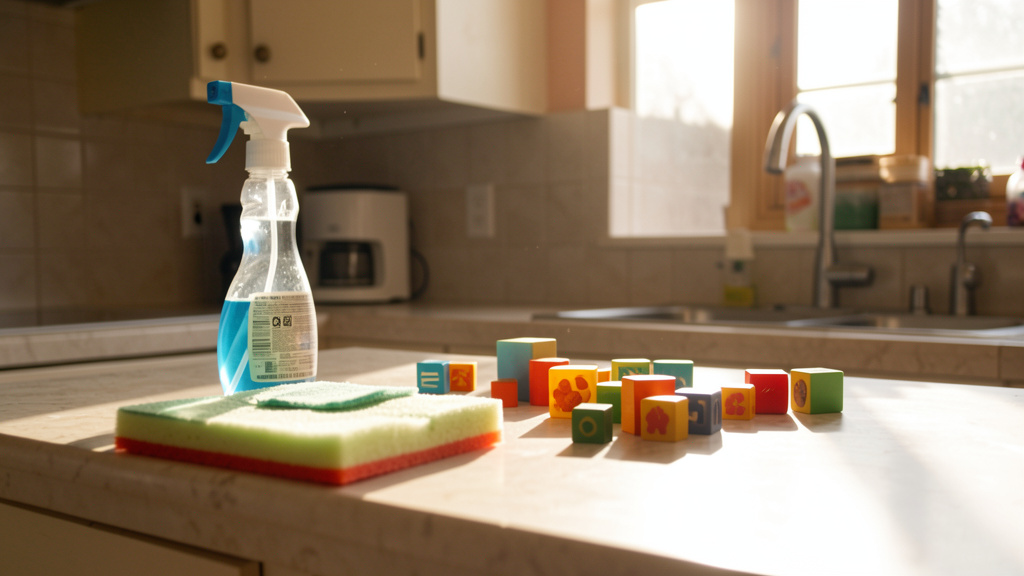
A Complete, Science-Informed Framework for Creating a Truly Secure Cleaning Routine—From Product Selection to Emergency Preparedness
Creating a spotless home shouldn’t mean gambling with your child’s curious fingers or your pet’s sensitive paws. True cleanliness harmonizes hygiene with holistic safety—where every wiped surface, stored bottle, and chosen ingredient actively protects the most vulnerable members of your household. This guide delivers an actionable, room-by-room system grounded in pediatric safety considerations, veterinary toxicology insights, and real-world practicality. You’ll discover which ingredients to embrace (and avoid), how to adapt techniques for toddlers versus curious cats, and critical emergency steps most guides overlook—transforming cleaning from a source of anxiety into a confident, protective ritual.
Introduction: Redefining “Clean” for Modern Families
For generations, “clean” meant gleaming surfaces and fresh scents. Today’s families rightly demand more: truly clean means safely clean. It means a floor your toddler can crawl on without residue concerns, countertops your dog won’t lick with harmful consequences, and cabinets where curiosity won’t lead to crisis. This shift isn’t about perfectionism—it’s about informed intentionality.
Current safety guidance from pediatric health organizations emphasizes that children under six are uniquely vulnerable due to hand-to-mouth behavior, developing organ systems, and proportionally higher exposure per body weight. Simultaneously, animal safety resources note frequent pet exposures to household cleaners—many involving products perceived as “mild,” like certain citrus-based degreasers or essential oil blends. Yet most cleaning advice remains siloed: parenting resources rarely incorporate veterinary toxicology perspectives; pet-focused content seldom addresses toddler-proofing storage. This guide bridges that gap. Synthesizing protocols referenced by EPA Safer Choice criteria, poison control resources, and veterinary behavior insights, we present a unified framework where human and animal safety considerations reinforce each other. This isn’t just another list of DIY recipes. It’s a comprehensive ecosystem approach—because protecting your family means seeing the whole picture, not just the spray bottle in your hand.
The SAFE Cleaning Framework: A Four-Pillar System for Lasting Security
Imagine a cleaning routine that works with your family’s rhythms, not against them. The SAFE Framework transforms safety from an afterthought into the foundation of every swipe, spray, and store. SAFE is an actionable acronym representing four interconnected pillars: Select, Apply, Finish, Emergency-Prepared. Each pillar contains layered strategies designed for real homes—where interruptions happen, budgets matter, and “perfect” isn’t practical. This system has been structured around common household scenarios: the toddler who opens lower cabinets during cleanup, the cat who investigates damp floors, the rushed evening when shortcuts tempt. By anchoring your habits in these four pillars, you build resilience into your routine. Let’s build that foundation together.
Pillar 1: SELECT – Choosing Products and Tools with Precision
Selection is your most powerful safety lever. What you bring into your home shapes your household’s exposure profile. This goes far beyond “natural vs. chemical.” True selection intelligence means reading labels critically, understanding ingredient implications, and matching tools to your household’s specific vulnerabilities.
Why Selection Matters More Than You Think
Research published in environmental health journals has noted that residue from certain common disinfectant compounds may persist on surfaces and correlate with respiratory sensitivity in young children. Veterinary literature consistently identifies specific ingredients—like phenols in some pine-scented cleaners—as hazardous to cats due to metabolic differences. Selection isn’t preference; it’s physiological compatibility. Choosing thoughtfully eliminates hazards at the source, reducing the cognitive load of constant vigilance later. It’s the difference between worrying during cleanup and feeling confident after.
How to Decode Labels Like a Safety Professional
Move beyond vague terms like “eco-friendly” or “plant-based.” These are marketing descriptors, not safety guarantees. Instead, prioritize these concrete markers:
– Third-Party Certifications: Look for EPA Safer Choice (indicates full ingredient disclosure and human/ecological safety screening), Green Seal (GS-37 for cleaners), or Ecologo. These require rigorous independent verification.
– Ingredient Transparency: Brands committed to safety list all ingredients. Avoid products listing only “fragrance/parfum”—this can mask compounds of concern. Opt for brands specifying exact components (and verify pet compatibility separately).
– Child-Resistant Packaging: While mandated for certain product types under U.S. CPSC guidelines, not all cleaners qualify. Prioritize bottles with push-and-turn caps or squeeze triggers requiring deliberate adult force. Test the mechanism before purchasing.
– Concentrate vs. Ready-to-Use: Concentrates reduce plastic use but increase dosing complexity. If choosing concentrates, use pre-measured caps and store only in original containers. Never transfer to unmarked bottles—a documented risk factor in exposure incidents.
The Critical Ingredient Safety Spectrum: What’s Truly Safe?
Not all “natural” ingredients are universally safe, and not all synthetics pose equal risk. Context, concentration, and household members dictate appropriateness. Below is a safety spectrum reflecting veterinary and pediatric considerations. Always consult your veterinarian before introducing new products around pets, especially birds, reptiles, or cats.
| Ingredient | Human Safety (Children) | Pet Safety Notes | Best Use Case | Critical Caution |
|---|---|---|---|---|
| White Vinegar | Generally Safe | Safe for dogs; avoid around birds (fumes) | Glass, sealed stone, deodorizing | Never use on natural stone (etches surface); dilute 1:1 with water |
| Baking Soda | Very Safe | Non-toxic; safe for all pets | Scouring sinks, deodorizing carpets | Avoid inhalation of fine powder (respiratory irritant) |
| Castile Soap | Very Safe (diluted) | Safe for dogs; use unscented around cats | All-purpose surfaces, floors | Rinse thoroughly—residue attracts dirt/pets |
| Hydrogen Peroxide (3%) | Safe with ventilation | TOXIC TO CATS; use only in pet-free zones | Disinfecting grout, stain removal | Never mix with vinegar (creates peracetic acid) |
| Citrus Oils | Moderate risk (skin) | HIGHLY TOXIC TO CATS; avoid entirely | Avoid in homes with felines | Even diffused oils pose risk; residue on floors |
| Tea Tree Oil | Moderate risk | EXTREMELY TOXIC TO CATS & BIRDS | Avoid completely in multi-species homes | As little as small amounts can cause severe reactions |
| Quaternary Ammonium | Moderate risk (asthma) | Toxic to birds; caution with reptiles | Avoid in homes with sensitive species | Leaves persistent residue; associated with respiratory sensitivity |
| Enzyme Cleaners | Very Safe | Generally safe; verify no added fragrances | Pet accidents, organic stains | Ensure no alcohol or phenol additives |
Table: Ingredient Safety Spectrum – Always verify specific product formulations. When in doubt, contact the manufacturer directly with your household composition.
Common Selection Mistakes (and How to Avoid Them)
- Mistake: Assuming “unscented” means fragrance-free.
Reality: “Unscented” often means masking agents were added. Choose “fragrance-free” explicitly. - Mistake: Using human-safe DIY recipes around pets.
Reality: A baking soda/vinegar mix safe for toddlers may contain citrus oil toxic to cats. Always cross-reference with both human and pet safety criteria. - Mistake: Prioritizing disinfection over cleaning.
Reality: For most home surfaces, removing germs (via soap and mechanical action) is safer and more effective than killing them with harsh biocides. Reserve disinfectants for high-risk zones (see Room-by-Room Protocols).
Selection Pathways: Ideal, Budget, and Transitional
- Ideal Pathway: Build a core kit of EPA Safer Choice-certified products (all-purpose, glass, floor) + dedicated pet-safe enzyme cleaner. Store in original child-resistant containers. Why it works: Maximizes safety transparency, minimizes decision fatigue during busy days.
- Budget Pathway: Create two master solutions:
- All-Purpose: 1 cup distilled water + 1 cup white vinegar + 1 tbsp castile soap (unscented) in a spray bottle. Label clearly.
- Scouring Paste: Baking soda + water paste stored in a sealed jar.
Critical: Use only on compatible surfaces (test hidden area first). Never add essential oils. Store solutions out of reach—DIY lacks child-resistant packaging. - Transitional Pathway: If replacing conventional cleaners feels overwhelming, start with high-contact zones: swap your kitchen counter spray and floor cleaner first. Keep a “transition log” noting which swaps felt seamless—build momentum gradually.
The Fundamental Principle: Safety isn’t found in a single “perfect” product—it’s engineered through intentional selection that respects the unique biology of every being in your home. Your choices here create the foundation for every subsequent step.
Pillar 2: APPLY – Executing Cleaning with Situational Awareness
How you apply cleaners matters as much as what you use. Application is where theory meets reality: the toddler tugging your leg, the dog circling your feet, the timer buzzing for dinner. Safe application transforms potential hazards into controlled, predictable actions. It’s about technique, timing, and environmental awareness—not just elbow grease.
Why Application Technique is a Safety Multiplier
Residue is a silent consideration. A floor wiped with diluted castile soap but not rinsed may leave a film pets lick or children touch before washing hands. Over-spraying a countertop creates aerosolized particles a crawling infant might inhale. Conversely, proper technique—like using microfiber cloths that trap particles—can significantly reduce chemical reliance. Application is where you convert product safety into actual safety through mindful execution.
The Pre-Clean Safety Sweep: 60 Seconds That Prevent Accidents
Before uncapping a single bottle, conduct this non-negotiable sweep:
1. Remove Vulnerable Beings: Gently guide children to a supervised activity (playpen, high chair with snack). Confine pets to a separate room with water and a toy. Never rely on “just a minute”—accidents happen in seconds.
2. Clear the Zone: Pick up toys, pet bowls, chew toys, or loose items that could trap cleaner residue or become contaminated.
3. Ventilate Proactively: Open windows or turn on exhaust fans before starting. Airflow dilutes fumes instantly.
4. Gather Tools Strategically: Place all needed supplies within arm’s reach before beginning. Avoid mid-task trips that leave open cleaners unattended.
5. Secure Your Workspace: Place a visual barrier (baby gate, closed door) between the cleaning zone and high-traffic areas.
6. Set a Timer: For tasks over 10 minutes (e.g., oven cleaning), set a visible timer. Prevents distraction-induced overspray or forgotten wet floors.
This sweep takes less than a minute but significantly reduces common exposure scenarios. Think of it as “buckling your seatbelt” before driving—non-negotiable protocol.
Surface-Specific Application Protocols
Not all surfaces require the same approach. Tailor technique to material and exposure risk.
-
Floors (High Pet/Child Contact):
Ideal: Damp-mop with microfiber pad + diluted castile soap solution. Change water frequently. Rinse with clean water pass. Dry thoroughly with fan or open windows.
Why: Prevents sticky residue pets track or children contact. Microfiber lifts dirt without harsh chemicals.
Critical Mistake: Using “no-rinse” floor cleaners that leave film. Even “pet-safe” versions can attract licking if residue remains. Always rinse.
Pet-Specific Tip: For homes with dogs who lick floors, add a final pass with plain water after cleaning. Test dryness by pressing palm to floor—no dampness should transfer. -
Countertops & Tables (Food Contact Zones):
Ideal: Spray cleaner onto cloth first, not surface. Wipe surface. Rinse cloth in clean water. Wipe again to remove residue. Air dry.
Why: Prevents overspray into food prep areas or adjacent items (spice jars, fruit bowls). Double-wipe ensures no cleaner film remains where hands or food contact occurs.
Critical Mistake: Spraying directly over open food containers or near pet food bowls. Always move bowls away before cleaning nearby surfaces.
Toddler Tip: Clean high chairs after meals using the double-wipe method. Pay special attention to tray seams where residue hides. -
Bathrooms (Moisture + Chemical Risk):
Ideal: Use enzyme cleaner for organic matter (soap scum, mildew). For disinfection (if needed), use hydrogen peroxide-based spray only on toilet exterior/base—never where pets drink. Ventilate aggressively.
Why: Enzymes break down grime biologically without harsh fumes. Avoids chlorine bleach (toxic fumes, dangerous if mixed with urine ammonia).
Critical Mistake: Leaving toilet lid up while cleaning. Always close lid before spraying to contain aerosols. Store toilet brushes in closed containers.
Pet Warning: Never use toilet bowl cleaners with drop-in tablets. Curious pets drinking from toilets face severe chemical risks. Opt for manual cleaning only. -
Windows & Glass:
Ideal: Vinegar-water solution (1:1) applied with squeegee or crumpled newspaper. Wipe edges with dry cloth.
Why: Avoids ammonia-based sprays (respiratory irritant for children, toxic to birds). Newspaper leaves zero lint.
Critical Mistake: Cleaning windows on windy days with pets/children nearby—overspray drifts onto fur or skin. Choose calm days or clean from inside only.
Tool Intelligence: Choosing and Using Equipment Safely
- Microfiber Cloths: Color-code them (e.g., red for bathrooms, blue for windows, green for kitchens). Wash separately in fragrance-free detergent. Replace when frayed—trapped particles reduce effectiveness.
- Spray Bottles: Use trigger sprayers with adjustable nozzles (mist vs. stream). Mist minimizes airborne particles. Never use glass bottles—they can shatter if knocked over.
- Mops: Flat-head microfiber mops with replaceable pads prevent cross-contamination. Avoid string mops—they trap moisture.
- Vacuums: HEPA-filter models capture dander, dust mites, and residues. Empty canisters/bags outdoors to avoid redistributing particles indoors.
- Gloves: Nitrile gloves (not latex) protect your skin and prevent transferring residues to doorknobs or light switches. Keep a dedicated pair only for cleaning.
Application Adaptations for Household Realities
- When You’re Interrupted: If a child cries or pet needs attention, stop immediately. Cap all bottles. Wipe hands. Secure the area (close door). Resume only when the zone is clear again. Never leave open cleaners unattended.
- Cleaning with Kids Present (Ages 3+): Turn it into supervised learning. “Let’s wipe the table together! You hold the dry cloth, I’ll use the wet one.” Assign safe tasks: sorting toys pre-clean, dusting low shelves with a dry sock on hand. Reinforces safety as shared responsibility.
- Multi-Pet Households: Clean litter boxes last, in a well-ventilated area. Use unscented, low-dust litter. Never clean near food/water bowls—move bowls first. For bird owners: avoid all aerosol sprays, vinegar fumes, and strong scents near cages. Clean cages in sinks away from food prep areas.
Pillar 3: FINISH – The Critical Post-Cleaning Safety Lockdown
The job isn’t done when the surface shines. The “Finish” phase—securing tools, verifying dryness, resetting the space—is where temporary safety becomes lasting security. This is the most overlooked pillar, yet where many incidents occur: a forgotten spray bottle, a damp floor a dog slips on, residue on a baseboard a toddler touches then rubs their eyes. Finishing transforms cleaning from a task into a closed-loop system.
The 5-Minute Safety Reset Protocol
Implement this sequence every time, without exception:
1. Rinse and Dry High-Contact Zones: Wipe baseboards, cabinet fronts, and chair legs with a damp cloth followed by dry cloth. These accumulate residue pets rub against or children touch while cruising/walking.
2. Verify Surface Dryness: Press palm firmly on cleaned floors and countertops. No moisture should transfer. Use fans or open windows to accelerate drying if needed. Critical for pets: Damp floors = slipping hazard + licking temptation.
3. Tool Decontamination: Rinse spray bottles, mop buckets, and cloths thoroughly with hot water. Hang cloths to dry completely—damp storage encourages microbial growth. Store mops upright in well-ventilated areas.
4. Secure All Products: Return every cleaner to its designated high cabinet immediately. Do not leave bottles “temporarily” on counters or under sinks.
5. Final Zone Sweep: Walk through the cleaned area slowly. Check for:
– Spills under appliances
– Dropped caps or tools
– Toys/pet items left in cleaning zone
– Open cabinet doors
– Lingering strong odors (indicates inadequate ventilation)
This protocol takes five minutes but dramatically reduces post-cleaning risks. Frame it as “closing the loop”—you wouldn’t leave a stove burner on after cooking; don’t leave cleaning hazards active.
Storage Solutions That Prevent Curiosity-Driven Accidents
Storage isn’t just “putting things away.” It’s engineering your environment to outsmart natural curiosity. Children as young as 9 months can open standard cabinets; dogs learn to nudge handles; cats leap to countertops.
- The Two-Lock Rule for High-Risk Zones:
Under-sink cabinets (a frequent location for exposure incidents) require two barriers: - Primary: Child safety latch (adhesive or magnetic) on the cabinet door.
-
Secondary: Individual lockable box or high shelf inside the cabinet for concentrated cleaners.
Why two layers? Toddlers may master single latches through observation. Redundancy adds critical protection. Test latches monthly—they weaken with use. -
Vertical Zoning Strategy:
- Zone 1 (Floor to 3 ft): ZERO cleaners. Store only pet toys, child-safe items.
- Zone 2 (3 ft to 6 ft): Daily-use safe items (dish soap, hand soap).
-
Zone 3 (Above 6 ft): All cleaning products, even “natural” ones. Use step stools only when needed, stored separately.
Pet Adaptation: For counter-surfing dogs or agile cats, treat all countertops as Zone 1. Never leave cleaners unattended on surfaces. -
Portable Cleaning Caddy Safety:
If using a caddy: - Choose one with a locking lid or secure straps.
- Never leave it unattended anywhere—even mid-task.
- Store it inside a locked cabinet when not in active use.
-
Line the bottom with absorbent pads to contain leaks.
-
Garage/Shed Storage Protocol:
If storing bulk cleaners here: - Use a dedicated, lockable plastic bin (not cardboard—pets may chew).
- Place bin on high shelf, away from pet food or children’s outdoor toys.
- Label bin clearly: “CLEANING SUPPLIES – KEEP OUT.”
- Check bin monthly for leaks or damaged containers.
The “Residue Reality Check”: Surfaces You’re Missing
Even meticulous cleaners overlook these high-contact zones where residue accumulates:
– Light Switches & Door Handles: Wipe with disinfecting wipe after cleaning nearby surfaces. These are touched immediately post-cleaning with potentially contaminated hands.
– Pet Bowl Stations: Clean bowls daily with hot, soapy water. Wipe the area around bowls—spilled water mixes with floor residue. Use washable placemats.
– Crib Rails & High Chair Trays: Clean after every use with food-safe cleaner (diluted castile soap). Pay attention to crevices where sticky residue hides.
– Stair Risers & Baseboards: Pets rub against these; toddlers touch while climbing. Include in your final dry-cloth pass.
– Vacuum Canisters/Bags: Empty outdoors. Residue inside can off-gas or contaminate next use. Wash canisters monthly with vinegar solution.
Finish Phase Adaptations by Household Member
- For Crawling Infants: After floor cleaning, do a “crawl test.” Get down on hands and knees. What do you see? Dust bunnies under furniture? Sticky spots? This perspective reveals hidden hazards.
- For Senior Pets: Arthritic dogs may slip on recently mopped floors even when “dry.” Place non-slip rugs at key transitions. Use fans to ensure complete dryness before allowing access.
- For Multi-Species Homes: Clean bird cages first in the morning with windows open, using only warm water and vinegar. Wait ample time before introducing other cleaners elsewhere—avian respiratory systems are highly sensitive to airborne particles.
- For Families with Allergies: Add an extra rinse pass with plain water on all surfaces. Residue—even from safe cleaners—can trigger sensitivities. Use HEPA air purifier during and after cleaning.
Pillar 4: EMERGENCY-PREPARED – Your Action Plan for the Unexpected
Despite careful protocols, accidents happen. A toddler’s quick cabinet raid. A cat knocking over a bottle. Emergency preparedness isn’t pessimism—it’s profound responsibility. This pillar transforms panic into purposeful action. Knowing exactly what to do reduces response time, minimizes harm, and restores calm. This section provides vetted, step-by-step protocols—not fear-mongering.
Building Your Home Emergency Kit (Beyond the Basics)
Place this kit in an easily accessible location (not locked away!), known to all caregivers. Refresh quarterly.
– Immediate Response Items:
– Nitrile gloves (multiple pairs)
– Clean microfiber cloths (for wiping skin/fur)
– Saline eye wash solution (for chemical splashes)
– Measuring cup/spoon (for precise dilution if advised)
– Flashlight (for checking dark spaces)
– Critical Information Sheet (Laminated):
– Poison Control Hotline: 1-800-222-1222 (U.S.) – Save in every phone
– ASPCA Animal Poison Control: (888) 426-4435 (fee may apply)
– Your veterinarian’s phone + after-hours emergency clinic
– Pediatrician’s phone
– Product labels/photos: Keep digital photos of all cleaner labels on your phone. In an emergency, you can show responders exact ingredients.
– Do NOT Include:
– Syrup of ipecac (no longer recommended)
– Activated charcoal (use only under professional direction)
– Hydrogen peroxide to induce vomiting (dangerous without vet guidance)
Exposure Response Protocols: Human and Pet Scenarios
Always call Poison Control or your vet FIRST before taking action. They provide real-time, product-specific guidance.
Scenario 1: Child Ingests Cleaner (Even a Small Amount)
✅ DO:
– Stay calm. Note the product name and ingredients.
– Call Poison Control immediately: 1-800-222-1222. Have the container ready.
– If advised, give small sips of water or milk only if child is conscious and alert.
– Save vomit (if occurs) in a clean container for analysis—only if instructed.
❌ DON’T:
– Induce vomiting unless explicitly told by Poison Control.
– Give charcoal, oil, or other home remedies.
– Wait for symptoms to appear—call immediately.
Illustrative Example: A parent found her 2-year-old with an open bottle of all-purpose cleaner. She called Poison Control while wiping his mouth with a damp cloth. They confirmed the product was low-risk due to its citric acid base, advised rinsing his mouth, and monitored him. Because she acted swiftly and had the label, unnecessary ER visits were avoided.
Scenario 2: Pet Licks Residue or Spill
✅ DO:
– Confine pet to prevent further exposure. Note product and amount contacted.
– Call ASPCA APCC (888) 426-4435 or your vet immediately. Have product label ready.
– If on skin/fur: Rinse gently with lukewarm water for 15+ minutes. Do not use soap unless directed—it can spread chemicals.
– If in eyes: Flush gently with saline solution or lukewarm water for 15 minutes.
❌ DON’T:
– Induce vomiting—many cleaners cause more damage coming back up.
– Apply hydrogen peroxide or home remedies.
– Assume “natural” means harmless—citrus oil exposure requires urgent care.
Veterinary Insight: Professionals emphasize: “Time is critical. Even if your pet seems fine, internal effects can be delayed. Always seek professional assessment. Save the product container—it’s essential for treatment.”
Scenario 3: Chemical Splash in Eyes (Human or Pet)
✅ DO:
– Immediately flush eyes with lukewarm water for at least 15-20 minutes. Hold eyelids open.
– For children: Wrap in towel, tilt head over sink, pour water from inner to outer eye.
– For pets: Use shower head on low setting or saline bottle. Have helper restrain gently.
– Call Poison Control/vet while flushing. Continue flushing during transport if needed.
❌ DON’T:
– Rub eyes.
– Use eye drops (unless saline).
– Stop flushing early—even if pain subsides.
Scenario 4: Inhalation of Fumes (Especially Birds or Asthmatic Children)
✅ DO:
– Move person/pet to fresh air immediately.
– Open all windows. Turn off HVAC to prevent circulation.
– For birds: Place cage near open window (not in direct draft). Monitor breathing closely—avian distress can escalate rapidly.
– Call Poison Control/vet even if symptoms seem mild.
❌ DON’T:
– Ignore coughing or wheezing.
– Return to the area until fully ventilated (30+ minutes).
Creating Your Family Emergency Drill
Practice reduces panic. Conduct this 5-minute drill quarterly:
1. Assign Roles: “You call Poison Control. I secure the child/pet. You grab the emergency kit.”
2. Locate Practice: Everyone points to where the emergency info sheet is stored.
3. Product ID Drill: Show a cleaner bottle. “What’s the first thing you’d tell the hotline?” (Answer: Product name and active ingredients.)
4. Evacuation Path: Walk the route to fresh air or car for transport.
For Children (Ages 4+): Teach “Stop, Drop, and Tell”: Stop what you’re doing, drop the item, tell a grown-up immediately. Role-play with toy bottles. Praise calm reporting—never shame curiosity.
When to Seek Immediate Medical/Veterinary Care
Go to ER/vet immediately if any of these occur (do not wait for Poison Control callback):
– Humans: Difficulty breathing, seizures, loss of consciousness, burns on skin/mouth, vomiting blood.
– Pets: Drooling, pawing at mouth, lethargy, tremors, difficulty walking, vomiting, collapse.
– Birds: Any sign of distress (fluffed feathers, labored breathing, sitting on cage floor)—avian emergencies escalate rapidly.
Pro Tip: Save your nearest emergency vet/hospital address in GPS. Know their hours and if they handle exotic pets.
Understanding Hidden Hazards: Beyond the Obvious Ingredients
True safety requires seeing beneath marketing claims. This section dissects pervasive myths, decodes greenwashing tactics, and reveals subtle risks hiding in plain sight—from “green” labels to seemingly innocent storage habits. Knowledge here transforms you from a passive consumer into an informed guardian.
The Greenwashing Decoder Ring: Marketing vs. Reality
“Green,” “natural,” and “eco-friendly” are largely unregulated terms. Regulatory reviews have indicated that many “green” product claims lack full substantiation. Protect yourself with these verification tactics:
– Spot the Vague Claim: “Made with natural ingredients” could mean minimal plant-derived content. Demand specificity: “What percentage is plant-derived? Which plants?”
– Beware of Imagery: Pictures of leaves, lemons, or forests imply safety but mean nothing legally. Focus on text certifications (EPA Safer Choice logo, not just “inspired by nature”).
– Fragrance Fraud: “Naturally scented with essential oils” sounds wholesome—but tea tree oil is deadly to cats. Always research which oils are used.
– The “Free-From” Trap: “Free of chlorine bleach” sounds safe, but may contain equally harsh alternatives. Check the full ingredient list.
Action Step: Use resources like the EWG Healthy Living app to scan barcodes for independent safety ratings. Cross-reference with veterinary toxicology resources if essential oils are present.
Age-Specific Vulnerabilities: Why One-Size-Fits-All Fails
Safety protocols must evolve with developmental stages. A strategy safe for a 10-year-old may endanger a toddler.
| Age Group | Primary Risks | Tailored Safety Protocols |
|---|---|---|
| Infants (0-12 mos) | Hand-to-mouth exploration; crawling on floors; sensitive systems | – Clean floors with rinse-pass only (no residue) – Avoid all aerosols near play areas – Wash hands after cleaning before holding baby – Use fragrance-free products exclusively |
| Toddlers (1-3 yrs) | Cabinet climbing; mimicking adult actions; putting objects in mouth | – Install two cabinet locks per under-sink cabinet – Store ALL cleaners out of sight and reach – Clean when child is napping or in secured play area – Teach simple rule: “Cleaners are for grown-ups only” |
| Preschoolers (3-5) | Curiosity about “what’s inside”; attempting to help | – Involve in safe tasks: wiping tables with water-only cloth – Explain simply: “This spray helps me clean, but it’s not for little hands” – Praise safe behavior: “Great job waiting until I finished!” |
| School-Age (6+) | Independent cleaning attempts; peer influence | – Teach label reading: “Let’s find the safety symbols together” – Practice emergency steps: “What would you do if you saw an open bottle?” – Assign age-appropriate chores with safe products (dusting with dry cloth) |
Critical Insight: Toddlers can scale cabinets using dishwashers or adjacent furniture. Install anti-tip brackets on appliances and use furniture anchors. Safety is environmental engineering, not just supervision.
Pet-Specific Toxicology: Species Matter Profoundly
A product safe for dogs may be hazardous for cats. Birds have uniquely sensitive respiratory systems. Never assume cross-species safety.
- Cats: Lack specific liver enzymes, making them unable to metabolize phenols, essential oils (tea tree, citrus, eucalyptus), and many plant compounds. Even diffused oils or residue on floors pose risks. Always choose unscented, oil-free products.
- Dogs: More resilient but prone to licking floors. Avoid products with pine oil, bleach, or ammonia. Watch for gastrointestinal upset after exposure.
- Birds: Extremely sensitive to airborne particles. Avoid all aerosols, vinegar fumes, and strong scents near cages. Clean cages with warm water only. Ventilate aggressively.
- Small Mammals (Rabbits, Guinea Pigs): Sensitive to phenols and strong odors. Clean habitats with white vinegar solution only when animals are removed, then rinse thoroughly and air-dry completely before returning pets.
- Reptiles/Amphibians: Absorb chemicals through skin. Never use cleaners near enclosures. Clean habitats with hot water and dedicated brushes only.
Veterinary Consensus: When in doubt, contact your vet before introducing a new cleaner. Provide the full ingredient list. A brief consultation prevents emergencies.
The Scent Illusion: Why “Fresh” Can Be Problematic
That “clean linen” or “ocean breeze” scent? Often a cocktail of undisclosed synthetic fragrances. Research indicates the term “fragrance” can represent numerous undisclosed compounds, some associated with health concerns. For children with respiratory sensitivities, fragrance is a common trigger. For pets, strong scents mask their ability to navigate by smell—a source of anxiety.
Actionable Shift: Embrace the scent of clean itself—soap, water, sunlight. If you desire subtle fragrance:
– Add 1-2 drops of vet-approved essential oil (like lavender—only if confirmed safe) to a dry cloth for final wipe after cleaning. Never add to spray solutions.
– Simmer citrus peels and cinnamon sticks on stove while cleaning (away from pets), then discard before family re-enters.
– Place sachets of dried lavender inside linen closets—not in living areas.
True cleanliness needs no perfume. Your nose will adjust within days, and you’ll detect actual odors (like mildew) more readily.
Room-by-Room Safe Cleaning Protocols: Precision for Every Space
Generic advice fails in real homes. A kitchen demands different protocols than a nursery. This section delivers hyper-specific, actionable steps for each critical zone—accounting for surface types, traffic patterns, and unique vulnerabilities. Print this as your quick-reference guide.
The Kitchen: Where Food, Pets, and Children Converge
High-Risk Zones: Under-sink storage, floor near pet bowls, high chair tray, countertops near stove.
✅ Daily Protocol:
– Wipe countertops after moving pet food bowls away. Use double-wipe method (cleaner cloth + water-rinse cloth).
– Sweep/vacuum floors before mopping to remove crumbs pets might eat off wet floor.
– Clean high chair tray immediately after meals with hot, soapy water. Rinse thoroughly.
– Store dish soap under sink only if cabinet has child lock. Otherwise, use upper cabinet.
❌ Critical Avoidances:
– Never clean near open pet food/water bowls. Move bowls first.
– Avoid citrus-based cleaners near cat food prep areas (residue risk).
– Do not use bleach near stainless steel sinks (creates fumes with residue).
✅ Weekly Deep Clean:
– Clean inside microwave with bowl of water + lemon slices (heat 3 mins, wipe steam-cleaned interior). Pet-safe, no chemicals.
– Degrease stove hood filter: Soak in hot water + baking soda paste. Rinse thoroughly.
– Wipe cabinet fronts and handles with damp cloth—high-touch zones accumulate residue.
– Clean under refrigerator: Pull out, vacuum coils, wipe floor. Prevents dust buildup pets inhale.
🐾 Pet-Specific Kitchen Tips:
– Place pet bowls on washable placemats. Clean mats daily.
– Store pet food in original bag inside sealed container—prevents contamination and curious paws.
– Clean water bowls daily with hot water; bacterial buildup occurs rapidly.
👶 Child-Specific Kitchen Tips:
– Install stove knob covers and appliance locks.
– Use drawer locks on utensil drawers (sharp objects + residue risk).
– Keep step stool stored away—prevents climbing access to counters.
The Bathroom: Moisture, Medicines, and Microbes
High-Risk Zones: Under-sink storage, toilet bowl, bathtub edges, medicine cabinet.
✅ Daily Protocol:
– Wipe sink and faucet with microfiber cloth dampened with water only. Reduces need for daily chemical use.
– Flush toilet with lid closed.
– Hang wet towels to dry—prevents mildew (a respiratory irritant).
❌ Critical Avoidances:
– Never use toilet bowl cleaner tablets. Opt for manual cleaning with baking soda paste.
– Avoid aerosol air fresheners—use open window or small box of baking soda in corner.
– Do not store cleaners in shower caddies accessible to children.
✅ Weekly Deep Clean:
– Clean shower/tub: Spray with vinegar solution, let sit 10 mins, scrub with baking soda paste. Rinse thoroughly. No harsh fumes.
– Disinfect toilet: Apply hydrogen peroxide-based cleaner only to exterior surfaces and base. Flush thoroughly. Never use inside bowl if pets drink from toilet.
– Wipe down medicine cabinet exterior. Check expiration dates on medications—dispose of expired items safely (take-back programs).
– Clean grout lines with old toothbrush + baking soda paste.
⚠️ Critical Storage Rule: Install child-proof locks on all under-sink cabinets. Store medications in locked box inside medicine cabinet. Bathroom is a frequent location for pediatric exposure incidents.
🐾 Pet Warning: Never allow pets in bathroom during cleaning. Close door. Many pets drink from toilets—residual cleaner poses severe risk. Keep lid closed at all times.
The Living Room & Play Areas: High Traffic, High Exposure
High-Risk Zones: Carpets (chemical absorption), baseboards, toy storage, pet beds.
✅ Daily Protocol:
– Vacuum with HEPA filter daily—removes dander, dust mites, and residues.
– Wipe baseboards with dry microfiber cloth (traps dust without chemicals).
– Pick up toys before vacuuming to prevent damage and ensure thorough cleaning.
❌ Critical Avoidances:
– Avoid carpet “fresheners” or powders—they embed in fibers, pets inhale them.
– Never spray aerosols near play mats or stuffed animals.
✅ Weekly Deep Clean:
– Spot-clean carpets: Blot stains with cloth dampened in water + drop of castile soap. Rinse with water-dampened cloth. Blot dry. Never saturate.
– Wash pet beds and blankets in fragrance-free detergent. Air dry completely.
– Dust shelves with damp cloth (dry cloths redistribute dust). Start high, work down.
– Clean electronics screens with microfiber cloth slightly dampened with water.
🧸 Toy Safety Protocol:
– Plastic toys: Wash in sink with hot water + mild soap. Rinse thoroughly. Air dry.
– Stuffed animals: Machine wash monthly in gentle cycle with fragrance-free detergent.
– Wooden toys: Wipe with cloth dampened in vinegar solution (1:1). Dry immediately—prolonged moisture warps wood.
– Always clean toys away from cleaning product storage areas to avoid cross-contamination.
Bedrooms & Nurseries: Sanctuary Demands Extra Care
High-Risk Zones: Crib rails, changing table, under bed, window sills.
✅ Nursery-Specific Protocol:
– Clean crib rails and changing table after every use with water-dampened cloth. For sticky residue, use diluted castile soap (1 tsp per cup water), then rinse with water cloth.
– Wash crib sheets and changing pad covers weekly in fragrance-free detergent.
– Dust window sills weekly—accumulated dust contains allergens.
– Vacuum under crib and furniture weekly—dust bunnies harbor mites.
❌ Absolute Avoidances:
– No aerosol sprays, plug-in air fresheners, or essential oil diffusers in nursery.
– Never use furniture polish on crib or changing table—residue transfers to skin.
– Avoid “anti-static” sprays on carpets near play areas.
🛏️ Mattress & Bed Safety:
– Use waterproof, breathable mattress covers on all beds. Wash monthly.
– Vacuum mattress surface monthly with upholstery attachment.
– Rotate mattresses quarterly to prevent dust mite concentration.
Entryways & Mudrooms: The Contamination Gateway
High-Risk Zones: Doormats, shoe storage, pet cleanup stations.
✅ Daily Protocol:
– Shake out doormats outside. Vacuum entryway rug.
– Wipe pet paws with damp cloth after walks (removes road salt, pesticides, residue).
– Store leashes, brushes, and pet towels in dedicated bin—not mixed with cleaning supplies.
❌ Critical Avoidances:
– Never store cleaning caddies in mudrooms accessible to children/pets.
– Avoid chemical “shoe deodorizers”—use cedar blocks or baking soda sachets.
✅ Weekly Deep Clean:
– Wash doormats according to label (many are machine washable).
– Wipe baseboards and door frames—high contact for dirty hands/paws.
– Clean pet hair remover tools (slicker brushes, rollers) to maintain effectiveness.
DIY Non-Toxic Cleaners: Recipes with Critical Safety Notes
Creating your own cleaners offers control and cost savings—but requires rigorous safety awareness. This section provides vetted recipes with explicit warnings, surface compatibility guides, and storage protocols. Never treat DIY as inherently safer—improper use creates new risks.
The Golden Rules of DIY Safety
- Label Everything: Include: Ingredients, date made, surface warnings (“Not for stone”), and pet warnings (“Keep away from cats”).
- Use Proper Containers: Only food-grade PET plastic (#1) or glass with protective sleeve. Never reuse beverage bottles—risk of accidental ingestion.
- Store Out of Reach: DIY solutions lack child-resistant packaging. Treat them like all cleaning products.
- Patch Test First: Apply to hidden area. Wait 24 hours. Check for discoloration or damage.
- Never Mix: Especially vinegar + hydrogen peroxide (creates peracetic acid) or vinegar + bleach (toxic chlorine gas).
Core Recipe Toolkit (Reviewed for Safety Considerations)
🌿 All-Purpose Cleaner (For sealed surfaces: laminate, tile, glass)
- Ingredients: 1 cup distilled water, 1 cup white vinegar, 1 tbsp unscented castile soap
- Instructions: Combine in spray bottle. Shake gently before use.
- Safety Notes:
- ✅ Generally suitable for: Dogs, children (when rinsed)
- ❌ Avoid around: Cats (vinegar fumes), birds (fumes), natural stone (etches surface)
- 🔄 Rinse Requirement: Always follow with water-dampened cloth on food surfaces or pet-accessible zones
- ⏳ Shelf Life: 2 weeks refrigerated (vinegar preserves; castile soap can spoil)
🧼 Scouring Paste (For sinks, tubs, cooktops)
- Ingredients: ½ cup baking soda, 2 tbsp liquid castile soap, 1 tbsp water
- Instructions: Mix to paste consistency. Apply with damp cloth or sponge. Scrub gently. Rinse thoroughly.
- Safety Notes:
- ✅ Generally suitable for: All pets and children when rinsed
- ❌ Avoid on: Non-stick coatings, polished metals (can scratch)
- 💡 Pro Tip: Add paste to old toothbrush for grout lines. Rinse brush thoroughly after use.
🪟 Glass & Mirror Cleaner
- Ingredients: 2 cups distilled water, ½ cup white vinegar, ¼ cup rubbing alcohol (70%)
- Instructions: Combine in spray bottle. Shake before use. Wipe with crumpled newspaper or microfiber cloth.
- Safety Notes:
- ✅ Generally suitable for: All household members when used with ventilation
- ❌ Avoid around: Birds during application (alcohol fumes); ensure room is ventilated before returning birds
- 🌬️ Critical: Open window while using. Alcohol evaporates quickly but fumes concentrate in small spaces.
🐾 Pet Accident Enzyme Cleaner (For carpets, upholstery)
- Ingredients: 1 cup warm water, ¼ cup white vinegar, 2 tbsp baking soda, 1 tbsp unscented castile soap
- Instructions: Do not mix in closed container (foaming reaction). Apply vinegar solution to stain. Sprinkle baking soda. Wait 15 mins. Blot. Mix castile soap with water, apply gently. Blot dry.
- Safety Notes:
- ✅ Generally suitable for: Dogs, cats (when fully dry)
- ❌ Never use on wool rugs (vinegar damages fibers)
- 🌡️ Test First: On colored fabrics, test for colorfastness
- 🔄 Rinse Thoroughly: Residue attracts re-soiling and licking
When DIY Isn’t the Answer: Knowing Your Limits
- Disinfection Needs: For confirmed illness (flu, stomach virus), EPA-registered disinfectants are necessary. DIY solutions do not reliably eliminate certain pathogens. Use hydrogen peroxide-based disinfectants only in unoccupied rooms with ventilation, then rinse thoroughly.
- Mold Remediation: Small surface mold? Vinegar solution may suffice. For areas >10 sq ft, hidden mold, or recurring issues—consult a professional. Disturbing mold spreads spores.
- Heavy Grease/Oven Cleaning: Baking soda paste works for light buildup. For baked-on grease, commercial oven cleaners are formulated for safety when used exactly as directed (ventilate, wear gloves, keep pets/children out). DIY alternatives often require excessive scrubbing (injury risk) or ineffective results.
- Stone Surfaces (Marble, Granite): Acidic cleaners (vinegar, lemon) etch permanently. Use pH-neutral stone soap only. When in doubt, consult your stone supplier.
DIY Storage & Handling Protocol
- Batch Small: Make 1-2 week supplies. Freshness ensures effectiveness and reduces spoilage risk.
- Color-Coded Labels: Use green tape for “safe for all,” red tape for “rinse thoroughly,” blue tape for “pet caution.”
- Dedicated Tools: Use separate funnels, measuring cups, and spoons only for cleaner making. Never use kitchen utensils.
- Child/Pet Lockdown: Store all DIY solutions in high cabinet with child lock. Treat them with same caution as commercial products.
Training and Behavior: Building a Culture of Safety
Products and protocols form the foundation—but lasting safety grows from shared understanding. This section provides age-appropriate strategies to teach children about cleaning safety and modify pet environments to reduce risk. Safety becomes a family value, not just a rule.
Teaching Children: From Toddlers to Tweens
Frame safety as empowerment, not fear. Use consistent language and positive reinforcement.
- Ages 1-3 (Toddler):
- Language: “Cleaners are for grown-up hands. They help me make our home safe and clean.”
- Action: Install locks. Redirect curiosity: “Let’s go find your watering can to help plants!”
-
Reinforcement: Praise safe choices: “I love how you waited until I finished cleaning before coming in!”
-
Ages 4-6 (Preschool):
- Language: “Some cleaners are like medicine—they help when used correctly, but can hurt if touched.” Use analogies they understand.
- Action: Involve in safe tasks: “You hold the dry cloth while I wipe.” Teach “Stop, Drop, and Tell” drill.
-
Reinforcement: Create a “Safety Helper” badge for completing drills. Read children’s books about home safety.
-
Ages 7-10 (School Age):
- Language: Explain why: “Vinegar cleans glass because it dissolves sticky stuff, but it can hurt stone counters.” Foster critical thinking.
- Action: Teach label reading. Assign supervised chores: dusting with dry cloth, sorting laundry. Practice emergency steps with toy phone.
-
Reinforcement: Let them choose a new microfiber cloth color for their chores. Celebrate responsibility.
-
Ages 11+ (Tween/Teen):
- Language: Discuss greenwashing, ingredient literacy, and environmental impact. Empower them as safety partners.
- Action: Train on safe product use (with supervision). Involve in selecting new cleaners. Teach emergency protocols thoroughly.
- Reinforcement: Acknowledge their maturity: “I trust you to clean the bathroom safely now. Let’s review the steps together.”
Guiding Pet Environments: Reducing Risk Through Design
You can’t “teach” a cat not to lick floors—but you can modify the environment to keep them safe.
- For Counter-Surfing Dogs:
- Prevention: Use baby gates to block kitchen access during cleaning. Store tempting items (food, cleaners) out of sight.
- Training: Teach “off” command consistently. Reward staying on mat during cleaning sessions.
-
Management: Place non-slip rugs on recently mopped floors to reduce slipping/licking temptation.
-
For Curious Cats:
- Prevention: Clean when cat is in another room (use closed door or pet gate). Ensure litter box is accessible during cleaning so they don’t seek alternatives.
- Distraction: Provide interactive toy (food puzzle) in separate room during cleaning sessions.
-
Critical: Never use citrus-scented cleaners—they may avoid the area but residue remains toxic.
-
For Birds:
- Absolute Rule: Clean cages first thing in morning with windows open. Use only warm water. Wait ample time before using any other cleaners in home.
- Habitat: Keep cage away from kitchen/bathroom doors. Cover cage during nearby cleaning (if bird is calm with covering).
-
Monitoring: Watch for fluffed feathers, labored breathing—signs of respiratory distress.
-
Universal Pet Protocol:
- Create a “safe zone” room with water, bed, and toy. Confine pets here before starting cleaning.
- Use white noise machine or calming music in safe zone to mask cleaning sounds (vacuum anxiety).
- After cleaning, do a “dry check” before allowing re-entry: floors completely dry, no lingering strong odors.
Making Safety a Family Ritual
- Weekly Safety Huddle (5 mins): “What’s one thing we did well this week? What’s one thing to remember next time?”
- Visual Cues: Place green checkmark stickers on cabinets with safe items; red stickers on locked cabinets (teaches recognition).
- Celebrate Wins: “We kept the floor dry all week—great job remembering the fan!”
- Model Calm: If you spill cleaner, narrate calmly: “Oops! I’ll wipe this up safely. See how I use gloves?” Children learn more from observation than instruction.
Safety isn’t about restriction—it’s about creating a home where curiosity is protected, not punished. When children and pets feel secure, everyone thrives.
Your Questions, Answered: Real Concerns from Real Families
We’ve compiled frequent, nuanced questions from parents and pet owners—answered with precision and compassion. No fluff, no fear-mongering—just clear guidance.
Q: Are “green” or “eco-friendly” labeled products always safe for children and pets?
A: No. These terms are largely unregulated marketing language. A product labeled “green” could still contain essential oils toxic to cats or undisclosed fragrances triggering sensitivities. Always verify with third-party certifications (EPA Safer Choice, Green Seal) and cross-reference ingredients with veterinary resources. When in doubt, contact the manufacturer directly with your household composition (“I have a toddler and a cat—can you confirm this is safe?”).
Q: My toddler licked a recently mopped floor. Should I be worried?
A: First, stay calm. Note the cleaner used. If it was a diluted vinegar/castile soap solution with a thorough rinse pass, risk is generally low—rinse their mouth with water and monitor. If it was a conventional cleaner, or you’re unsure:
1. Wipe mouth gently with damp cloth.
2. Call Poison Control immediately: 1-800-222-1222. Have the product label ready.
3. Do not induce vomiting.
Prevention tip: After mopping, do a final pass with plain water and ensure floors are completely dry before allowing access. Use fans to accelerate drying.
Q: Can I use essential oils in DIY cleaners if I don’t have cats?
A: Proceed with caution. Even in dog-only homes:
– Many oils (tea tree, eucalyptus, cinnamon, citrus) pose risks to dogs in concentrated forms.
– Residue on floors can be licked; aerosolized particles affect respiratory systems.
– Birds are exquisitely sensitive—even neighboring apartments using diffusers pose risks.
Recommendation: Avoid essential oils entirely in cleaning solutions. If you desire scent, add 1-2 drops of vet-approved oil (like lavender) to a dry cloth for final wipe after cleaning, or use non-toxic alternatives like simmered citrus peels (away from pets).
Q: How do I clean effectively without disinfecting everything?
A: This is a critical insight! For most home surfaces, cleaning (removing dirt and germs) is sufficient and safer than disinfecting (killing germs with chemicals). Focus disinfection only on high-risk zones during illness:
– Clean Daily: Soap/detergent + water + microfiber cloth removes most pathogens mechanically.
– Disinfect Selectively: Only when someone is sick—use hydrogen peroxide-based disinfectant on doorknobs, light switches, toilet handles. Follow label dwell time, then rinse food-contact surfaces.
– Ventilate Aggressively: Open windows during and after disinfecting.
Over-disinfecting contributes to unnecessary chemical exposure. Clean smarter, not harder.
Q: Are steam cleaners safe for homes with children and pets?
A: Yes—with important caveats. Steam cleaners use only water vapor to sanitize surfaces, eliminating chemical residue concerns. However:
– Burn Risk: Steam wands reach high temperatures. Keep children and pets out of the room during use. Store unit securely after cooling.
– Surface Compatibility: Avoid on unsealed wood, laminate (can warp), or delicate fabrics. Test hidden area first.
– Pet Caution: Ensure floors are completely cool and dry before allowing pets back in—dampness + heat can damage paw pads.
Ideal for tile, sealed stone, and grout. An excellent chemical-free option when used mindfully.
Q: What’s the safest way to clean pet toys?
A: Protocol depends on material:
– Rubber/Plastic Toys: Wash in sink with hot water + mild dish soap. Rinse thoroughly. Air dry completely before returning. For dishwasher-safe toys, use top rack only.
– Rope Toys: Soak in vinegar-water solution (1:4), rinse well, air dry completely (mold risk if damp inside). Replace when frayed.
– Stuffed Toys: Machine wash monthly in gentle cycle with fragrance-free detergent. Air dry or low-heat tumble.
– Critical Rule: Never clean pet toys in the same sink used for food prep without thorough sanitizing afterward. Designate a separate basin or clean toys in utility sink/bathtub.
Q: How often should I replace cleaning cloths and sponges?
A: Microorganisms thrive in damp environments. Follow this schedule:
– Microfiber Cloths: Wash after every use in hot water with fragrance-free detergent. Replace when frayed (every 3-6 months).
– Sponges: Discard after 1 week of use. Microwave damp sponge for 1 minute only if labeled microwave-safe (kills some microbes but doesn’t remove grime). Better: Use reusable cellulose pads washed daily.
– Mop Pads: Wash after each use. Replace every 2-3 months.
– Dish Brushes: Soak weekly in vinegar solution. Replace handle every 6 months.
Pro Tip: Color-code cloths by room (red=bath, blue=kitchen) to prevent cross-contamination.
Q: Is baking soda safe to use around birds?
A: Yes—with ventilation. Baking soda is non-toxic and excellent for deodorizing cages. However:
– Avoid creating fine dust clouds near birds—avian respiratory systems are sensitive to airborne particles.
– Apply paste to surfaces, let dry, then wipe away residue.
– Never use near open flames.
For cage cleaning: Remove bird first. Clean with warm water + baking soda paste. Rinse thoroughly. Air dry completely before returning bird. Ventilate the room well during cleaning.
Q: What should I do if my child drinks from the pet’s water bowl?
A: While not ideal, risk is generally low if:
– The bowl is cleaned daily with hot, soapy water.
– No cleaner residue is present near the bowl station.
– Pet is healthy.
Rinse child’s mouth with clean water. Monitor for stomach upset. Prevention: Place pet bowls on elevated, non-slip mat away from child play areas. Teach children: “Water bowls are for [pet’s name].” Clean bowls daily—bacterial buildup is the real concern.
Q: Are “flushable” cleaning wipes really safe for plumbing and pets?
A: No on both counts.
– Plumbing: Most “flushable” wipes do not break down like toilet paper, causing sewer blockages.
– Pets: Wipes contain chemicals and fibers hazardous if ingested. Curious pets may pull wipes from trash.
Safer Alternative: Use reusable microfiber cloths. For quick cleanups, keep pre-moistened cloth wipes in a sealed container (not flushable), and dispose of in trash. Store container out of reach.
Q: How can I verify if a cleaner is truly pet-safe?
A: Follow this verification chain:
1. Check Certifications: EPA Safer Choice logo indicates full ingredient disclosure and safety screening.
2. Research Ingredients: Cross-reference each ingredient with ASPCA resources and veterinary toxicology databases.
3. Contact Manufacturer: Email customer service: “I have [species] pets. Can you confirm this product contains no phenols, essential oils, or ingredients toxic to [species]?” Reputable companies will answer.
4. Consult Your Vet: Provide the ingredient list. A brief consultation prevents emergencies.
When uncertainty exists, choose a verified alternative. Your peace of mind is worth it.
Conclusion and Your Next Step: Safety as an Evolving Practice
Creating a truly safe cleaning routine isn’t a one-time project—it’s a compassionate, evolving practice. It’s the mindful pause before uncapping a bottle. The extra rinse pass on the floor your toddler crawls on. The locked cabinet that honors your child’s curiosity while protecting their well-being. You’ve now absorbed a comprehensive framework designed not to overwhelm, but to empower. You hold actionable protocols for every room, species-specific insights, and emergency readiness that transforms anxiety into assurance.
The Three Anchors to Carry Forward
- Selection is Prevention: Your product choices create the foundation. Prioritize transparency over marketing. When in doubt, choose simpler ingredients and verify certifications.
- Technique Multiplies Safety: How you clean matters as much as what you use. The pre-clean sweep, double-wipe method, and 5-minute safety reset are non-negotiable habits that compound protection daily.
- Preparedness Breeds Calm: Knowing emergency steps—and having your kit ready—turns potential panic into purposeful action. Practice your drill. Save those numbers.
The 24-Hour Rule: One Tiny Action to Start Today
Within the next 24 hours, complete this single, specific action:
🔒 Install one additional child safety lock on your most vulnerable under-sink cabinet.
Not all cabinets—just one. Choose the cabinet holding your most frequently used cleaner. Test the lock. Show your child (if age-appropriate): “This keeps our home safe.” This tiny act creates immediate momentum. Tomorrow, you might label one DIY bottle. Next week, conduct your first family safety huddle. Progress compounds through consistent, small steps—not perfection.
The Bigger Picture: You Are Building a Legacy of Care
Every time you choose a safer product, secure a cabinet, or teach your child “Stop, Drop, and Tell,” you’re doing more than cleaning surfaces. You’re modeling intentionality. You’re weaving safety into your family’s culture—a legacy where curiosity is protected, not punished. You’re creating a home where cleanliness and compassion coexist, where the scent of clean is the scent of security. This work matters deeply. It echoes in the confident crawl of a toddler, the peaceful nap of a dog on a dry floor, the quiet pride of a child who knows how to keep their world safe.
You’ve got this. One mindful swipe at a time.
Explore Our Complete Home Safety System:
Creating a Non-Toxic Nursery: A Room-by-Room Safety Blueprint | Pet-Proofing Your Home Beyond the Basics | The Mindful Minimalist’s Guide to Reducing Household Toxins | Emergency Preparedness for Families: Beyond the First Aid Kit | Teaching Children Home Safety Through Play and Routine