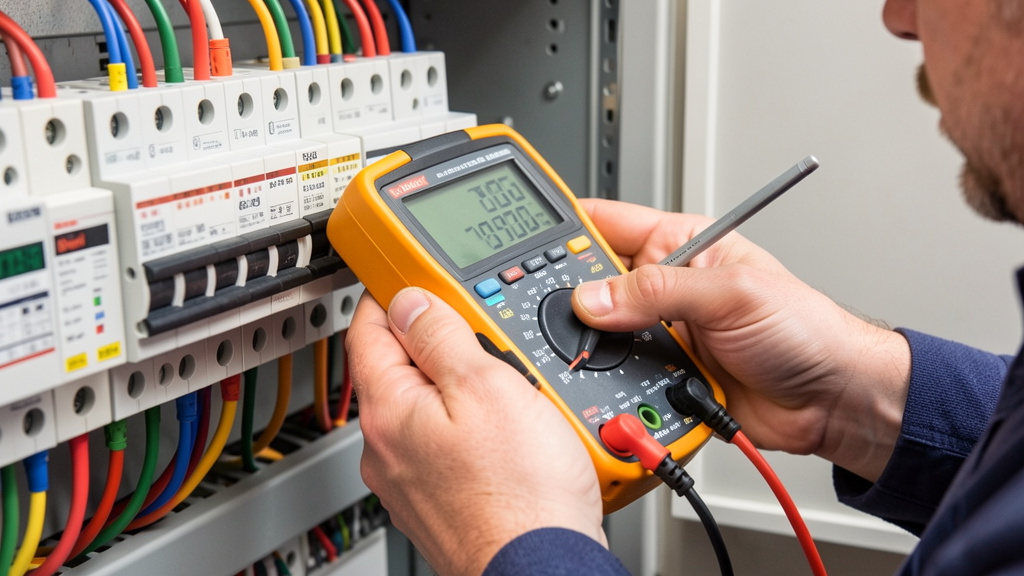
Stop guessing and start solving. This systematic approach transforms confusion into confidence, whether you’re facing a dead outlet, flickering lights, or a tripped breaker that refuses to stay on.
Electrical problems trigger understandable anxiety—flickering lights suggest hidden dangers, dead outlets disrupt daily routines, and mysterious buzzing sounds evoke worst-case scenarios. Yet beneath the surface of every electrical fault lies a logical sequence of cause and effect waiting to be uncovered. This comprehensive guide delivers a proven, safety-first methodology used across residential diagnostics to isolate, understand, and resolve wiring issues. You’ll move beyond random part replacement to grasp why failures occur, how components interact within your home’s electrical ecosystem, and precisely when DIY ends and professional intervention begins—all while prioritizing your safety at every single step.
Introduction
Electricity operates on immutable physical laws, yet human perception of electrical faults often leans toward superstition: “This outlet has always been temperamental,” or “The lights flicker when the moon is full.” In reality, every symptom—from a warm switch plate to intermittent power loss—represents measurable data points within a closed system. Safety standards establish critical boundaries for installation and repair, but effective diagnosis requires a complementary framework: a structured investigative process that respects both electrical physics and human limitations. This guide synthesizes widely accepted diagnostic protocols with accessible explanations tailored for the informed homeowner. We emphasize verification over assumption, evidence over intuition, and safety as the non-negotiable foundation of every action. Understanding your home’s electrical behavior isn’t about memorizing complex theory; it’s about developing a disciplined observational rhythm that turns ambiguity into actionable clarity. Before touching a single wire, remember this core truth: Diagnosis is 90% observation, 10% intervention. Rushing to “fix” without fully understanding the symptom pattern risks compounding the problem or creating new hazards. This guide exists to replace uncertainty with competence—one verified step at a time.
The Diagnostic Ladder: Your Framework for Electrical Troubleshooting
Imagine diagnosis as climbing a ladder. Each rung represents a critical verification point. Skipping rungs invites error. Rushing upward risks falling. The Diagnostic Ladder provides sequential, interdependent steps designed to isolate variables methodically while embedding safety checks at every stage. This framework transforms overwhelming complexity into manageable increments. It works for simple dead-outlet scenarios and scales to perplexing intermittent faults. The ladder’s power lies in its universality: whether troubleshooting a single lamp or a whole-house anomaly, the sequence remains consistent. Deviate from the sequence, and you introduce guesswork. Follow it deliberately, and you build irrefutable evidence toward the root cause.
Rung 1: Safety First – Preparing for Diagnosis
Why this step is non-negotiable: Electricity demands respect, not fear. Safety protocols aren’t bureaucratic hurdles—they’re engineered responses to documented failure modes. A single misstep during diagnosis can convert a minor fault into a life-threatening event. This rung establishes your personal safety perimeter before engaging with any component.
How to execute safely:
1. Clear the workspace: Remove children, pets, and flammable materials (paper, curtains, solvents) from a 6-foot radius around the work area. Ensure adequate lighting—use a battery-powered LED work light, never rely on the circuit you’re diagnosing.
2. Personal Protective Equipment (PPE): Wear dry, rubber-soled shoes. Safety glasses are mandatory—arc flashes can eject molten metal particles. For panel work, add voltage-rated insulated gloves (Class 00, rated for 500V AC) even if you believe power is off. This is not optional theater; it’s your last line of defense against human error.
3. Tool verification ritual: Before any testing, confirm your voltage tester or multimeter functions correctly. Test it on a known-live circuit (e.g., a working outlet across the room). Then test it on a known-dead source (like a battery compartment). This “live-dead-live” check validates your tool’s reliability. A faulty tester provides false confidence—the most dangerous state in electrical work.
4. One-hand rule: When measurements must be taken on potentially live circuits (e.g., verifying a tripped breaker), keep one hand behind your back or in your pocket. This prevents current from traversing your chest cavity (hand-to-hand path) if accidental contact occurs.
5. Emergency prep: Have a non-conductive object nearby (dry wooden broom handle, fiberglass rod) to safely push a person away from a live source if shock occurs. Know your panel’s exact location and ensure the path is unobstructed. Program your local emergency number into your phone before starting.
Common mistakes to avoid:
– Assuming the wall switch controls power: Switches often interrupt only the “hot” wire to a light; the outlet box may remain energized. Always verify at the source.
– Working in damp conditions: Never diagnose near sinks, wet floors, or during rain. Moisture drastically reduces skin resistance, increasing shock severity.
– Using damaged tools: Frayed insulation on probe leads, cracked meter casings, or corroded battery contacts compromise safety. Inspect tools meticulously before each use.
– Rushing the verification step: Skipping the “live-dead-live” tool check is a frequent cause of false-negative readings leading to accidental contact.
Budget-conscious safety note: Safety cannot be compromised for cost. A reliable non-contact voltage tester starts around $15. Insulated gloves cost $25–$40. These are non-negotiable investments. If funds are limited, do not proceed—contact a qualified professional. There is no “budget alternative” to verified safety.
Real-world scenario: A homeowner attempts to replace a buzzing switch. They flip the wall switch off, remove the cover plate, and touch a screw terminal—receiving a severe shock. Why? The wall switch controlled the light fixture, but the circuit feeding the switch box remained live via another path. Had they followed Rung 1—turning off the correct breaker and verifying absence of voltage with a tested tool—the injury would have been prevented. Safety protocols exist because these scenarios occur repeatedly.
Rung 2: Symptom Analysis – Decoding the Clues
Why symptom analysis precedes action: Symptoms are your system’s language. Misinterpreting them leads down rabbit holes. A “dead outlet” could stem from a tripped GFCI 30 feet away, a loose wire in an adjacent junction box, or a failed breaker. Jumping to conclusions wastes time and risks damage. This rung transforms vague complaints (“the lights are weird”) into precise, actionable data.
How to conduct thorough symptom analysis:
1. Create a symptom log: Document objectively. Avoid assumptions. Record:
– Exact location: “Kitchen counter outlet left of sink,” not “the kitchen outlet.”
– Behavior pattern: “Flickers rapidly for 2 seconds when refrigerator compressor kicks on,” not “lights flicker sometimes.”
– Triggers: Does it occur only when raining? When AC runs? At night? When plugging in the vacuum?
– Duration: “Started yesterday after storm,” or “Gradually worsened over several months.”
– Associated signs: Buzzing? Burning smell? Warm faceplate? Visible scorch marks?
2. Categorize the fault type:
– Open circuit: Complete loss of power (dead outlet, non-functional light). Current path is broken.
– Short circuit: Unintended low-resistance path (spark, pop, immediate breaker trip). Current bypasses intended load.
– Ground fault: Current leaking to ground (GFCI trips, tingling sensation from appliance). Common in damp areas.
– Arc fault: Intermittent sparking due to damaged insulation or loose connection (buzzing, flickering, AFCI trips). High fire risk.
– Voltage fluctuation: Dimming/brightening lights correlated with appliance cycling (undersized wiring, utility issue, loose neutral).
3. Map the affected zone: Sketch a quick floor plan. Mark all affected devices. Does the issue span multiple rooms? Only one circuit? Only devices plugged into surge protectors? This spatial mapping reveals circuit boundaries.
Symptom Decoding Table: Common Presentations and Likely Origins
| Symptom Description | Most Probable Cause(s) | Critical Red Flags | First Verification Step |
|---|---|---|---|
| Single outlet dead; others on same wall work | Loose wire connection at that outlet; failed outlet | Warm faceplate, discoloration, burning smell | Check upstream GFCI outlets (bathrooms, garage, exterior) |
| Multiple outlets/lights dead on one circuit | Tripped breaker; loose connection at first device on circuit; failed breaker | Breaker feels hot; buzzing from panel; scorch marks | Verify breaker position; test voltage at breaker output |
| Flickering lights only when AC/refrigerator starts | Normal voltage drop on shared circuit; or loose neutral connection | Flickering is severe (lights nearly go out); affects entire house | Measure voltage at outlet with multimeter while appliance cycles |
| GFCI outlet trips repeatedly with no load plugged in | Moisture intrusion in GFCI box; internal GFCI failure; downstream ground fault | GFCI feels warm; visible water in box; won’t reset at all | Unplug everything downstream; reset GFCI; if still trips, replace GFCI |
| Buzzing/humming from switch or outlet | Loose connection (arcing); failing component (dimmer, transformer); overloaded circuit | Sound is loud/crackling; accompanied by burning smell; device is hot | TURN OFF CIRCUIT IMMEDIATELY. Do not touch. Investigate after power-off. |
| Breaker trips instantly upon reset (no load) | Short circuit in wiring; failed breaker; rodent damage | Burning smell from panel; visible arcing when resetting | DO NOT REPEATEDLY RESET. Unplug all devices on circuit. If still trips, contact a qualified electrician. |
| Intermittent power loss (comes/goes randomly) | Loose connection in panel, junction box, or meter base; failing breaker; utility issue | Correlates with wind/vibration; affects large section of house | Check main lugs in panel only if qualified; contact utility company first |
Common mistakes to avoid:
– Attributing symptoms to the most visible component: A dead outlet is rarely just a bad outlet. Always look upstream.
– Ignoring environmental correlations: “It only happens when it rains” points strongly to moisture intrusion—critical diagnostic data.
– Dismissing minor symptoms: A faint buzz today can become a fire tomorrow. Document everything.
– Failing to involve household members: Ask others: “Have you noticed anything unusual with the lights/outlets recently?” They may recall crucial details.
Analogy: Symptom analysis is like a doctor’s intake interview. Fever + cough + recent travel suggests different causes than fever + rash + joint pain. Similarly, “flickering lights + rain” suggests a different path than “flickering lights + AC cycling.” Precision in description directs the entire diagnostic journey.
Counter-example: A homeowner replaces three outlets because “they were dead,” spending time and resources unnecessarily. The real cause? A tripped GFCI in the garage they never checked. Thorough symptom analysis (noting all dead outlets were downstream of the garage) would have solved it in 60 seconds. Diagnosis prevents wasted effort and expense.
Rung 3: Isolate the Circuit – Narrowing the Scope
Why isolation is critical: Homes contain interconnected circuits. A fault in one location can manifest symptoms elsewhere. Isolation eliminates variables. It answers: “Is this problem confined to one circuit, or is it systemic?” This rung prevents you from chasing ghosts in unrelated parts of the system.
How to isolate methodically:
1. Locate and access your main electrical panel: Clear all obstructions. Remove the cover only if you are comfortable and wearing PPE. If the panel is labeled clearly (“Kitchen Lights,” “Master Bedroom”), note the relevant breaker. If labels are missing, inaccurate, or you feel uneasy—STOP. Proceed to the “Circuit Mapping” technique below without opening the panel.
2. The “Lamp Test” for circuit identification (No panel access needed):
– Plug a simple incandescent lamp (LEDs can behave oddly) into the problematic outlet.
– Go to the panel. Flip breakers OFF one by one slowly.
– After flipping each breaker, check if the lamp turns off. When it does, you’ve found the correct circuit.
– Crucial: Flip the breaker back ON immediately after identification unless proceeding to work on that circuit. Leaving circuits off unnecessarily disrupts home systems (refrigerator, security).
3. Verify circuit boundaries: Once the suspect breaker is identified:
– Turn it OFF.
– Walk through the house testing all outlets, lights, and switches. Note every device that loses power. Update your symptom log.
– This reveals the circuit’s true scope. You might discover the “dead kitchen outlet” shares a circuit with the garage GFCI—a vital clue.
4. Check for shared neutrals or multi-wire branch circuits (MWBCs): Advanced note: In older homes, two circuits may share a neutral wire. Turning off one breaker may not de-energize all wires in a box. If you encounter unexpected voltage after turning off one breaker, STOP. This requires professional handling. MWBCs are increasingly rare in modern installations but remain a critical hazard in pre-1990s wiring.
5. Document your findings: Sketch the circuit path: “Breaker #7 → Garage GFCI → Kitchen Outlet A → Kitchen Outlet B → Dining Room Light.” This visual map guides Rung 4.
Common mistakes to avoid:
– Assuming panel labels are accurate: Many residential panels have outdated or incorrect labeling, making physical verification essential.
– Turning off multiple breakers at once: This obscures which circuit controls the symptom. Isolate one variable at a time.
– Ignoring the main breaker: For whole-house issues (all lights dimming), the fault may lie upstream of individual breakers—in the main lugs, meter base, or utility connection. Do not touch the main lugs. This is a utility or licensed electrician domain.
– Forgetting outdoor circuits: Exterior outlets, landscape lighting, and well pumps often tie into unexpected indoor circuits (like the garage GFCI).
Budget method vs. Ideal method:
– Budget: The Lamp Test (described above). Requires only a lamp and patience. Time-consuming but highly effective and safe.
– Ideal: A circuit tracer tool (e.g., Klein Tools ET300). Transmitter plugs into outlet; receiver beeps near the correct breaker. Costs $50–$100. Saves significant time, especially in large homes or poorly labeled panels. Worthwhile investment for frequent DIYers.
– Emergency: If a burning smell accompanies the fault, isolate by turning OFF the main breaker immediately. Evacuate if smell is strong. Contact emergency services and a qualified electrician. Safety overrides systematic isolation.
Real-world scenario: A family reports the living room lamp flickers. They replace the bulb, the lamp cord, even the switch—no fix. Using the Lamp Test, they discover the lamp shares a circuit with the refrigerator. Further investigation reveals a loose neutral connection in the junction box behind the fridge. Isolating the circuit transformed a “mystery lamp problem” into a traceable wiring fault. Without isolation, they’d have continued replacing irrelevant components.
Rung 4: Tool-Based Verification – Confirming Hypotheses with Data
Why tools replace guesswork: Human senses are unreliable for electrical diagnosis. A wire may look connected but be fractured internally. An outlet may feel cold but harbor a dangerous arc fault. Tools provide objective, quantifiable data. This rung validates or refutes hypotheses formed in Rungs 2 and 3. It transforms “I think the breaker is bad” into “Voltage reads 0V at the breaker output terminal with the breaker ON—breaker is faulty.”
Essential tools and their precise applications:
1. Non-Contact Voltage Tester (NCVT):
– Purpose: Quickly detect AC voltage presence without contact. Ideal for initial safety checks.
– How to use: Turn on tester. Hold near (not touching) wire insulation, screw terminal, or outlet slot. Audible beep/light indicates voltage. ALWAYS verify tester function first on a known-live source.
– Critical limitation: Can give false positives (detecting “ghost voltage” from adjacent wires) or false negatives (low battery, shielded cable). Never rely solely on NCVT for “power off” verification before touching wires. It’s a screening tool, not a safety validator.
– Pro tip: Test both slots of an outlet. If only one beeps, it may indicate an open neutral—a serious fault.
-
Digital Multimeter (DMM):
- Purpose: Measure voltage (AC/DC), continuity, resistance. The cornerstone of accurate diagnosis.
- Critical setup: Insert black probe into “COM” port. Insert red probe into “VΩmA” port. Set dial to “V~” (AC voltage) for household circuits. Start on highest range (e.g., 600V) if unsure.
- Measuring outlet voltage: Insert probes into slots (black to neutral/long slot, red to hot/short slot). Expect 110–125V. Reverse probes—reading should be identical. Test hot-to-ground (round hole): should match hot-to-neutral. Significant deviation (>5V) indicates wiring fault.
- Continuity test (POWER OFF!): Set dial to continuity symbol (sound wave). Touch probes to wire ends or switch terminals. Audible beep = complete circuit (good connection). No beep = open circuit (broken wire, failed switch).
- Resistance test (POWER OFF!): Measures opposition to current flow. High resistance at a connection point indicates corrosion or looseness. Compare readings between similar components (e.g., two switches on same circuit).
- Safety ritual: Before every measurement on a circuit you believe is dead, touch probes to a known-live source to confirm meter function. After measurement, re-verify meter on known-live source. This “live-dead-live” protocol catches meter failures mid-process.
-
Outlet Tester (Receptacle Analyzer):
- Purpose: Instantly diagnose common wiring faults at outlets (open ground, open neutral, hot/neutral reverse).
- How to use: Plug in. Three lights display code (refer to chart on device). “Correct” = two amber lights. Any other pattern indicates specific fault.
- Limitation: Cannot detect loose connections that pass initial test but fail under load. Cannot verify GFCI/AFCI functionality. Use in conjunction with multimeter.
- Pro tip: Test every outlet on a suspect circuit. A single miswired outlet can cause intermittent issues downstream.
Step-by-Step Verification Workflow for a “Dead Outlet”:
1. Turn OFF circuit breaker. Verify with NCVT near outlet wires (after removing cover plate). Then verify with multimeter set to AC voltage: probes in outlet slots should read 0V. This dual verification is critical.
2. Turn breaker ON. Measure voltage at the outlet terminals with multimeter: Hot-to-Neutral should be ~120V. Hot-to-Ground ~120V. Neutral-to-Ground should be <2V. Document readings.
3. If voltage is present at terminals but outlet doesn’t work: Outlet is faulty. Replace.
4. If voltage is absent at terminals: Turn breaker OFF. Perform continuity test on circuit path:
– Disconnect wires from outlet.
– Set multimeter to continuity. Test hot wire back toward panel (requires access to upstream device). No beep = break in hot wire.
– Repeat for neutral wire.
5. If continuity is good but no voltage: Fault lies between this outlet and the panel (loose connection at upstream device, failed breaker).
Common mistakes to avoid:
– Using the wrong meter setting: Measuring voltage while set to continuity can blow the meter’s fuse or damage the circuit. Double-check dial position before probing.
– Poor probe contact: Dirty probes or loose grip causes erratic readings. Clean probe tips with isopropyl alcohol. Hold probes firmly against metal.
– Ignoring meter battery: Low battery causes inaccurate readings, especially on continuity/resistance modes. Replace batteries proactively.
– Testing under no load: Some faults (loose connections) only manifest when current flows. After initial verification, plug in a lamp or heater (safely) and re-measure voltage. A significant drop (>10V) under load indicates high resistance fault.
Analogy: Tools are your electrical stethoscope and thermometer. You wouldn’t diagnose a fever by touch alone; you use a thermometer for accuracy. Similarly, you wouldn’t guess a heart murmur—you’d use a stethoscope. Voltage readings and continuity tests are the objective diagnostics that replace dangerous assumptions.
Counter-example: A DIYer uses only an NCVT to check a “dead” outlet. It beeps near the hot slot, so they assume power is present and replace the outlet. The new outlet still doesn’t work. Why? The NCVT detected capacitive coupling (“ghost voltage”) from a nearby live wire, but actual usable voltage was zero due to a broken neutral upstream. A multimeter would have shown 0V under load, directing focus upstream immediately. Tool selection matters profoundly.
Rung 5: Component-Level Diagnosis – Testing Individual Parts
Why component testing follows circuit isolation: Once the faulty circuit is isolated and verified (Rungs 3–4), focus shifts to individual components within that circuit path. This rung identifies the precise failure point: Is it the outlet? The switch? A wire splice in a hidden junction box? Methodical component testing prevents unnecessary replacement of good parts.
Systematic component testing protocol (POWER OFF AND VERIFIED DEAD):
1. Visual inspection first: Before disconnecting anything, remove cover plates. Look for:
– Scorch marks, melted plastic, discoloration (brown/black on wires or devices)
– Loose wires (push-in “backstab” connections are notorious failure points; screw terminals are more reliable)
– Corrosion (white/green powder on copper wires, common in damp locations)
– Signs of pests (gnawed insulation, nesting debris)
– Document findings with phone photos before disassembly. Critical for reassembly and identifying patterns.
2. Test devices in circuit sequence: Work from the panel outward or from the symptom location upstream. Test the component closest to the power source first.
– Example for dead outlets: Start at the first outlet after the panel (or the GFCI if present). Test that outlet’s wiring and device. If good, move to the next downstream outlet.
3. Outlet testing procedure:
– Disconnect wires from outlet terminals.
– Set multimeter to continuity. Test between hot terminal and neutral terminal on the outlet itself (no wires attached). Should read “open” (no beep). If beep occurs, outlet is internally shorted—replace immediately.
– Test ground terminal continuity to outlet mounting strap. Should beep (good ground path).
– Inspect wire ends: Are copper strands bright and untarnished? Frayed or greenish wires indicate corrosion—cut back and restrip.
4. Switch testing procedure:
– Disconnect wires. Label connections with tape if unsure (e.g., “Line,” “Load,” “Traveler” for 3-ways).
– Set multimeter to continuity. For a standard single-pole switch:
– Probes on two screw terminals. Flip switch ON: should beep (continuity). Flip OFF: no beep (open circuit).
– No beep in ON position = failed switch. Replace.
– For dimmer switches: Continuity tests are less reliable. Look for burnt smell, visible damage, or excessive heat during prior operation. Dimmers are common failure points with LED loads—check compatibility.
5. Wire continuity and resistance testing:
– Continuity (open circuit check): With circuit de-energized and disconnected at both ends, set meter to continuity. Touch probes to ends of same wire (hot-to-hot, neutral-to-neutral). Beep = good continuity. No beep = broken wire. Trace path to find break (often at staples, bends, or rodent-prone areas).
– Resistance (loose connection check): Set meter to lowest Ohms (Ω) setting. Measure resistance between two points on the same wire run (e.g., at outlet and at upstream junction box). Should be near 0Ω. Readings above 1Ω indicate high resistance—likely a loose/corroded connection. Tighten or remake connection.
6. Junction box inspection: If circuit path includes hidden boxes (common in attics, crawlspaces, behind walls):
– Locate box (follow circuit map). Turn OFF power.
– Open box. Inspect all wire nuts: Are they tight? Do wires protrude evenly? Are copper strands visible under the nut? Wiggle test: Gently tug each wire—should not pull out.
– Remake any suspect connections: Untwist wires, trim damaged ends, twist tightly clockwise with pliers, secure with new wire nut rated for wire gauge/count. Tape wire nut base with electrical tape for vibration resistance (permitted reinforcement in many jurisdictions).
Common mistakes to avoid:
– Disturbing good connections: Only disconnect components under suspicion. Randomly unwiring a functioning box introduces new failure points.
– Ignoring wire nut quality: Old, brittle, or undersized wire nuts fail. Replace any that feel loose, show cracks, or have discolored wires inside.
– Overlooking “backstab” connections: Push-in outlets/switches fail frequently. When replacing a device, always use screw terminals. Bend wire into a hook, wrap clockwise around screw, tighten firmly.
– Failing to label wires: Especially critical for 3-way switches, GFCIs, or multi-wire circuits. Take photos before disconnecting. Use masking tape and pen for temporary labels.
Budget vs. Ideal Repair Approach:
– Budget: Replace only the confirmed faulty component (e.g., one outlet). Use existing wire nuts if in good condition. Focus on immediate fix.
– Ideal: While the circuit is open, inspect all accessible connections on that circuit path. Replace aging outlets/switches proactively (devices degrade over time). Upgrade all push-in connections to screw terminals. Install AFCI/GFCI protection if absent and code-appropriate. This “while you’re in there” approach prevents future failures.
– Emergency: For a critical loose connection causing arcing: Secure connection temporarily with a new wire nut and electrical tape only to restore minimal safe function, then schedule permanent repair within 24 hours. Never leave a known arcing fault unaddressed.
Real-world scenario: An outlet intermittently loses power when the vacuum is plugged in. Visual inspection shows a loose backstab connection on the neutral wire. Continuity test confirms intermittent connection. Repair: Disconnect wires, cut off damaged end, strip fresh wire, secure tightly to screw terminal. Post-repair voltage test under vacuum load shows stable 118V—problem resolved. Component-level diagnosis pinpointed the exact failure mode without replacing the entire outlet unnecessarily.
Rung 6: Repair or Replace – Executing the Fix Correctly
Why correct repair matters more than quick repair: A sloppy fix creates future hazards. A wire nut twisted loosely may work today but overheat tomorrow. An outlet mounted crooked stresses connections. This rung details repair techniques aligned with safety standards that ensure longevity and safety. Speed is irrelevant; precision is everything.
Universal repair principles:
– Power remains OFF until after all connections are secured, devices are mounted, and cover plates are installed. Verify dead again before final re-energization.
– Work cleanly: Keep wire insulation intact. Avoid nicking copper conductors with strippers. Use the correct stripper notch for wire gauge (typically 14 AWG for 15A circuits, 12 AWG for 20A).
– Respect box fill limits: Safety standards limit the number of wires/devices in a box to prevent overheating. Adding a new wire nut or device may exceed capacity. If box is crowded, replace with a deeper “old work” box or add a junction box nearby. Never cram wires.
– Torque considerations: Screw terminals should be tight enough that wire cannot be pulled out, but not so tight you strip the screw or crush the wire. For critical terminations, consult local guidelines; for general DIY, “snug plus 1/4 turn” is a practical guideline.
Step-by-Step: Replacing a Standard Outlet
1. Verify power OFF with multimeter at outlet terminals. Double-check.
2. Remove mounting screws, gently pull outlet from box. Note wire positions: Brass screws = Hot (black/red wires), Silver screws = Neutral (white wires), Green screw = Ground (bare copper/green wire).
3. Critical: If wires are in push-in holes (“backstabs”), release the small slot next to the hole with a screwdriver to free the wire. Do not pull wires out forcefully.
4. Cut off damaged wire ends if present. Strip 3/4″ of insulation using wire stripper. Twist stranded wires tightly clockwise.
5. Bend wire end into a hook shape using needle-nose pliers. Hook must wrap clockwise around screw terminal (so tightening screw pulls hook closed).
6. Attach wires: Hot to brass, Neutral to silver, Ground to green. Tighten screws firmly. Tug gently on each wire—should not loosen.
7. Fold wires neatly into box, avoiding sharp bends. Ensure no bare copper touches box sides (except ground wire to box ground screw if metal box).
8. Mount outlet squarely. Attach cover plate. Do not overtighten mounting screws—this can crack the outlet body or warp the faceplate.
9. Restore power. Test with outlet tester and multimeter under load (plug in a lamp).
Step-by-Step: Securing a Loose Wire Nut Connection
1. Verify power OFF. Disconnect circuit at both ends if possible for safety.
2. Unscrew old wire nut. Separate wires. Inspect: Cut off any discolored, frayed, or corroded sections. Strip fresh 1/2″ insulation.
3. Hold wires parallel, ends aligned. Twist clockwise tightly using lineman’s pliers (not fingers). Strands should be uniformly twisted, no gaps.
4. Select correct wire nut size (check packaging for wire gauge/count). Screw on firmly until only insulation is visible at the base. No bare copper should protrude.
5. Tug test: Gently pull each wire individually. None should slip out. If any do, disassemble and retwist.
6. Optional but recommended: Wrap base of wire nut and exposed wire ends with electrical tape, spiraling from nut down the wires. Provides vibration resistance and contains any potential arcing.
7. Neatly fold connection into box, ensuring no stress on wires.
When replacement is mandatory (not optional):
– Any device (outlet, switch) showing physical damage: cracks, melting, discoloration, burn marks.
– Outlets where plugs feel loose or fall out (indicates worn internal contacts—fire/shock hazard).
– GFCI/AFCI outlets that fail monthly testing or won’t reset.
– Aluminum wiring connections (pre-1970s homes): Do not attempt DIY repair. Requires specialized connectors installed by a qualified electrician trained in aluminum remediation. Specialized torque and compounds are essential. This is a critical safety boundary.
Safety considerations (key principles):
– GFCI Protection: Required within proximity of water sources (kitchen, bathroom, laundry, garage, exterior, crawlspaces, unfinished basements). If adding an outlet in these zones, use a GFCI outlet or ensure it’s fed from an upstream GFCI.
– AFCI Protection: Required for circuits serving living areas, bedrooms, hallways in many regions. Often implemented at the breaker. Adding outlets to these circuits may require AFCI compliance—consult local requirements.
– Box Fill Awareness: Each wire, device, and clamp occupies space. Overfilling creates heat buildup. When in doubt, upgrade to a larger box.
Common mistakes to avoid:
– Reversing hot and neutral: Creates shock hazard (device internals remain energized even when switched off). Outlet tester will show fault patterns.
– Leaving ground wire unconnected: Defeats critical safety path. Ground must connect to device ground screw and metal box (if present).
– Over-stripping wires: Exposed conductor beyond terminal screw can contact other wires or box, causing short.
– Using tape instead of wire nuts: Electrical tape alone is never acceptable for splicing wires. It degrades, loses adhesion, and provides no mechanical security.
Analogy: Repairing electrical connections is like surgical suturing. A loose stitch (wire nut) can tear open under stress. A precise, tension-appropriate closure (proper twist and nut) promotes healing (reliable operation). Rushing the closure risks infection (fire hazard). Precision and adherence to protocol are non-negotiable.
Rung 7: Verification and Prevention – Ensuring Long-Term Reliability
Why verification is the final diagnostic step: A repair that works for 5 minutes but fails under sustained load is a dangerous repair. Verification confirms the fix resolves the root cause, not just the symptom. Prevention strategies address underlying conditions that led to the failure, reducing recurrence risk.
Comprehensive post-repair verification protocol:
1. Initial power-up: Stand clear. Turn breaker ON slowly. Listen for unusual sounds (buzzing, popping) from panel or repair location. If heard, turn OFF immediately.
2. No-load testing: With nothing plugged in, measure voltage at repaired outlet/switch. Should be stable 110–125V. Check adjacent outlets on same circuit.
3. Under-load testing (critical): Plug in a device that draws significant current (e.g., space heater rated 1500W, hair dryer). Run for 5–10 minutes.
– Re-measure voltage at repaired outlet: Should remain within 5V of no-load reading. A drop >10V indicates residual high-resistance fault.
– Feel the faceplate and device: Should be slightly warm at most. Hot to the touch (>120°F) indicates dangerous resistance—turn off immediately.
– Monitor for flickering, buzzing, or tripping.
4. Functional testing: Operate all switches, test GFCI “TEST/RESET” buttons, verify AFCI functionality if applicable.
5. 24-hour monitoring: For repairs involving loose connections or intermittent faults, check the repaired device periodically over the next day. Feel for warmth. Listen for sounds. Intermittent issues may require time to re-manifest.
Prevention strategies tailored to failure modes:
– Loose connections (most common cause of failures):
– Prevention: During any electrical work, inspect all accessible connections on the circuit. Tighten screw terminals. Replace push-in connections with screw terminals.
– Long-term: Schedule periodic visual inspections of accessible panels and junction boxes (attic, basement). Look for discoloration, dust patterns (indicating heat), or loose components.
– Moisture intrusion (GFCI trips, corrosion):
– Prevention: Install weather-resistant (WR) GFCI outlets with in-use covers in all damp locations (outdoors, garages, near sinks). Seal outdoor conduit entries with silicone caulk. Ensure roof/gutter drainage directs water away from exterior outlets.
– Long-term: Test all GFCIs monthly. Replace any that fail testing immediately.
– Circuit overload (nuisance tripping, warm wires):
– Prevention: Map high-draw appliances (space heaters, microwaves, AC units). Avoid plugging multiple high-wattage devices into the same circuit. Use power strips with internal circuit breakers only for low-draw electronics (TVs, computers)—never for heaters or refrigerators.
– Long-term: If overloads are frequent, consult a qualified electrician about adding dedicated circuits for high-demand areas (kitchen countertops, workshop).
– Aging components (intermittent failures, discoloration):
– Prevention: Proactively replace outlets/switches showing signs of age: discolored faceplates, loose plug fit, stiff switch action. Standard devices typically serve reliably for many years; high-use areas may need attention sooner.
– Long-term: Create a home maintenance log. Note installation dates of major electrical components. Plan phased upgrades.
Creating your home electrical baseline:
– Circuit map: Label your panel accurately. Note every device (outlet, light, appliance) on each circuit. Update after any changes. Store map inside panel door.
– Voltage awareness: Periodically (e.g., annually) measure voltage at a central outlet. Note reading. Significant deviation over time may indicate utility or service issues.
– GFCI/AFCI log: Record test dates and results. Replace devices per manufacturer guidance—internal components degrade over time.
When verification fails:
– Symptom returns immediately: Root cause not addressed. Revisit Rung 2 (Symptom Analysis). Did you miss an upstream fault? Is there a hidden junction box?
– New symptom appears: Repair may have disturbed another connection. Re-isolate the circuit (Rung 3). Check all connections you accessed.
– Breaker trips under load: Indicates short circuit or ground fault introduced during repair. Turn OFF. Re-check all connections for stray strands, reversed wires, or damaged insulation. Verify no bare wire contacts box or other terminals.
The Fundamental Principle: Electricity follows the path of least resistance, but diagnosis follows the path of most evidence. Never assume; always verify. A repair is not complete until it proves stable under real-world conditions.
Beyond the Basics: Diagnosing Complex Scenarios
Mastering the Diagnostic Ladder prepares you for most residential issues. However, some scenarios demand deeper analysis. These sections address nuanced situations where symptoms overlap, clues are subtle, or risks are elevated. Approach these with heightened caution—when uncertainty arises, professional consultation is the wisest path.
Dead Outlet Diagnosis: The Upstream Hunt
A single dead outlet is rarely isolated. The Diagnostic Ladder guides you upstream. Begin with the most common culprits before dissecting the outlet itself.
Step-by-Step Upstream Protocol:
1. Check ALL GFCI outlets first: GFCIs protect downstream outlets. A tripped GFCI in the garage can kill power to kitchen outlets. Check every GFCI in the house (bathrooms, kitchen, garage, basement, exterior, laundry room). Press “RESET.” If it won’t reset, unplug everything downstream and try again. If still fails, the GFCI itself is faulty or a downstream ground fault exists.
2. Verify the circuit breaker: Is it fully ON? Sometimes breakers trip to a “middle” position that looks ON. Flip it firmly OFF, then ON. Listen for a solid “click.” If it trips immediately upon reset (with nothing plugged in downstream), a short circuit exists in the wiring—stop and contact a qualified electrician.
3. Test adjacent outlets: Is the dead outlet the only one dead on the circuit? Or are others downstream also dead? This identifies if the fault is at the outlet or upstream of it.
4. Inspect the nearest upstream device: If Outlet B is dead but Outlet A (closer to panel) works, the fault lies between A and B. Open Outlet A. Check connections, especially the load-side wires feeding Outlet B. Look for loose wires, failed wire nuts, or signs of arcing. Remake connections if suspect.
5. The “Half-Dead” Outlet Clue: If only one slot of a duplex outlet works, it often indicates:
– Tab broken intentionally: Common for split-circuit outlets (e.g., one half switched). Verify if other outlets on circuit are also half-dead.
– Tab broken accidentally: During replacement, the small brass connecting tab between screws was snapped. Requires replacing the outlet.
– Loose connection on one terminal: Inspect wiring closely.
Why GFCIs trip unexpectedly:
– Moisture: Humidity, condensation, or rain ingress into outdoor/GFCI box. Solution: Replace with Weather-Resistant (WR) GFCI and in-use cover.
– Appliance fault: A failing motor (refrigerator, dishwasher) leaks current to ground. Unplug appliances one by one to isolate.
– Nuisance tripping with electronics: Some devices cause small leakage currents. Modern GFCIs are less susceptible. If persistent, try a different brand/model of GFCI.
– Worn-out GFCI: Internal sensors degrade over time. If it trips with nothing plugged in or fails monthly tests, replace it.
Critical reminder: Never replace a GFCI with a standard outlet to “stop the tripping.” This removes critical shock protection. Diagnose the cause of the trip.
Flickering Lights: Decoding the Pattern
Flickering ranges from benign to catastrophic. Pattern recognition is key. Document exactly when and how it occurs.
Pattern-Based Diagnosis Guide:
| Flicker Pattern | Likely Cause | Diagnostic Action | Urgency |
|---|---|---|---|
| Single bulb flickers | Loose bulb; failing bulb (especially CFL/LED); incompatible dimmer | Tighten bulb; replace bulb; verify dimmer compatibility | Low |
| Single fixture flickers (all bulbs) | Loose connection in fixture; failing ballast (fluorescent); bad socket | Turn OFF at switch. Inspect fixture wiring, socket contacts. Replace ballast/socket if needed | Medium |
| Multiple lights on one circuit flicker only when major appliance cycles (AC, fridge) | Normal voltage drop on shared circuit; or loose neutral connection | Measure voltage at outlet while appliance starts. Drop <5V = normal. Drop >10V + affects multiple circuits = loose neutral (HIGH RISK) | Normal drop: Low. Large drop: HIGH |
| Whole-house flickering correlated with wind/rain | Loose service connection (at meter, mast, or utility pole); failing main breaker | CONTACT UTILITY COMPANY IMMEDIATELY. Do not touch panel. Loose service connections cause fires. | CRITICAL |
| Rapid, random flickering across multiple circuits | Loose neutral in main panel; failing utility transformer | Turn OFF non-essential breakers. If flickering stops, points to overloaded circuit. If continues, contact a qualified electrician and utility. | HIGH |
| Flickering accompanied by buzzing/crackling from panel or wall | Arcing fault (loose connection, damaged wire) | TURN OFF MAIN BREAKER. EVACUATE IF SMELL PRESENT. CONTACT A QUALIFIED ELECTRICIAN URGENTLY. | EMERGENCY |
LED-Specific Flickering Nuances:
– Incompatible dimmer: Older dimmers designed for incandescent loads cause LED flicker. Solution: Replace dimmer with LED-compatible model (look for “CL” rating). Ensure bulbs are dimmable.
– Poor quality LED driver: Cheap bulbs have inadequate internal power supplies. Solution: Replace with reputable brand.
– Shared neutrals or induced voltage: In complex switch loops, “ghost voltage” can cause faint LED glow when off. Solution: Install a bypass resistor or use bulbs with built-in shunts. Consult a qualified electrician for persistent issues.
When flickering demands immediate action:
– Flickering intensifies over time
– Accompanied by burning smell, buzzing, or warm faceplates
– Occurs during windy conditions (suggests loose outdoor connection)
– Affects the entire house consistently
Do not ignore these signs. Loose connections generate intense heat at the point of resistance—often hidden inside walls—creating significant fire risk. When in doubt, shut off the circuit and contact a professional.
Tripped Breaker That Won’t Reset: Decoding the Failure Mode
A breaker that trips immediately upon reset signals a serious fault. Repeatedly forcing it ON risks fire. Understand why it trips to respond correctly.
Failure Mode Analysis:
– Instant trip (no delay) upon reset: Indicates a short circuit or ground fault. Current flow is so high the magnetic trip mechanism activates instantly. Do not keep resetting.
– Action: Turn breaker OFF. Unplug every device on the circuit. Turn breaker ON. If it holds, plug devices back in one by one. The device causing the trip is faulty. If it trips with nothing plugged in, the fault is in the wiring—contact a qualified electrician.
– Trip after 10–60 seconds (under load): Indicates an overload. Total current draw exceeds breaker rating (e.g., space heater + microwave on 15A circuit). Thermal mechanism heats up and trips.
– Action: Identify high-draw appliances on the circuit. Redistribute loads. Avoid using multiple high-wattage devices simultaneously. If overloads are frequent, circuit may be undersized for modern needs—consult a qualified electrician about adding circuits.
– Trip with no load, intermittent: Suggests a failing breaker or loose connection at the breaker. Heat builds at the loose connection, tripping the thermal element.
– Action: Extreme caution. If you are qualified and wearing PPE, briefly feel the breaker face (do not touch terminals). Is it significantly warmer than adjacent breakers? Do not open panel if unsure. This often requires a qualified electrician to check connections.
Critical safety boundary: If a breaker trips repeatedly and you detect any of these:
– Burning smell from panel
– Visible scorch marks on breaker or panel interior
– Buzzing/humming from the breaker
– Breaker feels excessively hot
STOP. TURN OFF MAIN BREAKER. CONTACT A LICENSED ELECTRICIAN IMMEDIATELY. These indicate dangerous arcing or overheating within the panel—a severe fire hazard. Do not attempt further diagnosis.
Buzzing Sounds and Burning Smells: Critical Warning Signs
These are not “symptoms” to diagnose—they are active emergencies requiring immediate, specific actions. Your response in the first 60 seconds determines safety outcomes.
Buzzing/Humming Protocol:
1. Identify source location: Is it from an outlet, switch, light fixture, or the main panel? Do not put your ear directly against it. Listen from 1–2 feet away.
2. If from outlet/switch/fixture:
– DO NOT TOUCH THE DEVICE.
– Turn OFF the circuit breaker controlling that device immediately.
– If buzzing continues after turning off the breaker, turn OFF the MAIN BREAKER.
– Evacuate the area. Do not use the device again.
– Contact a licensed electrician. Describe the sound (“loud buzz,” “crackling,” “sizzling”) and location precisely.
3. If from main panel:
– TURN OFF MAIN BREAKER IMMEDIATELY.
– Evacuate the area near the panel.
– Contact your utility company and a licensed electrician. A buzzing panel often indicates a loose main service connection—a critical fire hazard requiring utility involvement (they own the meter/mast).
Burning Smell Protocol:
1. Do not ignore faint smells. Electrical burning has a distinct acrid, “fishy” or “plastic” odor. Trust your nose.
2. Locate general area: Walk through the house. Does the smell intensify near a specific room, outlet, or the panel?
3. Turn OFF MAIN BREAKER immediately. This cuts all power, stopping the source of heat/arcing.
4. Do not investigate further. Hidden fires can smolder inside walls. Opening an outlet/switch could introduce oxygen and ignite flames.
5. Evacuate the house. Contact the fire department from outside. Inform them of an electrical burning smell and that you’ve turned off the main power.
6. After fire department clearance: Contact a licensed electrician for a full system inspection before restoring power. Do not assume the smell “went away.”
Why these signs are non-negotiable emergencies:
– Buzzing indicates arcing—electricity jumping across a gap due to loose connection or damaged insulation. Arcing reaches extremely high temperatures, instantly igniting surrounding materials.
– Burning smell means insulation, plastic, or wood is actively overheating or smoldering. By the time you smell it, significant damage has occurred. Hidden fires in wall cavities are extremely difficult to extinguish without professional equipment.
Myth debunked: “It’s just the dimmer switch buzzing—it’s always done that.” While some dimmers emit a faint hum, a new, louder, or changing buzz is a failure warning. Any buzzing accompanied by warmth, discoloration, or burning smell requires immediate shutdown. Never normalize warning signs.
GFCI and AFCI Outlets: Special Diagnostic Considerations
Modern safety devices add layers of protection but introduce unique diagnostic paths. Understanding their operation prevents misdiagnosis.
GFCI (Ground Fault Circuit Interrupter) Deep Dive:
– How it works: Compares current flow on hot and neutral wires. A difference as small as 4–6mA (milliamps)—indicating current leaking to ground (e.g., through a person)—trips the device rapidly.
– Why it trips:
– True ground fault: Appliance fault, moisture in outlet box, damaged cord.
– Nuisance trip: Long circuit runs, multiple downstream outlets, certain electronics. Modern “smart lock” GFCIs reduce nuisance trips.
– End-of-life: Internal sensors degrade. Most GFCIs have a “self-test” feature that disables power when failed (won’t reset). Replace per manufacturer guidance.
– Diagnostic flow for nuisance trips:
1. Unplug everything downstream.
2. Reset GFCI. If it holds, plug devices back in one by one to find the culprit appliance.
3. If it trips with nothing plugged in, moisture or internal failure is likely. Replace GFCI.
4. If trips only with specific appliance, appliance has ground fault—repair or replace appliance.
– Critical test: Press “TEST” button monthly. “RESET” button should pop out, cutting power. Press “RESET” to restore. If “TEST” does nothing or it won’t reset, replace immediately. A GFCI that won’t test is dangerously non-functional.
AFCI (Arc Fault Circuit Interrupter) Deep Dive:
– How it works: Analyzes current waveform for signatures of dangerous arcing (series arcs from broken wires, parallel arcs from short circuits). Distinguishes dangerous arcs from normal “good” arcs (like plugging in a cord).
– Why it trips:
– Dangerous arc: Loose connection, damaged cord pinched in furniture, rodent-chewed wire.
– Nuisance trip: Older vacuum cleaners, drill motors, dimmer switches on same circuit, shared neutrals. Newer “combination AFCI” breakers are more immune.
– Incompatible devices: Some older electronics cause trips. Check manufacturer compatibility.
– Diagnostic flow:
1. Note what was happening when it tripped (plugging in appliance? turning on light?).
2. Unplug suspect appliances. Reset AFCI.
3. If trips immediately with nothing plugged in, wiring fault exists—contact a qualified electrician.
4. If trips only with specific appliance, appliance has internal arcing fault—repair/replace.
5. Check for damaged cords on lamps/vacuums. Ensure cords aren’t pinched under rugs or furniture.
– Panel vs. Outlet AFCI: AFCI protection is typically at the breaker (required by code for living areas). Some outlets offer supplemental AFCI, but breaker-level is primary. Know where your AFCI protection resides.
GFCI + AFCI Combined (DFCI): Newer devices combine both protections. Diagnosis follows the stricter protocol of the two. Tripping requires checking for both ground faults and arc faults. Replacement cost is higher, but essential for modern safety compliance in required areas.
When to upgrade: If your home lacks GFCI in wet areas or AFCI in living areas (common in homes built before 2000), consult a qualified electrician about adding protection. Options include:
– GFCI/AFCI breakers (protect entire circuit)
– GFCI/AFCI outlets at the “first” device on a circuit (protects downstream)
Upgrading is often more cost-effective than full rewiring and significantly enhances safety. Prioritize kitchens, bathrooms, bedrooms, and garages.
Voltage Drop Issues: When Appliances Underperform
Voltage drop occurs when wire resistance causes voltage to decrease between the panel and the outlet. Mild drop is normal; excessive drop indicates problems and stresses appliances.
Symptoms of excessive voltage drop:
– Lights dim noticeably when AC, refrigerator, or microwave turns on
– Motor-driven appliances (fans, power tools) run slower, hotter, or struggle to start
– Electronics behave erratically or shut down unexpectedly
– Measured voltage at outlet under load is >10V lower than at panel
Causes and Solutions:
| Cause | Diagnosis Method | Solution |
|---|---|---|
| Undersized wire for circuit length | Measure circuit length. Check wire gauge (14 AWG for 15A, 12 AWG for 20A). Long runs may need larger gauge. | Run a dedicated circuit with appropriately sized wire. Requires a qualified electrician. |
| Loose/corroded connection | Measure voltage at panel output vs. outlet under load. Large difference points to connection fault. Inspect all accessible connections on circuit. | Tighten connections; remake wire nuts; replace corroded components. |
| Overloaded circuit | Measure total load (wattage) on circuit. Compare to breaker rating (15A = 1800W max continuous). | Redistribute loads to other circuits. Add dedicated circuits for high-draw appliances. |
| Utility-side issue (loose neutral) | Whole-house voltage fluctuation. Measure voltage at main panel lugs (qualified personnel only). Contact utility. | Utility repairs service drop/meter connections. Do not attempt yourself. |
| Shared neutral issues (MWBC) | Voltage fluctuates wildly on two circuits when loads change. Requires panel inspection. | Electrician must correct wiring; may require separating circuits. |
How to measure voltage drop:
1. Measure voltage at a working outlet near the panel (baseline).
2. Measure voltage at the problematic outlet with nothing plugged in (no-load voltage).
3. Plug in a high-wattage load (1500W space heater). Measure voltage again at the problematic outlet (under-load voltage).
4. Calculate drop: (No-load V – Under-load V) / No-load V x 100%. Drop >5% is excessive; >10% requires correction.
Why it matters: Excessive voltage drop forces motors to draw more current to compensate, causing overheating and premature failure. It also reduces efficiency and can damage sensitive electronics. Addressing drop isn’t just about convenience—it’s appliance preservation and fire prevention.
Intermittent Problems: The Diagnostic Endurance Test
Intermittent faults—power that cuts out randomly, flickering that comes and goes—are the most frustrating to diagnose. They evade standard testing because the fault isn’t present during inspection. Patience and systematic logging are your primary tools.
Strategy for elusive faults:
1. Become a detective: Keep a dedicated log (notebook or phone note). Record:
– Date and exact time
– What was happening? (e.g., “rain started,” “AC cycled on,” “wind gust”)
– Which devices were affected?
– Duration of event
– Any sounds/smells?
2. Identify patterns: Review log after 3–5 occurrences. Correlations emerge:
– Weather-related: Points to moisture intrusion (outdoor outlet, meter base, service mast). Inspect after rain for water ingress.
– Vibration-related: Points to loose connection (wind shaking house, slamming door, washing machine cycle). Focus inspection on connections in affected circuit path.
– Time-of-day related: Points to utility load issues (brownouts during peak evening hours) or shared tenant issues (in apartments).
– Appliance-triggered: Points to overloaded circuit or failing appliance.
3. Deploy monitoring tools:
– Plug-in voltage monitor: Devices like the “Kill A Watt” meter log min/max voltage over time. Leave plugged into suspect outlet for 24–48 hours.
– Thermal camera (if available): Scan panel, outlets, switches during normal operation. Hot spots indicate high-resistance connections. (Smartphone attachments available; many electricians use them diagnostically).
– Circuit monitor: Systems like Sense or Emporia Vue track whole-house usage and can detect anomalous patterns correlated with outages.
4. Controlled stress testing: Only if safe and you understand risks. With circuit energized:
– Gently tap outlets/switches on the circuit with a wooden stick (not metal!). Does tapping cause flickering? Indicates loose connection at that device.
– Wiggle cords of plugged-in appliances. Does movement cause dropout? Indicates failing appliance cord or internal fault.
– STOP immediately if you see sparks, smell burning, or hear arcing.
When to concede: If after 2 weeks of diligent logging and targeted inspection the pattern remains elusive, or if the fault poses any safety concern (buzzing, warmth), contact a licensed electrician. Professionals have advanced tools (oscilloscopes, insulation resistance testers) and experience recognizing subtle failure modes. Persisting indefinitely with an undiagnosed intermittent fault creates unnecessary risk. Knowing when to escalate is a hallmark of competent diagnosis.
When DIY Ends and Professional Help Begins
Competence includes recognizing boundaries. Electrical work carries inherent risks where error consequences are severe. This section defines clear, actionable thresholds for professional engagement—framed not as limitation, but as responsible stewardship of your home and safety.
Absolute “Stop and Call Immediately” Red Flags:
– Visible damage: Scorch marks, melted plastic, charring on outlets, switches, panels, or cords.
– Sensory warnings: Burning smell (even faint), buzzing/crackling/humming from devices or panel, visible sparks.
– Physical symptoms: Tingling sensation when touching appliances, faucets, or switches; frequent static shocks in one area.
– Water involvement: Any electrical component submerged, splashed, or in a flooded area (basement, under sink leak). Do not touch. Turn off main power at meter if safe to do so, otherwise evacuate and contact emergency services.
– Panel abnormalities: Breakers that feel hot, won’t stay on, show discoloration, or emit buzzing. Rust inside panel. Loose main service wires.
– Aluminum wiring: Homes built 1965–1973 may have aluminum branch circuit wiring. Do not attempt repairs. Requires specialized connectors and techniques. Find an electrician certified in aluminum wiring remediation.
– Main service issues: Problems with the meter, service mast, weatherhead, or underground service line. These are utility-owned or require utility coordination. Contact your power company first.
Situational Thresholds Requiring Professional Assessment:
– Recurring faults: A problem that returns after your repair indicates unresolved root cause. Two attempts without success warrant professional eyes.
– Uncertainty during diagnosis: If at any point in the Diagnostic Ladder you feel confused, rushed, or unsure of the next step—stop. Re-reading this guide is wise; proceeding while uncertain is dangerous.
– Code compliance questions: Adding circuits, upgrading panels, installing EV chargers, or modifying kitchen/bathroom circuits often require permits and inspections. A qualified electrician ensures work meets current standards and local amendments.
– Age of system: Homes over 40 years old with original wiring (knob-and-tube, fabric-insulated, ungrounded outlets) benefit from a professional safety audit. Hidden degradation is common.
– Scope creep: What began as “fixing one outlet” reveals multiple faulty connections, outdated components, or undersized circuits. A professional can assess the full scope efficiently and cost-effectively.
How to choose a qualified electrician:
1. Verify licensing and insurance: Ask for license number and verify with your state/local licensing board. Confirm they carry liability and workers’ compensation insurance. Request certificate of insurance.
2. Seek specialized experience: For aluminum wiring, knob-and-tube replacement, or panel upgrades, ask specifically about their experience with your issue. “How many aluminum remediation jobs have you completed?”
3. Get multiple quotes: For non-emergency work, obtain 2–3 detailed written estimates. Compare scope, materials, timeline, and warranty. Beware quotes significantly lower than others—may indicate corner-cutting.
4. Check references and reviews: Ask for 2–3 recent client references for similar work. Read online reviews critically (look for responses to negative reviews).
5. Discuss diagnostic approach: A good electrician will explain their diagnostic process, not just jump to replacement. Ask: “How will you determine the root cause before proposing a fix?”
6. Clarify warranty: Reputable electricians warranty both parts and labor (typically 1 year minimum). Get warranty terms in writing.
Budget-conscious engagement strategy:
– Diagnose, don’t repair: Hire an electrician only for diagnosis. Pay for their expertise to identify the exact problem and solution path. You may then choose to perform simple repairs yourself (e.g., replacing a confirmed faulty outlet) or get quotes for the full repair. Many electricians offer diagnostic fees that apply toward repair if you hire them.
– Prioritize findings: If an audit reveals multiple issues, ask the electrician to categorize: “Critical (fire/shock risk),” “Important (functionality/safety),” “Recommended (upgrade).” Address critical items first.
– Prepare thoroughly: Before the electrician arrives, document symptoms, circuit maps, photos of problem areas, and your diagnostic steps. This reduces diagnostic time (and cost) and shows you’re an informed client.
The ethical boundary: Never attempt work to circumvent permitting requirements for safety-critical systems. Permits exist to ensure independent verification of life-safety systems. Your home’s electrical system protects your family 24/7—investing in professional verification for complex work is non-negotiable stewardship. Choosing professionalism isn’t admitting defeat; it’s exercising wisdom.
Your Questions, Answered
Q: Can I safely diagnose electrical problems if I have no prior experience?
A: Yes, if you strictly adhere to the Safety First protocols (Rung 1) and start with low-risk scenarios (e.g., verifying a tripped GFCI, testing an outlet with a plug-in tester). Begin by observing and documenting symptoms without touching components. Use this guide’s framework to build knowledge incrementally. Never proceed if you feel uneasy. Safety is not a skill to be learned through trial and error—it’s a discipline practiced from day one. When in doubt, stop and consult a qualified professional. Your caution is your greatest asset.
Q: Why does my non-contact voltage tester beep near a disconnected wire?
A: This is typically “ghost voltage” or capacitive coupling. A de-energized wire running parallel to a live wire can pick up a small induced voltage, detectable by sensitive NCVTs. This voltage is usually harmless (very low current) but causes false positives. Always verify with a multimeter set to AC voltage. A true live circuit will read 110–125V; ghost voltage typically reads very low (<20V) or disappears under load. Never rely solely on an NCVT for “power off” verification before touching wires.
Q: Is it safe to replace an outlet myself if the wires are connected via push-in “backstab” holes?
A: Replacing the outlet itself is generally safe if you follow all safety protocols (turn off correct breaker, verify dead with multimeter). However, strongly avoid reusing backstab connections. They are a leading cause of loose connections and failures. When installing the new outlet, use the screw terminals: bend wire into a clockwise hook, secure tightly under the screw. This creates a more reliable, vibration-resistant connection. If the existing wires are too short after removing from backstabs, use a wire nut to add a short “pigtail” extension to reach the screw terminal safely.
Q: How can I tell if my home has aluminum wiring, and what should I do?
A: Aluminum wiring was commonly used for branch circuits (outlets, lights) in homes built roughly between 1965 and 1973. To identify: Turn off power. Remove cover plate from an outlet/switch. Look at the wire insulation color—aluminum wires often have “AL” or “Aluminum” printed on the jacket, and the bare conductor has a dull silver color (vs. copper’s reddish hue). Do not touch or disturb connections. If confirmed or suspected, do not attempt DIY repairs. Contact a licensed electrician specifically experienced in aluminum wiring remediation. Solutions include specialized connectors or complete circuit replacement. This is a critical safety issue requiring specialized expertise.
Q: My outlet tester shows “Open Neutral.” What does this mean, and is it dangerous?
A: “Open Neutral” means the neutral (white) wire path is broken somewhere between the outlet and the panel. This is potentially dangerous. While the outlet may appear dead, the hot wire remains energized. More critically, an open neutral on a multi-outlet circuit can cause voltage imbalances—some outlets may receive dangerously high voltage (>150V), frying plugged-in electronics, while others receive low voltage. Turn off the circuit breaker immediately. This requires tracing the neutral path to find the break (often a loose connection in an upstream junction box or at the panel). Due to the risks of voltage imbalance, this repair is best handled by a qualified electrician unless you are highly experienced with circuit tracing.
Q: Why do my LED lights glow faintly when the switch is off?
A: This “ghosting” is usually caused by one of two issues: 1) Induced voltage: The switched wire runs parallel to a live wire in the wall, picking up a small capacitive charge. 2) Illuminated switch: Switches with pilot lights (glow-in-the-dark) leak a tiny current to power the light, which can charge LED drivers enough to cause faint glow. Solutions: Install a bypass resistor (like the Lutron LUT-MLC) across the fixture wires to dissipate the charge; replace illuminated switches with standard switches; or try a different brand/model of LED bulb (some have better internal shielding). If the glow is bright or accompanied by warmth, investigate for a miswired switch (hot/neutral reversed)—use an outlet tester or multimeter to verify.
Q: Can weather (rain, wind, cold) actually cause electrical problems inside my house?
A: Absolutely. Weather is a major trigger for electrical faults: Rain/humidity causes moisture intrusion into outdoor outlets, service panels, or meter bases, leading to GFCI trips or corrosion. Wind can shake loose connections in overhead service lines, mast heads, or even within wall boxes, causing intermittent outages or arcing. Extreme cold makes older insulation brittle, increasing risk of cracks and shorts; it can also cause contraction of connections, exacerbating existing looseness. If problems correlate strongly with weather, focus inspection on exterior components, service entrance points, and attic/crawlspace junction boxes. After severe storms, visually inspect outdoor electrical components for damage before use.
Q: How often should I test my GFCI and AFCI outlets/breakers?
A: Monthly testing is essential. For GFCI/AFCI outlets: Press the “TEST” button—power should cut off immediately (lamp plugged in should turn off). Press “RESET” to restore power. For AFCI/GFCI breakers: Flip the breaker’s “TEST” switch (if equipped) or press the test button on the breaker face—breaker should trip to OFF position. Reset normally. If any device fails to trip during testing, or won’t reset afterward, replace it immediately. These devices save lives by detecting faults; a non-functional unit provides dangerous false security. Mark your calendar or set a phone reminder for the first of each month.
Q: What’s the difference between a tripped breaker and a blown fuse, and how do I handle each?
A: Breakers (modern standard) are resettable switches that trip (flip to OFF/middle position) during overload or short circuit. To reset: Flip firmly to OFF, then ON. If it trips again immediately, do not keep resetting—diagnose the fault. Fuses (older systems) contain a metal element that melts (“blows”) during overload, breaking the circuit permanently. To restore power: Turn off lights/appliances on that circuit. Unscrew the blown fuse (glass window will be dark/smoked). Replace only with a fuse of the identical amperage rating (e.g., 15A). Never replace with a higher-rated fuse or “fuse fixer” (penny behind fuse)—this defeats overcurrent protection and creates severe fire risk. If fuses blow repeatedly, the circuit is overloaded or faulty—contact a qualified electrician. Consider upgrading a fuse panel to a modern circuit breaker panel for enhanced safety and capacity.
Q: I found an old cloth-wrapped wire in my attic. Is this dangerous?
A: Cloth-insulated wiring (common pre-1960s) is often part of knob-and-tube systems. The cloth insulation becomes brittle with age, cracks easily, and offers minimal protection. While not inherently dangerous if undisturbed and in dry locations, it presents significant risks: lack of ground wire, lower ampacity, susceptibility to damage from rodents or insulation contact, and incompatibility with modern loads. Do not touch or disturb it. If you plan renovations, adding insulation, or notice any damage/fraying, consult a licensed electrician about evaluation and potential replacement. Many insurance companies have specific requirements regarding older wiring systems. Treat it with caution and seek professional assessment for peace of mind.
Q: Can a power surge from a storm cause hidden damage that shows up weeks later?
A: Yes, power surges can cause latent damage to electrical components. A surge may weaken insulation on wires, degrade semiconductor components in electronics, or create micro-fractures in connections that worsen over time. Symptoms might include intermittent failures, reduced appliance lifespan, or unexpected tripping of protection devices weeks or months later. After any significant surge event (nearby lightning strike, utility grid fluctuation), consider having a qualified electrician inspect critical systems—especially if you notice new anomalies. Installing whole-house surge protection at the main panel, combined with point-of-use protectors for sensitive electronics, provides layered defense against both immediate and cumulative surge damage.
Conclusion and Next Step
Recap: Mastering electrical diagnosis hinges on three pillars: disciplined safety protocols, systematic symptom analysis, and knowing your boundaries. The Diagnostic Ladder transforms overwhelming faults into manageable steps—each rung building evidence while prioritizing your well-being. Remember: observation precedes intervention, verification trumps assumption, and humility in recognizing professional thresholds is a sign of competence, not limitation.
The 24-Hour Rule: Within the next 24 hours, take one small, safe action: Test every GFCI outlet in your home using the “TEST/RESET” buttons. Document any that fail to trip or reset. This simple habit reinforces proactive safety and familiarizes you with your home’s protection devices. If any fail, replace them promptly or schedule professional assessment.
The Big Picture: Your home’s electrical system is a dynamic ecosystem. Each repair, each verified connection, each documented circuit map contributes to long-term resilience. Approach electrical stewardship not as a series of isolated fixes, but as ongoing partnership with your home’s infrastructure. When knowledge meets caution, confidence follows—and that confidence empowers you to maintain a safer, more reliable living environment for years to come.
Explore Our Complete System:
[Understanding Your Home’s Electrical Panel: A