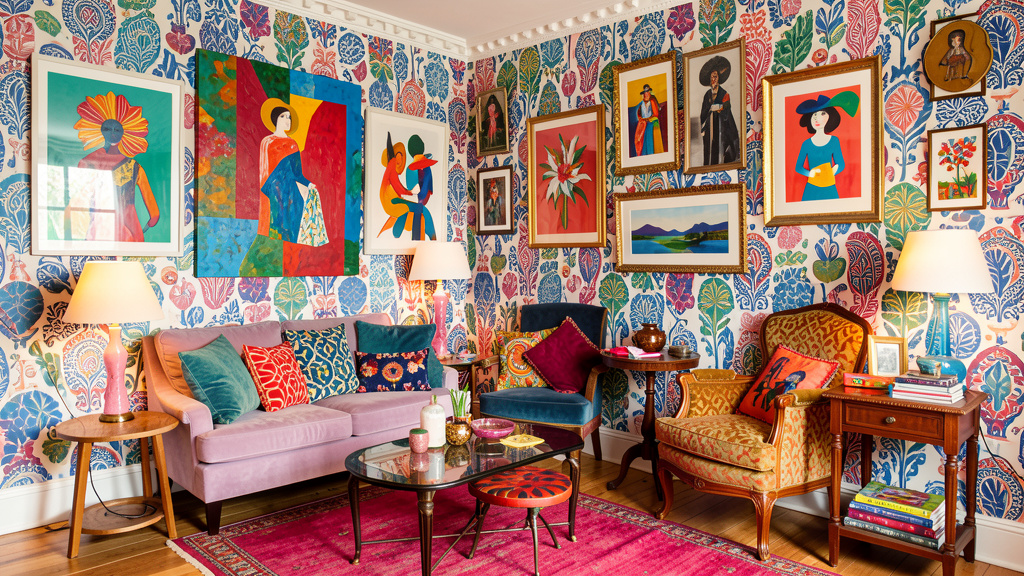
Move beyond cluttered chaos—discover the precise principles, psychological balance, and strategic layering that transform maximalism from overwhelming to awe-inspiring.
Maximalist interior design celebrates abundance, personality, and storytelling through layered textures, bold colors, and curated collections. But without intention, it risks becoming visually fatiguing. This guide reveals the foundational principles of balance, the psychology of visual weight, and adaptable strategies to create a maximalist space that feels cohesive, joyful, and uniquely yours—while avoiding common pitfalls. Forget the myth that “more is more” means “anything goes.” True maximalism is a thoughtful practice of curation, rhythm, and emotional resonance. It honors your story without sacrificing comfort or function.
Introduction
Step into a thoughtfully layered maximalist space, and you feel an immediate sense of warmth and narrative depth. Your gaze gently travels across surfaces, discovering new details with each glance—a vintage map beside a hand-thrown ceramic vase, embroidered textiles layered over textured upholstery, bookshelves holding well-loved volumes alongside meaningful travel mementos. This isn’t randomness. It’s design with clear purpose. Maximalism has resonated deeply in recent years as a heartfelt response to overly austere aesthetics, reflecting a cultural desire for authenticity, memory, and sensory richness in our living environments. Historically, layered design appears across eras and cultures—from Victorian parlors adorned with collected artifacts to Baroque interiors celebrating ornamentation, Moroccan riads featuring intricate tilework and handwoven textiles, and the playful rebellion of the 1980s Memphis Group. Contemporary maximalism, however, is distinct: it prioritizes personal meaning over period replication, psychological awareness over dogma, and intentional curation over accumulation. It often emerges as a conscious counterpoint to digital saturation—a desire to surround ourselves with tangible, meaningful objects in an increasingly virtual world. Research in environmental psychology suggests that spaces reflecting personal identity and positive memories can support emotional well-being and foster a sense of belonging. This isn’t about hoarding or visual noise; it’s about creating environments that feel lived-in, loved, and authentically yours. The critical distinction between maximalism and clutter lies entirely in intentionality. Clutter feels accidental, unresolved, and stressful. Maximalism feels deliberate, harmonious, and energizing. This guide exists to bridge that gap. Whether you’re drawn to maximalism but fear chaos, have layered spaces that feel unbalanced, or simply crave a home that tells your story without apology—this framework provides adaptable structure. We’ll move beyond superficial styling tips to explore foundational principles that make abundance feel balanced, psychological considerations for comfort within complexity, and practical strategies adaptable to any budget, space size, lifestyle, or sensory need.
The Intentional Abundance Framework: Your Blueprint for Cohesive Maximalism
Maximalism without guiding principles can feel overwhelming. The Intentional Abundance Framework transforms complexity into clarity through three interconnected pillars. These pillars are not rigid rules that stifle creativity, but supportive scaffolding that frees your expression. Think of them like musical composition: structure enables improvisation that feels both spontaneous and deeply coherent. Master these pillars to layer with confidence while maintaining visual and emotional harmony.
Pillar 1: Intention — The Compass for Meaningful Curation
Intention is the foundation of every decision. Without it, objects accumulate randomly. With it, each piece serves a purpose—emotional, functional, narrative, or sensory. Intention answers the quiet question: Why does this belong here?
Why This Pillar Matters
Objects without clear purpose create visual static. A shelf filled with items purchased solely for color or price often feels hollow. Conversely, a shelf holding a cherished teacup, a stone from a meaningful journey, and a child’s handmade sculpture radiates warmth. Intention acts as a gentle filter for acquisition, reducing decision fatigue by providing a clear criterion: Does this deepen the story or function of this space? Environmental psychology research indicates that spaces filled with personally significant objects may support emotional grounding and reduce stress. Intention also creates narrative cohesion. A room expressing “coastal serenity” (linen textures, sea-inspired hues, organic forms) feels resolved. The same room with a neon accent lamp and chrome furniture may feel disjointed—unless those elements intentionally reflect a deliberate sub-narrative (e.g., “celebrating my childhood summers in a vibrant beach city”).
Cultivating Intention: A Practical Process
1. Define Your Core Narrative: Before adjusting a single object, articulate the essence of the space. Complete this prompt: “This room should feel like __ and remind me of ____.” Examples:
– “This living area should feel like a welcoming library in a sunlit European apartment and remind me of quiet mornings studying abroad.”
– “This bedroom should feel like a restorative jungle retreat and remind me of peaceful hikes with my partner.”
Avoid vague terms like “happy” or “cozy.” Dig deeper: What specific memories, values, emotions, or sensory experiences anchor this space? Write it down. Keep it visible during styling sessions.
2. Create an Intention Board: Gather 15–20 images (digital or physical) that evoke your narrative. Include colors, textures, objects, landscapes, even non-visual inspiration (a song lyric, a scent memory). Notice recurring motifs. Do images feature curved lines? Earthy palettes? Handcrafted details? This becomes your visual reference guide.
3. Apply the “Why” Filter: When considering adding an item, ask:
– Does this connect directly to my core narrative? (e.g., a vintage botanical print for a nature-inspired library)
– Does this support the intended emotional tone? (e.g., a soft wool blanket enhancing “coziness”)
– Does this fulfill a functional or sensory need? (e.g., a textured rug softening acoustics, a smooth ceramic vase offering tactile contrast)
If an item doesn’t align with at least one criterion, pause. It may belong elsewhere—or not at all.
4. Document Meaning Gently: For key pieces, note their significance discreetly (a small label tucked behind art, a digital photo caption). “This ceramic bowl: created during a pottery workshop with my sister, 2019.” This preserves meaning over time and prevents “object amnesia”—that uncertainty about why something remains.
Common Pitfalls & Gentle Corrections
– Narrative Drift: Starting with “desert modern” but adding coastal decor because it was on sale. Correction: Revisit your core narrative statement before new acquisitions.
– Sentimental Overload: Keeping every memento without curation. Correction: Honor meaning through selective display. Frame one meaningful drawing per child per year; store others thoughtfully. Intention requires compassionate editing.
– Sensory Oversight: Focusing only on visuals while neglecting sound (echoey rooms), scent (layered but subtle aromas), or touch (scratchy fabrics). True intention engages multiple senses. A maximalist space should feel as rich to the fingertips as to the eyes.
Illustrative Scenario: Consider a homeowner who transformed a sunroom using intention. Their narrative: “A botanical sanctuary where my grandmother’s love of gardening meets my appreciation for global textiles.” They began with a curated collection of vintage botanical prints as an anchor. Added a deep green textured sofa for emotional warmth, layered a kilim rug over a neutral sisal base for storytelling, and placed thriving monstera plants in hand-thrown pottery for functional and sensory depth. They consciously chose not to include a bright yellow chair they admired—it disrupted the serene, earthy narrative. The result felt deeply personal, cohesive, and calm.
Pillar 2: Balance — The Invisible Architecture of Harmony
Balance is maximalism’s essential counterweight. It’s the thoughtful distribution of visual weight that allows complexity to feel calm and intentional. Without balance, even meaningful objects can create visual tension. Balance is not strict symmetry—it’s dynamic equilibrium across multiple dimensions. Human perception naturally seeks harmony; balanced spaces support ease and comfort.
The Four Dimensions of Maximalist Balance
1. Color Balance:
– Principle: Distribute dominant hues thoughtfully throughout the space. If your sofa features emerald green, echo that green in smaller doses elsewhere (a ceramic vase, book spines, lamp base). This creates visual “bookends,” guiding the eye comfortably.
– Adaptable Approach: The 60-30-10 guideline (60% dominant, 30% secondary, 10% accent) offers a starting point. In maximalism, the accent category may expand to 15–25%, but distribution remains key. Scatter accent colors intentionally—avoid clustering all red items in one corner.
– Adjustment Tip: If a room feels heavy (e.g., navy walls, sofa, and curtains), introduce lighter neutrals (cream rug, light wood shelves) and strategic complementary accents (mustard pillows) to lift the space visually.
- Scale and Proportion Balance:
- Principle: Intentionally mix large, medium, and small elements. A room filled only with tiny objects feels fussy; one dominated by oversized furniture feels oppressive.
- Application: In a gallery wall, include one anchoring piece (larger artwork or mirror) surrounded by varied frame sizes. On shelving, place a tall sculptural object beside stacked books of differing heights and a small dish.
-
Small Space Consideration: Use vertical elements (floor-to-ceiling shelves) to draw the eye upward, creating perceived height. Balance with lower-profile furniture to avoid top-heaviness.
-
Texture and Pattern Balance:
- Principle: Vary texture density like musical dynamics. Pair “bold” textures (bouclé, heavy embroidery) with “quiet” ones (smooth stone, polished wood). For patterns, mix scales: large-scale floral + medium geometric + small dot.
- Nuanced Insight: Balance visual “activity,” not just pattern type. A busy floral pillow can harmonize with an ikat rug if their colors relate and scales differ. Two large-scale, high-contrast patterns in similar colors may compete.
-
Practical Check: Photograph your space in black and white. Without color distraction, areas of visual “static” become clear, indicating where simplification may help.
-
Negative Space Balance:
- Principle: Intentional emptiness is essential. Negative space (clear wall sections, uncluttered surfaces) gives the eye resting points—the breath between visual sentences.
- Guideline: Aim for 20–30% negative space within any styled vignette. A shelf need not be 100% full; leave thoughtful gaps. Artwork should float with breathing room, not touch floor or ceiling.
- Clarification: Negative space ≠ bare walls. It’s curated emptiness. A single completely empty wall in a maximalist room may feel unintended. Instead, create negative space within layered areas: the gap between books, the clear surface beside a lamp.
The Guiding Insight: Maximalism thrives not through the absence of structure, but through the thoughtful application of it. Balance is the quiet conductor ensuring every element contributes to a harmonious whole.
Common Imbalances & Gentle Adjustments
– Focal Point Competition: Bold wallpaper plus a vibrant rug plus an ornate light fixture without visual breathing room. Adjustment: Let one element shine per zone. If wallpaper is the hero, choose simpler lighting and a more neutral rug.
– Vertical Neglect: Cluttered lower shelves with empty upper sections (or vice versa). Adjustment: Create visual triangles—tall object low, medium at eye level, small higher up.
– Texture Monotony: Layering multiple “heavy” textures (velvet, wool, dark wood) without relief. Adjustment: Introduce smooth, reflective, or airy elements (glass table, metal lamp, sheer curtains).
Illustrative Scenario: An urban living area felt visually busy despite beautiful objects. Assessment revealed imbalance: all dark wood furniture concentrated low, patterns clustered on one seating area, minimal negative space on shelves. Adjustments included adding a light-toned media console to lift visual weight, scattering patterned textiles across both seating zones, and thoughtfully removing 25% of shelf items to create intentional gaps. The same abundance now felt curated, calm, and inviting.
Pillar 3: Evolution — Designing for Growth and Change
Maximalism is inherently dynamic. A “finished” maximalist room contradicts its spirit. Evolution acknowledges that your story, collections, needs, and even sensory preferences change over time. This pillar builds flexibility into your design, reducing pressure and preventing stagnation. It’s the understanding that your home can grow with you.
Why Evolution Matters
Life unfolds. New hobbies emerge, families change, travel memories accumulate, seasons shift. A rigid design philosophy struggles under real life. Evolution embraces impermanence as strength. It reduces the pressure to “get it perfect” immediately. It also combats aesthetic fatigue—the subtle boredom that can arise in static environments. Spaces that evolve with us often deepen our connection to them, becoming living journals of our journey.
Strategies for Graceful Evolution
1. Modular Foundation: Build core elements for adaptability.
– Furniture: Choose larger pieces in versatile, durable fabrics (performance velvet, washed linen) or neutral finishes. They anchor the room while allowing textiles (throws, pillows, rugs) to change seasonally or as tastes shift.
– Storage: Opt for adjustable shelving systems. As collections grow or priorities change, shelf heights can adapt. Avoid fixed built-ins unless long-term needs are certain.
– Walls: Paint walls in layered, versatile neutrals (warm white, soft clay, greige) rather than bold saturated colors. This provides a flexible backdrop. Save bold color for removable elements: a single accent wall with removable wallpaper, or large-scale art.
- Rotation Systems: Create gentle rituals for refreshment.
- Art Rotation: Install a picture rail or use leaning shelves. Store 2–3 additional pieces nearby. Swap art seasonally or when new meaningful pieces are acquired.
- Textile Rotation: Store off-season textiles neatly. Swap lightweight linen throws for wool ones as temperatures change. This refreshes the space with minimal effort.
-
Vignette Zone: Dedicate one small surface (a console table, a single shelf) as a “curated moment” area. Change its contents monthly: seasonal botanicals, current favorite books, a rotating small sculpture.
-
Designated Expansion Zones: Plan for future growth.
- Gallery Wall: Leave 2–3 frames empty within a grid layout. Fill them gradually over months or years. The empty frames become part of the design—a visual promise of stories to come.
- Bookshelves: Intentionally leave 15–20% of shelf space clear. This accommodates new books or objects without triggering anxiety about “where to put this.”
-
Collections: If you collect ceramics, reserve a specific shelf section for new additions. This prevents overflow into unrelated areas.
-
Seasonal and Cyclical Rituals: Align evolution with natural rhythms.
- Spring: Deep clean surfaces. Introduce lighter textiles. Add fresh greenery or flowering branches.
- Autumn: Layer in warmer textures (chunky knits, leather accents). Swap art for pieces evoking coziness.
- Year-End Reflection: Conduct a gentle “gratitude edit.” Hold each object. Does it still resonate with your current narrative or bring calm joy? Thank and release items that no longer serve you. This isn’t minimalism—it’s intentional curation aligned with your present self.
Common Evolution Challenges & Compassionate Solutions
– Overfilling Initially: Starting with shelves at 100% capacity. Solution: Begin at 60–70% full. Allow the space to breathe and grow organically.
– Neglecting Functional Needs: Forgetting that life requires usability. A maximalist home office still needs clear desk space. Solution: Designate “functional zones” within layered rooms (e.g., one clear shelf for daily essentials, a tidy desk surface).
– Resistance to Change: Keeping an object long after its meaning has faded due to attachment to the “original design.” Solution: Revisit your core narrative quarterly. Does this item still belong? Evolution requires the courage to edit with compassion.
Illustrative Scenario: A household designed their dining area with evolution in mind. They selected a sturdy oak table (neutral foundation) and painted walls a soft terracotta (warm but versatile). One wall featured a 12-frame gallery grid—only 8 filled initially. Over three years, they added children’s artwork, a wedding photograph, and a print from a memorable trip. The empty frames created anticipation; filling them became a shared family ritual. The room feels perpetually fresh, deeply personal, and never “complete”—a living record of their journey.
Decoding the Maximalist Palette: Color, Pattern, and Texture as Narrative Tools
Color, pattern, and texture form maximalism’s expressive vocabulary. Used with awareness, they convey emotion, memory, and identity. Used without consideration, they can create discord. This section provides adaptable systems for building palettes that feel rich, resolved, and authentically yours.
The Psychology of Color in Layered Spaces
Color functions as emotional architecture. Warm hues like terracotta or ochre can evoke comfort and connection (well-suited for living and dining areas). Cooler tones like sage or slate may promote calm (ideal for bedrooms or studies). Maximalism thrives in nuance: a “green” room isn’t a single flat shade—it’s forest green book spines, sage ceramic vessels, mossy textile weaves, and olive-toned artwork. This layered approach creates depth and avoids sensory overload.
Building a Cohesive Palette: The Anchor-Expand-Refine Method
1. Anchor (The Soul): Choose one deeply resonant color tied to your narrative. This isn’t a trend-driven choice; it’s emotionally or memory-based.
– Example: For a “Mediterranean Coast” narrative, anchor = ochre (evoking sunbaked earth, ancient pathways).
– Finding It: Review your intention board. What hue appears repeatedly? What color evokes your core emotion (serenity, joy, energy)?
- Expand (The Family): Develop 3–5 supporting colors within the same tonal family as your anchor. Use a color wheel as a guide:
- Analogous Scheme: Colors adjacent on the wheel (ochre → burnt sienna → mustard). Creates serene, harmonious depth.
- Split-Complementary: Anchor + two colors adjacent to its complement (ochre + deep teal + forest green). Adds gentle vibrancy.
-
Essential Variation: Include a deep tone (for grounding), a mid-tone (for larger surfaces), and a light tone (for airiness). For ochre: deep umber, mid-tone terracotta, light cream.
-
Refine (The Spark): Introduce 1–2 unexpected accent colors for subtle energy. Use sparingly (under 10% of the visual field) but intentionally.
- Example: In the ochre scheme, add lapis lazuli blue (inspired by ceramic tiles) or oxidized copper green.
- Placement Strategy: Use accents in small, repeatable doses: book spines, ceramic handles, embroidery threads. These become delightful “discoveries” upon closer look.
Palette Examples Across Narratives
| Narrative Theme | Anchor Color | Expand Colors | Refine Accent | Emotional Resonance |
|———————-|————–|————————|——————-|———————|
| Botanical Sanctuary | Forest Green | Sage, Olive, Moss | Terracotta | Grounding, restorative |
| Vintage Library | Deep Navy | Charcoal, Cream, Walnut| Gold Foil | Intellectual, cozy |
| Global Nomad | Warm Clay | Indigo, Rust, Cream | Turquoise | Adventurous, welcoming |
| Artisan Studio | Charcoal Gray| Oatmeal, Mustard, Brick| Cobalt Blue | Creative, energetic |
Avoiding Color Chaos: The Distribution Principle
Scatter each color family throughout the room. If your palette includes sage and olive, avoid placing all sage items on one side and olive on the other. Instead, mix them: a sage pillow on an olive-toned sofa, an olive vase on a sage-hued shelf. This creates visual rhythm. Photograph the room in grayscale. If one area appears significantly darker or lighter, redistribute objects to balance value (lightness/darkness).
Pattern Mixing: Creating Rhythm, Not Riot
Patterns add movement, personality, and cultural resonance. Successful mixing relies on scale variation and color harmony—not perfect matching.
The Three-Scale Principle for Pattern Confidence
Every layered zone benefits from:
1. Large-Scale Pattern: Dominant, bold (floral wallpaper, ikat rug). Sets the primary rhythm.
2. Medium-Scale Pattern: Secondary support (geometric pillow, subtle stripe curtain). Bridges large and small.
3. Small-Scale Pattern: Delicate detail (micro-dot mug, tiny herringbone weave on a basket). Adds finesse.
Why it works: Like musical notes (whole, half, quarter), varied scales create harmony. Two large-scale patterns often compete. Two small-scale patterns can feel fussy.
Pattern Pairing Guidance
| Large-Scale Pattern | Harmonizing Medium Pair | Complementary Small Pair | Why It Works |
|———————|————————-|————————–|————–|
| Floral | Geometric (chevron) | Micro-dot | Geometry grounds floral romance |
| Stripes | Organic texture (marble)| Tiny paisley | Organic softens stripe structure |
| Ikat | Solid with texture | Mini houndstooth | Texture adds depth without visual noise |
| Toile | Subtle stripe | Gingham | Stripe modernizes traditional toile |
Critical Consideration: Pattern Density
A “busy” floral has high visual density (many details per inch). Pair it with a “quieter” geometric (wide stripes, open spaces). Avoid pairing two high-density patterns (e.g., intricate floral + detailed damask)—they may create visual vibration. Test by placing fabric swatches together and squinting. If they blur into static, choose a simpler companion.
Texture Layering: The Tactile Soul of Maximalism
Texture is maximalism’s secret dimension—engaging touch and sight, adding depth especially in low light. It transforms flat surfaces into sensory experiences.
The Five-Texture Minimum Principle
A richly layered space thoughtfully incorporates at least five distinct texture categories. This creates sensory complexity that feels intentional and inviting.
| Texture Category | Examples | Sensory Effect | Maximalist Application |
|---|---|---|---|
| Soft/Plush | Velvet, bouclé, faux fur, knit | Comfort, warmth, safety | Upholstery, throws, area rugs |
| Smooth/Cool | Marble, glass, polished wood | Calm, clarity, elegance | Tabletops, vases, frames |
| Rough/Earthy | Rattan, jute, raw wood, pottery | Grounding, authenticity | Baskets, side tables, planters |
| Structured | Woven seagrass, cane, macramé | Order, craftsmanship | Chair seats, wall hangings |
| Metallic | Brushed brass, oxidized copper | Focus, subtle energy | Light fixtures, hardware, trays |
Layering Strategy by Zone
– Seating Area: Smooth wood floor → jute rug (rough) → velvet sofa (soft) → bouclé throw (plush) → ceramic side table (smooth) with brass lamp (metallic).
– Bedroom: Linen sheets (structured) → wool blanket (soft) → rattan headboard (rough) → glass water carafe (smooth) → iron bed frame (metallic).
– Shelving Vignette: Stacked books (smooth spines) → unglazed pottery vase (rough) → small velvet box (soft) → framed photo in brushed brass (metallic).
Texture Balance Reminder
Too many “heavy” textures (deep pile velvet, thick wool, dark wood) can feel oppressive. Counterbalance with “light” textures (glass, sheer linen, light oak). In a room with a velvet sofa and wool rug, choose a glass coffee table and light-filtering curtains. Photograph in black and white: if the image appears uniformly dark or muddy, introduce lighter or smoother textures.
Illustrative Scenario: A homeowner felt their living area lacked depth despite loving textiles. Applying the five-texture principle, they added a chunky knit throw (soft) over their linen sofa, a rattan side table (rough), a glass vase with dried grasses (smooth + structured), and brass candlesticks (metallic). The space transformed from visually flat to deeply inviting—guests naturally reached out to touch surfaces.
Room-by-Room Maximalism: Adapting Abundance to Function
Maximalism must serve how you live. A kitchen needs clear counters for cooking; a bedroom requires restful calm. This section adapts the framework to specific rooms, honoring function while expressing personality.
The Living Room: Heart of Connection and Story
The living room often serves as maximalism’s showcase—a space for gathering, relaxation, and displaying your narrative. Balance expression with usability for daily life and guests.
Adaptable Approach: The Layered Lounge
– Foundation: Select larger furniture in versatile, durable materials (performance fabric sofa, solid wood coffee table). This anchors the room and withstands use.
– Intentional Layering:
– Walls: Create a gallery wall with mixed frame styles (wood, metal, painted). Include art, mirrors (to reflect light), and small floating shelves for 3D objects. Leave intentional gaps for breath.
– Textiles: Layer 3–4 throw pillows per seating area using the three-scale pattern principle. Add a textured throw and a vintage rug over a neutral base layer.
– Surfaces: Style the coffee table with a stack of books (vary heights), a small dish for remotes, a single stem in a bud vase. Rotate seasonal items gently.
– Flow Check: Ensure clear pathways (minimum 24″ wide). Avoid blocking windows, doors, or natural movement paths with furniture or decor.
Budget-Conscious Adaptation
– Thrifting Strategy: Seek unique frames at secondhand stores. Spray-paint mismatched frames one cohesive color (matte black, warm white) for instant unity.
– DIY Art: Create a “memory wall” with postcards, ticket stubs, or children’s art in simple frames. Use removable washi tape for renter-friendly displays.
– Textile Swaps: Borrow textiles from other rooms seasonally. A bedroom quilt becomes a living room throw in colder months.
Gentle Reset for Overwhelm
If the space feels chaotic:
1. Remove all small objects from surfaces.
2. Rebuild slowly: Add books first (grouped by color or size), then one meaningful object per shelf.
3. Step back after each addition. Does it feel calmer? Stop before it feels “full.”
The Bedroom: Sanctuary for Rest
A maximalist bedroom must prioritize rest. Clutter can trigger anxiety; intention fosters calm. Avoid using bedrooms as overflow storage for collections.
Adaptable Approach: Curated Calm
– Walls: Choose one feature wall for depth (textured grasscloth, a large-scale tapestry). Keep other walls serene to support relaxation.
– Bedding: Layer textures, not competing patterns. Crisp cotton sheets + linen duvet cover + velvet sham + chunky knit blanket. Stick to a cohesive color family (e.g., all blues from navy to sky).
– Nightstands: Style minimally. One lamp, one book, one small meaningful object (a smooth stone, a tiny framed photo). This creates negative space essential for rest.
– Storage: Use attractive baskets for hidden storage (under bed, in closet). Display only items that spark calm joy and serve bedtime rituals (a favorite novel, essential oil diffuser).
Small Space Solution
– Vertical Focus: Install floating shelves above the bed for books and small objects. Keeps floor space clear.
– Mirror Placement: Position a mirror opposite a window to reflect light and create a sense of expanded space. Choose an ornate frame for maximalist character.
– Multi-Functional Furniture: Select an upholstered bench at the foot of the bed with hidden storage for off-season textiles.
Family-Inclusive Adaptation
– Child Zones: Designate one low shelf or basket for children’s bedtime items. Keep the rest of the room adult-curated for calm.
– Durable Choices: Use washable performance fabrics on upholstered pieces. Avoid delicate silks or light colors in high-use areas.
– Shared Input: Involve partners or children in choosing one element (e.g., “Let’s select the rug pattern together”). Builds shared ownership.
The Kitchen: Functional Beauty
Open shelving is popular in maximalist kitchens—but requires strategy to avoid looking like a cluttered pantry.
Adaptable Approach: The Curated Pantry
– Open Shelving Styling:
– Group by Color or Type: Stack white dishes together, group blue ceramics. Creates visual order.
– Vary Heights: Place tall pitchers behind stacks of plates. Add small potted herbs in ceramic pots for life.
– Edit Thoughtfully: Display only beautiful, frequently used items. Store mismatched mugs or plastic containers out of sight.
– Backsplash: Use bold tile (handmade zellige, colored grout subway) as an anchor. Keep countertops clear except for one intentional vignette (olive oil cruet, wooden spoon crock).
– Island or Counter: Style with a wooden bowl of fruit, a stack of cookbooks, and a small cutting board. Rotate weekly.
Renter-Friendly Expression
– Removable Wallpaper: Apply bold pattern to the inside of open shelves or cabinet doors for hidden joy.
– Contact Paper: Line cabinet interiors with colorful patterned paper—a secret delight.
– Artful Storage: Use matching canisters for pantry items. Display them proudly.
Maintaining Kitchen Harmony
– The “One In, One Out” Practice: For every new dish or gadget displayed, consider removing one. Prevents gradual accumulation.
– Daily Reset Ritual: Spend two minutes each evening clearing counters. Intentional maximalism thrives on gentle maintenance, not neglect.
– Functional Zones: Keep cooking tools near the stove, dishes near the sink. Beauty should support, not hinder, workflow.
The Bathroom: Sensory Sanctuary
Even small bathrooms can embrace maximalism through texture, detail, and thoughtful material choices without feeling cramped.
Adaptable Approach: Textural Immersion
– Walls: Use bold, small-scale tile (Moroccan fish scale, subway with colored grout) on one accent wall or within a shower niche.
– Textiles: Layer bath mat (plush), shower curtain (patterned linen), and towels (varying textures: waffle weave, velour). Roll towels and display in a woven basket.
– Surfaces: Style vanity with a tray holding soap dispenser, hand cream, and a single stem. Add a small framed art print in a moisture-resistant shadow box.
– Lighting: Choose an ornate sconce or vintage-inspired mirror with integrated lighting.
Moisture-Resistant Maximalism
– Material Wisdom: Avoid paper-based art or untreated wood in steamy areas. Opt for powder-coated metal, ceramic, glass, or properly sealed wood.
– Ventilation Priority: Ensure exhaust fan functions well. Maximalist decor should never compromise mold prevention.
– Practical Beauty: Choose smooth or lightly textured tiles in shower areas for easier cleaning. Beauty must be maintainable within your routine.
The Home Office: Inspiration with Focus
A maximalist office should fuel creativity without scattering attention. Balance personal artifacts with functional clarity.
Adaptable Approach: The Focused Studio
– Desk Zone: Keep the immediate workspace clear (laptop, notebook, pen cup). This is your “negative space anchor” for concentration.
– Inspiration Wall: Dedicate one wall to a curated mood board: pinned sketches, color swatches, meaningful quotes in small frames. Refresh quarterly.
– Shelving: Store reference books neatly. Display 3–5 meaningful objects (a travel souvenir, a favorite sculpture, a thriving plant). Rotate to avoid visual fatigue.
– Lighting: Use an adjustable task lamp (brass or ceramic base) for function. Add a small salt lamp for warm ambiance during evening work.
Bridging Digital and Physical
– Screen Background: Choose a rich, textured digital wallpaper that inspires without distracting during video calls.
– Physical Anchors: Print one favorite digital photo monthly. Frame it. This gently combats digital hoarding and brings virtual memories into physical space.
Illustrative Scenario: A creative professional transformed a compact home office. They painted the wall behind the desk a deep forest green (anchor color). Installed floating shelves in the same tone for “floating” books. Grouped supplies in matching ceramic pots. Kept the desk surface clear except for a small succulent and a vintage brass magnifying glass. The space feels deeply personal yet utterly functional—clients note its inspiring calm.
The Psychology of Maximalism: Honoring Individual Experience
Maximalism is deeply personal. Understanding why certain arrangements resonate—or feel overwhelming—empowers you to design spaces aligned with your nervous system, values, and life context.
Environmental Enrichment and Personal Sensitivity
Neuroscience research suggests that visually rich environments with varied textures, colors, and meaningful objects may stimulate positive emotional responses for many people. This “environmental enrichment” effect can contribute to feelings of engagement and joy. However, this experience is highly individual. For some individuals—particularly those with anxiety sensitivities, ADHD, autism spectrum traits, or sensory processing differences—excessive visual stimuli can increase cognitive load or feelings of overwhelm. The key is personalized enrichment, not universal abundance.
Gently Assessing Your Sensory Response
Before layering deeply, observe your authentic reactions:
– High Sensitivity to Complexity: You feel energized in bustling markets, art galleries, or bookstores. Cluttered desks don’t bother you. Maximalism may feel naturally stimulating.
– Moderate Sensitivity: You enjoy visual interest but need “quiet zones” to recharge (e.g., a calmer bedroom within a layered home). Balance is essential.
– Low Sensitivity to Complexity: Busy spaces consistently cause tension or fatigue. You prefer clear surfaces and neutral palettes. Maximalism may be better suited to a dedicated “joy space” (craft room, library nook) rather than primary living areas.
Reflective Practice: Spend 10 minutes in a visually rich space (a boutique, a friend’s layered home). Notice your body:
– Do your shoulders relax? (Positive signal)
– Is there subtle tension in your jaw or chest? (Caution signal)
– Do you feel drawn to linger or eager to leave? (Clear indicator)
Honor your physiology. Maximalism should serve your well-being, not conform to an external ideal.
Maximalism vs. Clutter: The Intentional Divide
Clutter can trigger stress responses. Research indicates that visual disarray may compete for attention and increase cognitive load. Maximalism avoids this through perceived order and meaningful curation. The difference isn’t quantity—it’s intentionality.
| Characteristic | Clutter | Intentional Maximalism |
|---|---|---|
| Organization | Random, accidental accumulation | Grouped by color, theme, function |
| Meaning | Forgotten purpose, guilt-driven | Clear emotional or narrative link |
| Maintenance | Feels burdensome (“I should tidy”) | Feels joyful (“I love refreshing this”) |
| Psychological Effect | Anxiety, decision fatigue | Comfort, pride, sensory engagement |
| Pathways | Blocked, narrow | Clear, intentional flow |
Practical Reflection: Hold an object and ask gently:
1. Do I know exactly why this is here? (If no, it may be clutter.)
2. Does seeing this bring calm or joy? (If anxiety arises, it may be clutter.)
3. Is this accessible and functional? (If buried, it may be clutter.)
Release items without judgment. True maximalism celebrates chosen abundance, not accumulated obligation.
Navigating Shared Spaces with Differing Preferences
Maximalism in shared homes requires empathy, communication, and creative strategy. Forcing a partner who values minimalism into a highly layered space can create tension.
Collaborative Framework
1. Zone Mapping: Divide the home intentionally.
– Shared Zones (living room, kitchen): Find middle ground. Use maximalist textiles over minimalist furniture. Or designate one accent wall.
– Personal Zones (home offices, closets): Grant full autonomy. Your partner’s calm sanctuary respects their needs; your expressive bedroom honors yours.
2. The “Joy Threshold” Agreement: Collaboratively agree on a comfortable maximum for displayed items per surface (e.g., “Three meaningful items per shelf”). Provides gentle structure without stifling expression.
3. Shared Narrative Building: Create a joint intention board. Identify overlapping values (“We both cherish travel memories,” “We want guests to feel welcomed”). Build expression around shared stories.
Illustrative Scenario: A couple resolved design differences through intentional zoning. Their living area features a neutral sofa (supporting one partner’s need for calm) layered with globally sourced textiles and art from shared travels (honoring their joint narrative). One partner’s home office remains minimalist; the other’s craft room embraces abundant expression. Both feel respected. They describe it as “designing with empathy.”
When Maximalism May Not Be the Primary Approach
Honesty is part of thoughtful design. Maximalism may not be the best fit for:
– Periods of High Stress: During times of grief, illness, or major transition, simpler, calmer spaces may better support well-being. Maximalism can be revisited when energy allows.
– Specific Neurodivergent Needs: For some individuals, visual simplicity significantly reduces cognitive load. Prioritize function, comfort, and personal peace over aesthetic trends.
– Extremely Compact Primary Living Areas: In tiny homes under 400 sq ft, functionality often requires minimalist solutions. Maximalism can appear in micro-doses: one bold accent wall, a single curated shelf, or richly layered textiles on a bed.
This isn’t failure—it’s wisdom. Design should serve life, not ideology. If maximalism feels like pressure, pause. Start with one small vignette. Build confidence slowly. Your journey is valid at any pace.
Navigating Common Challenges: From Overwhelm to Cohesion
Even experienced enthusiasts encounter hurdles. These frequent challenges have clear, compassionate solutions.
Challenge 1: Scale and Proportion Imbalance
Symptom: A room feels “off” without clear reason. Furniture overwhelms the space, or small accessories get lost.
Root Cause: Focusing on individual objects without considering their relationship to the room and each other.
Gentle Solution:
– Room Scale: Measure your space. A sofa should occupy no more than two-thirds of a wall. Leave 18–24″ between furniture pieces for comfortable flow.
– Object Scale: In a large room, choose one substantial art piece rather than many small frames. In a small room, use vertical art to draw the eye upward.
– Proportion Check: Sit in the room. Do objects feel balanced relative to your body? A coffee table should be within easy reach of the sofa.
Challenge 2: Pattern Clash Without Color Harmony
Symptom: Patterns feel chaotic, even if individually loved. The space feels visually tiring.
Root Cause: Mixing patterns with clashing color temperatures (cool blue floral + warm orange geometric) or similar visual scales.
Gentle Solution:
– Color Connection: Ensure all patterns share at least one common color (e.g., navy appears in floral, stripe, and dot prints).
– Scale Variation: Apply the three-scale principle consistently. When adding a new textile, ask: “Do I have large, medium, and small patterns represented here?”
– Neutral Bridge: Introduce a solid-color item in a shared hue between two competing patterns. Creates visual “truce.”
Challenge 3: Inadequate Lighting Layers
Symptom: The room feels flat or harsh. Beautiful textures lack dimension, especially in evening hours.
Root Cause: Relying solely on overhead lighting. Maximalism’s layers demand nuanced illumination.
Gentle Solution: Implement three lighting layers:
1. Ambient: Overall illumination (ceiling fixture, wall sconces). Use dimmers where possible.
2. Task: Focused light for activities (desk lamp, reading light).
3. Accent: Highlights features (picture lights, discreet LED strips under shelves, clustered candles).
Tip: Choose warm-white bulbs (2700K–3000K) for all fixtures. Cool light (4000K+) can flatten colors and feel clinical. Candles add gentle, dynamic warmth.
Challenge 4: Disregarding Flow and Function
Symptom: Beautiful objects, but the room is difficult to navigate. Furniture blocks natural pathways.
Root Cause: Styling surfaces without considering human movement and daily routines.
Gentle Solution:
– Pathway Principle: Maintain clear pathways of at least 24″ wide. In high-traffic zones (between sofa and coffee table), allow 30–36″.
– Furniture Placement: Float furniture away from walls where space allows. Creates intimacy and improves circulation.
– Walk-Through Test: After arranging, walk the intended paths. Do you bump into anything? Adjust thoughtfully.
Challenge 5: Overlooking Maintenance Realities
Symptom: The space looks stunning initially but feels burdensome to upkeep. Dust accumulates; layered textiles require constant attention.
Root Cause: Prioritizing aesthetics over realistic lifestyle and available time.
Gentle Solution:
– Honest Assessment: How much time will you realistically spend tidying daily? Choose textures and objects that align.
– Lower Maintenance: Smooth surfaces (glass, sealed wood), machine-washable textiles, quality faux botanicals.
– Higher Maintenance: Velvet (requires occasional steaming), delicate ceramics, real plants needing daily care.
– The 5-Minute Reset: Design your space so a quick daily tidy is effortless. Use trays to corral small items. Store remotes in a designated dish.
– Seasonal Refresh: Schedule gentle quarterly sessions to rotate textiles, dust thoroughly, and reassess objects. Frames maintenance as intentional care, not burden.
Challenge 6: Trend-Driven Choices Over Personal Narrative
Symptom: The room feels like a magazine spread—but not your home. You don’t feel emotionally connected to it.
Root Cause: Acquiring items because they’re currently popular rather than meaningful to your story.
Gentle Solution: Revisit your core narrative statement. Before acquiring anything new, ask: “Does this deepen my story or support my intended feeling?” If not, it’s okay to pass. True maximalism feels timeless because it’s personal. A room filled with objects reflecting your journey will resonate deeply for years.
Compassionate Reset: Reviving an Overwhelmed Space
If a room already feels chaotic:
1. Clear Gently: Remove all decor from surfaces and walls. Live with the bare bones for 24 hours. Notice what you genuinely miss.
2. Rebuild with Intention: Add back only items that pass the “Why” filter. Start with largest elements (rug, art), then layer downward.
3. Apply the 70% Guideline: Stop when the space feels about 70% full. Wait a week. Add only if truly needed.
4. Photograph and Reflect: Take a photo. View it on your phone screen (reduces emotional attachment). Does it feel balanced? Calm? Joyful? Edit further with compassion if needed.
Illustrative Scenario: A homeowner felt their living area was “too much.” They cleared it completely. After 24 hours, they realized they deeply missed their travel photographs and a handmade quilt—but not numerous decorative boxes. They rebuilt with those meaningful anchors, added textiles in their chosen palette, and left intentional negative space. They reported feeling “relieved and reconnected” to their home.
Maximalism for Real Life: Budget, Space, and Family Considerations
Maximalism is often misunderstood as expensive or space-intensive. Its heart lies in thoughtful curation, not consumption. These strategies make intentional abundance accessible and sustainable.
Budget-Conscious Maximalism: Richness Through Resourcefulness
True maximalism celebrates creativity and patience. Some of the most compelling spaces are built slowly, thoughtfully, and thriftily.
The Thoughtful Curator’s Approach
– Quality Over Quantity: One beautiful vintage vase often holds more presence and meaning than several inexpensive new ones. Inspect secondhand items for:
– Structural Integrity: No cracks, wobbles, or major damage.
– Material: Solid wood, ceramic, glass, or metal over particleboard or plastic.
– Potential: Can it be cleaned, gently refreshed, or repurposed?
– Color Coordination: Visit thrift stores with your palette swatches. Seek items in your anchor or expand colors. A $3 cream ceramic bowl integrates seamlessly; a $3 neon item may not.
– Textile Treasures: Thrift stores often hold linens, curtains, and blankets. Wash thoroughly. Use vintage tablecloths as throws, scarves as wall art, or quilt squares for pillow covers.
DIY as Personal Expression
– Frame Everything: Turn postcards, fabric scraps, children’s art, or pressed botanicals into framed art. Use mismatched thrifted frames painted one cohesive color for unity.
– Natural Dyeing: Revive faded linens with plant-based dyes (avocado pits for blush, onion skins for gold). Creates custom colors aligned with your palette.
– Furniture Refresh: Sand and repaint a dated dresser. Reupholster chair seats with bold fabric remnants. Each piece gains narrative depth.
Mindful Investment Priorities
Allocate resources to items delivering daily joy and foundational impact:
| Investment Area | Why It Matters | Budget-Friendly Alternative |
|—————–|———————————|————————————|
| Area Rug | Defines space, adds texture/color foundation | Layer two affordable rugs (jute base + vintage kilim top) |
| Art | Focal point, emotional anchor | Create a large-scale collage in one frame; support a local artist |
| Lighting | Sets mood, highlights layers | Refresh a thrifted lamp with a new shade; add warm smart bulbs |
| Key Textiles| High tactile engagement | Invest in one luxurious throw; supplement with curated thrifted pillows |
Illustrative Scenario: An educator created a warm, layered living area on a modest budget over two years. They collected frames weekly from thrift stores, painting them black for cohesion. Curated meaningful postcards from students and travels. Dyed thrifted sheets for custom pillow covers. Their gallery wall cost under $50 and radiates personal history. Guests consistently comment on its authentic warmth.
Small Space Maximalism: Depth Without Density
Small spaces demand smarter maximalism—not less expression. The goal: create personality and depth without sacrificing function, light, or ease of movement.
Vertical and Visual Strategies
– Walls as Canvas: Install floating shelves to eye level. Display books spine-out for color blocks. Use wall-mounted desks to preserve floor space.
– Mirrors as Amplifiers: Place a large mirror opposite a window. Choose an ornate frame for character. Reflects light and creates perceived spaciousness.
– Ceiling Interest: Paint ceilings a soft, warm tone or add removable wallpaper. Draws the eye upward, enhancing height.
Curated Collections Principle
– Edit with Care: In compact spaces, every object must earn its place. Display only your most meaningful 5–7 items from a collection. Store the rest thoughtfully.
– Group for Cohesion: Cluster small objects on a tray. Creates unity and prevents visual scatter.
– Multi-Functional Objects: Choose items serving dual purposes:
– A beautiful basket stores blankets and adds texture.
– A vintage trunk acts as coffee table and storage.
– A wall-mounted fold-down desk disappears when not in use.
Color Wisdom for Compact Areas
– Myth: “Small rooms must be white.” Reality: Deep, saturated colors can create cozy intimacy. A navy accent wall in a tiny bedroom feels like a jewel box.
– Guideline: Apply your anchor color to the largest uninterrupted surface (often the wall opposite the entry). Creates a visual “destination.”
– Light Trick: Keep ceilings and trim in light, warm whites to lift the space visually.
Illustrative Scenario: A 400-square-foot studio felt cramped. The resident painted the far wall a deep forest green (anchor color). Installed floor-to-ceiling shelves on adjacent walls, leaving 30% empty for breath. Used a large mirror with an ornate frame opposite the window. Layered textiles on the seating area but kept floors clear. The space now feels intentional, expansive, and deeply personal—proving maximalism thrives in intimacy.
Family and Pet-Inclusive Maximalism: Joyful, Livable Spaces
Homes with children or pets require maximalism that’s durable, adaptable, and forgiving—without sacrificing warmth or expression.
Durability Meets Design
– Fabrics: Choose performance velvet, Sunbrella indoor-safe fabrics, or tightly woven cotton for upholstery. Stain-resistant and washable.
– Surfaces: Opt for sealed wood, laminate, or quartz over highly porous materials. Scratches happen; choose materials that age gracefully.
– Art Placement: Hang art above typical child height (54″+). Use acrylic “glass” instead of real glass in frames. Secure heavier objects with museum putty.
Intentional Zoning for Family Life
– Child Zones: Designate low shelves or labeled bins for children’s toys/books. Rotate toys monthly to maintain novelty and reduce visual clutter.
– Adult Sanctuaries: Protect personal calm zones. A reading nook with a comfortable chair and curated shelf remains a quiet retreat.
– Shared Zones: In living areas, choose washable textiles. Store delicate items in closed cabinets. Display only unbreakable treasures at child level.
Including Children in Curation
– The “Special Shelf”: Give each child a small, accessible shelf to style with current favorites. Empowers them and contains expression.
– Art Rotation: Frame children’s art in identical frames. Swap pieces monthly. Celebrates creativity without overwhelming walls.
– Family Story Wall: Create a dedicated area for photos, ticket stubs from outings, and maps of places visited. Makes maximalism a shared, evolving journey.
Pet-Friendly Expression
– Discreet Solutions: Use attractive cabinets with cut-out doors for litter boxes. Place in closets or under consoles.
– Styled Pet Areas: Choose pet beds in fabrics/colors matching your palette. Tuck into a curated corner with a small plant.
– Durable Textures: Avoid delicate silks or light-colored velvets in high-traffic pet zones. Opt for indoor-outdoor rugs that hide fur and withstand activity.
Illustrative Scenario: A household of five designed a vibrant living area that accommodates soccer cleats and art projects. They chose a performance velvet sofa in deep teal (hides stains well). Used a large, washable kilim rug. Installed floor-to-ceiling bookshelves with lower sections dedicated to children’s books in labeled bins. Upper shelves display adult collections behind glass doors. A mobile “creation station” cart holds art supplies—rolled away when not in use. The space feels alive, personal, and genuinely livable.
Your Questions, Answered
Q: How do I begin maximalism if I’m transitioning from a minimalist home? It feels overwhelming.
A: Start microscopically. Choose one small surface—a single shelf, your nightstand, the top of a dresser. Apply the framework there: define a tiny narrative (“This shelf celebrates my morning ritual”), add 3–5 meaningful objects with varied textures, ensure balance and negative space. Master that vignette. Then expand to another small zone. This builds confidence without pressure. Remember: maximalism is a practice, not a destination. Your first layered shelf is a meaningful step.
Q: Can maximalism work in a rental where I can’t paint or install permanent fixtures?
A: Absolutely. Maximalism shines through removable, portable elements. Focus on:
– Textiles: Bold rugs, patterned curtains, layered throws and pillows.
– Freestanding Storage: Use a vintage étagère or modular cube shelf (like Kallax) requiring no wall mounting.
– Removable Surfaces: Apply peel-and-stick wallpaper to the inside of bookshelves, cabinet doors, or as a temporary accent panel.
– Curated Objects: Style existing surfaces with thrifted vases, dried botanicals, or meaningful collections. Your rental can feel deeply personal without violating lease terms.
Q: How do I ensure my space doesn’t resemble hoarding?
A: This critical distinction hinges on three factors:
1. Intention: Every object has a known purpose or story. Hoarding involves keeping items without clear reason, often tied to anxiety.
2. Organization: Maximalist spaces are curated and grouped intentionally. Hoarded spaces feature random accumulation with blocked pathways.
3. Functionality: Maximalist rooms remain usable and safe. Hoarded spaces lose essential function.
If concerned, apply the reflection questions from the Psychology section. Prioritize clear pathways, functional surfaces, and emotional connection over quantity. When in doubt, consult a mental health professional—this question deserves compassion and care.
Q: What’s the most common color mistake beginners make in maximalism?
A: Using too many unrelated colors at full intensity. A room with equal parts bright red, electric blue, neon green, and hot pink often feels chaotic. Instead:
– Choose one anchor color tied to your narrative.
– Build a family of related hues (varying saturation and value).
– Use unexpected accents sparingly (under 10% of the visual field).
– Distribute colors evenly throughout the room.
Start with a limited palette (3–4 core colors). Depth can be added gradually over time.
Q: How often should I refresh a maximalist space?
A: There’s no universal timeline—it depends on your life, narrative, and energy. Helpful rhythms include:
– Daily: A 5-minute tidy to maintain intention.
– Seasonally: Swap textiles, rotate art, refresh botanicals.
– Annually: Conduct a gentle “gratitude edit.” Release items that no longer serve your story. Add 1–2 meaningful new pieces.
Avoid constant change, which can create fatigue. True maximalism deepens over time. Let your space accumulate gentle patina and new chapters.
Q: Are there rooms where maximalism is generally not advisable?
A: Maximalism should always serve function and well-being. Exercise thoughtful consideration in:
– Very small, windowless bathrooms: Can feel claustrophobic. Opt for bold tile in the shower niche only; keep other surfaces light and clear.
– Home offices for individuals with focus challenges: If visual stimuli hinder concentration, keep the immediate desk zone minimalist. Add layered elements to peripheral walls or shelves.
– High-traffic utility areas (mudrooms): Prioritize durable, easy-clean surfaces. Maximalism can appear in a single curated hook rack or bench cushion.
Always prioritize how the space functions for its users. Adapt the framework with compassion; don’t force it.
Q: How do I layer patterns without creating visual chaos?
A: Master the Three-Scale Principle: include one large, one medium, and one small pattern per zone. Crucially, ensure all patterns share at least one common color. Test by placing fabric swatches together and squinting. If they blur into static, replace one pattern with a solid texture in a shared color. Remember: negative space between patterned items (like a solid pillow between two patterned ones) provides essential visual rest.
Q: What if my partner or family members prefer minimalism?
A: This requires empathy, listening, and creative collaboration—not compromise of core values. First, listen deeply to their concerns (anxiety about clutter? desire for calm? fear of judgment?). Then:
– Zone the home: Designate personal spaces for full expression; find middle ground in shared zones.
– Start small: Propose a “maximalist corner” (a reading nook, one bookshelf) as a gentle trial.
– Focus on shared values: “We both want this home to feel welcoming. How can we use color and texture to achieve that together?”
– Invite input: Ask for their perspective on one element (“Which of these two rug colors feels more like our home?”). Collaboration builds shared ownership.
Q: Can maximalism align with sustainable practices?
A: Absolutely—and it often inherently does. Thoughtful maximalism celebrates:
– Thrifted and vintage items: Giving objects new life reduces waste and honors craftsmanship.
– Repair and reuse: Mending textiles, refinishing furniture, repurposing containers.
– Slow curation: Acquiring intentionally over time versus fast furniture consumption.
– Natural materials: Wood, wool, cotton, ceramic age beautifully and have lower environmental impact than synthetics.
Avoid maximalism reliant on disposable decor. True intentional abundance honors resources, stories, and the planet.
Q: How do I photograph my maximalist space authentically?
A: Photography should highlight intention and story:
– Gentle Prep: Remove temporary items (coffee mug, phone) for the shot.
– Focus on Vignettes: Photograph styled shelves or tablescapes, not just the entire room.
– Natural Light: Shoot near windows during soft daylight hours. Avoid harsh flash.
– Minimal Editing: Adjust brightness/contrast slightly if needed. Avoid heavy filters that distort your true colors.
– Share the Story: Caption with why—not just “loving my shelf,” but “This shelf holds my grandmother’s teacups and a stone from our wedding hike.” Authenticity resonates deeply.
Q: Is maximalism just an excuse for avoiding tidiness?
A: No—and this misconception overlooks maximalism’s core discipline. Intentional maximalism requires more thoughtful curation, not less. It demands:
– Conscious editing to retain only meaningful items.
– Thoughtful organization for visual and functional harmony.
– Regular, gentle maintenance to preserve intention.
Clutter is accidental; maximalism is deliberate. The proof is in the feeling: a well-executed maximalist space evokes calm joy and ease, not anxiety. If your space feels burdensome, revisit the framework—particularly Intention and Balance pillars—with compassion.
Q: How do I find inspiration without falling into comparison?
A: Curate your inputs mindfully:
– Diverse Voices: Follow maximalist homes across cultures, budgets, abilities, and aesthetics (accounts celebrating global perspectives).
– Time Boundaries: Set a 10-minute timer for design inspiration scrolling.
– Principle Focus: Instead of “I need that lamp,” ask “How does that lamp create balance? What texture does it add?”
– Return to Your Narrative: When feeling insecure, reread your core statement. Your home’s purpose is to serve your story, not replicate someone else’s.
True inspiration sparks ideas aligned with your values—not envy. Protect your peace.
Conclusion and Your 24-Hour Maximalist Spark
Maximalist interior design, at its heart, is an act of gentle courage. It’s the conscious choice to surround yourself with evidence of a life fully lived—to honor memories, celebrate passions, and embrace complexity with intention. Throughout this guide, we’ve moved beyond the myth that maximalism equals chaos. Instead, we’ve explored its true nature: a deeply personal practice of curation, balance, and evolving expression. The Intentional Abundance Framework—Intention, Balance, Evolution—offers adaptable structure to transform abundance into harmony. You’ve gained insights into building palettes with emotional depth, layering textures with tactile richness, and adapting maximalism to real-life contexts of budget, space, family, and sensory needs. You hold compassionate tools to navigate challenges and honor your unique journey.
But understanding flourishes through gentle action.
Recap: The Three Pillars to Carry Forward
- Intention: Every object serves your story. Define your narrative clearly. Filter choices through meaning and function.
- Balance: Distribute visual weight thoughtfully. Honor color, scale, texture, and negative space. Let rhythm guide the eye and calm the spirit.
- Evolution: Design for growth. Build flexible foundations. Embrace editing as an act of care, not failure.
The 24-Hour Spark: Your First Step Toward Confident Expression
Within the next day, complete this small, meaningful action:
Identify one object in your home that holds deep personal significance—a gift from a loved one, a memento from a meaningful journey, a handmade item. Place it in a spot where you’ll see it daily. Build a tiny vignette around it with two complementary items that share its color, texture, or story. Step back. Breathe. Notice how it feels.
This is not about perfection. It’s about practice. This single vignette embodies all three pillars:
– Intention: You chose an object with meaning.
– Balance: You considered placement and companions.
– Evolution: This is your starting point. Add to it slowly, with compassion.
This micro-action builds momentum. It proves you can create intentional abundance. It shifts maximalism from an abstract concept to a lived, personal experience.
The Bigger Picture: Your Home as a Living Narrative
Your home is not a static backdrop. It is a dynamic reflection of your journey—ever-changing, deeply human, beautifully imperfect. Maximalism, practiced with awareness and compassion, becomes a form of self-care. It’s the daily reminder of who you are, where you’ve been, and what brings you joy. In a world that often demands conformity, choosing to surround yourself with curated abundance is a quiet affirmation. It says: My story matters. My memories are worthy of honor. My joy is valid.
Embrace the layers. Honor the gaps. Let your space grow with you. The most powerful maximalist homes aren’t flawless magazine spreads—they’re spaces where laughter echoes, where sunlight catches dust motes dancing above well-loved books, where every corner whispers a chapter of a life being lived with intention and heart.
Start small. Trust your story. Your abundant, balanced, deeply personal sanctuary awaits.
Explore Our Complete System:
The Psychology of Color in Home Design | Curating Collections with Intention | Textiles Decoded: Weaves, Fibers, and Care | The Three Layers of Lighting | Small Space, Big Personality | The Compassionate Edit: Letting Go with Gratitude | Designing Rooms That Tell Your Story