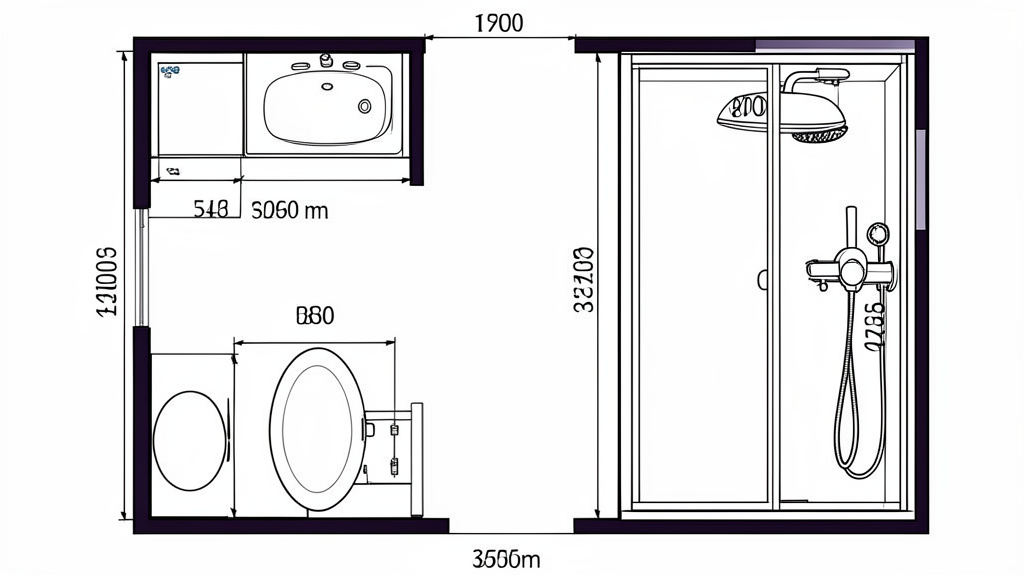
Stop Guessing and Start Planning: Every Measurement, Code Requirement, and Pro Tip to Create a Safe, Functional, and Beautiful Bathroom That Works for Real Life
Designing a bathroom layout that balances beauty, functionality, and safety requires far more than selecting attractive fixtures and finishes. Beneath every successful bathroom lies a meticulously planned spatial framework governed by building codes, human ergonomics, and practical daily rituals. This comprehensive guide translates complex plumbing codes, accessibility standards, and spatial psychology into actionable, step-by-step planning strategies—equipping you to avoid costly redesigns, failed inspections, and daily frustrations. Whether you’re renovating a powder room or designing a primary suite from scratch, you’ll gain the precise measurements, decision frameworks, and real-world insights needed to create a bathroom that flows seamlessly for years to come.
Introduction
Walk into any beautifully photographed bathroom online, and you’ll rarely see the invisible architecture that makes it work: the precise distance between the toilet centerline and the vanity, the unobstructed swing path of the shower door, the strategic placement of electrical outlets away from water sources. These details aren’t arbitrary—they’re the result of deliberate planning rooted in safety standards, human movement patterns, and established industry knowledge. A bathroom that ignores these fundamentals may look stunning in a magazine spread but quickly becomes a source of daily friction: knees bumping against cabinets, doors jamming against fixtures, or worse—safety hazards that compromise well-being.
Building codes exist not as bureaucratic obstacles but as carefully researched safeguards developed through decades of safety analysis and ergonomic study. While this guide references the International Residential Code (IRC), International Plumbing Code (IPC), National Electrical Code (NEC), and Americans with Disabilities Act (ADA) Standards for Accessible Design as foundational benchmarks, it’s critical to recognize that building codes are living documents. Jurisdictions across regions adopt, amend, or supplement these model codes based on local climate, infrastructure, and safety priorities. Requirements applicable in one location may differ subtly elsewhere. Always verify specific requirements with your local building department before finalizing plans—a step that protects your investment, ensures occupant safety, and prevents delays during permitting and inspection. This proactive verification isn’t merely procedural; it’s the cornerstone of responsible design that respects both regulatory frameworks and the people who will use the space daily. Understanding the intent behind each requirement—whether preventing slips, ensuring accessibility, or managing moisture—transforms compliance from a checklist into conscious design.
The “Flow, Function, Safety” Framework: A Three-Layer Approach to Bathroom Planning
Creating a bathroom that feels intuitive requires moving beyond checklist compliance. Instead, adopt a layered planning methodology that addresses human experience first, functional requirements second, and regulatory compliance third. This inverted pyramid—prioritizing lived experience while using codes as a safety net—transforms technical constraints into design opportunities. The “Flow, Function, Safety” framework provides a repeatable mental model applicable to powder rooms, family bathrooms, luxury suites, and adaptable designs alike. By working through these layers sequentially, you avoid the common pitfall of designing to minimum code requirements rather than through them toward an elevated user experience.
Layer 1: Mapping Human Movement and Daily Rituals
Before placing a single fixture on paper, observe how people actually move through and use bathroom spaces. Stand in your current bathroom at different times of day. Notice the path from doorway to sink. Watch how someone navigates around an open shower door. Consider multi-user scenarios: a parent assisting a child, partners preparing simultaneously, or accommodating guests with varying mobility needs. These observations reveal the invisible choreography of daily life—a choreography your layout must support.
Begin by defining primary traffic paths. The main circulation route—the path from entry door to the farthest fixture—should maintain a consistent minimum width of 36 inches where space allows. Why 36 inches? This dimension accommodates average adult shoulder width plus comfortable clearance for movement, clothing, and incidental items like towels. In tighter spaces, 30 inches may satisfy minimum requirements for certain corridors in some jurisdictions, but this creates a psychologically constricting “tunnel effect” and becomes problematic when two people attempt to pass. Visualize this path as a continuous ribbon flowing through the room. Does it intersect with an open door swing? Does it force someone to step directly into a wet shower zone? Does it create a “pinch point” near the toilet? Each intersection represents a potential friction point requiring resolution.
Next, analyze door swing dynamics—a frequent source of layout conflict. An inward-swinging door that opens directly into the toilet area creates immediate conflict. Imagine someone seated as the door swings inward: the doorstop may strike the user’s knee, or worse, trap them against the fixture. Similarly, a shower door swinging into the main traffic path forces users to perform an awkward sidestep maneuver while potentially wet and slippery. The solution lies in strategic door placement and swing direction. Where possible, position entry doors to open against a wall clear of fixtures. For shower enclosures, consider sliding, bi-fold, or outward-swinging doors in constrained layouts. If an inward-swinging shower door is unavoidable, ensure the swing path remains entirely within the shower threshold and doesn’t obstruct the main circulation route. Sketch multiple door swing arcs on your layout plan using a compass tool or digital equivalent—this simple step prevents costly field adjustments later.
Consider temporal usage patterns. A master bathroom used primarily by two adults at staggered times has different flow requirements than a family bathroom serving multiple children before school. In high-traffic bathrooms, create “activity zones” that allow simultaneous use without conflict. Position the vanity away from the direct path to the toilet. Ensure the shower entry doesn’t face the sink area, preventing water spray from reaching toothbrushes or countertops. For households with young children, locate the toilet within sightlines of the sink area for supervision without compromising privacy. These nuanced considerations transform a generic layout into a personalized spatial solution.
Finally, incorporate adaptability through flexible zoning. Life stages change: children grow, mobility needs evolve, household composition shifts. Designing with foresight reduces future renovation costs and emotional stress. Leave strategic wall space near the toilet free of permanent obstructions (like full-height cabinets) to allow future installation of support bars. Position electrical outlets with potential future needs in mind—such as near the vanity for medical devices or alongside the tub for therapeutic equipment. This layer of planning requires thoughtful anticipation but pays dividends in longevity and inclusivity.
Layer 2: Fixture-by-Fixture Clearance Deep Dive
With human movement patterns mapped, shift focus to individual fixtures. Each element— toilet, lavatory, shower, tub—has specific spatial requirements driven by function, comfort, and safety. Understanding not just what the measurements are but why they exist empowers you to make intelligent trade-offs when space is constrained. Below is a comprehensive breakdown of clearance considerations, practical implementation tips, and common pitfalls for every major bathroom component. Always confirm dimensions with your specific fixture manufacturer and local code authority.
The Toilet: Precision in Proximity
The toilet occupies a deceptively complex spatial footprint. Requirements focus on three critical dimensions: side clearance, front clearance, and centerline positioning.
- Side Clearance (Typically 15 inches minimum): Measured from the center of the toilet flange to the nearest side wall or obstruction (like a vanity cabinet or shower wall). This dimension ensures adequate elbow room and prevents knees from contacting adjacent surfaces. Crucially, this is often a minimum—many designers and accessibility guidelines recommend 18 inches for enhanced comfort, especially in primary bathrooms. When measuring, include the thickness of wall finishes (tile, wainscoting) and any protruding hardware. A common error: measuring to the finished wall surface but forgetting that a towel bar mounted on that wall now becomes the obstruction.
- Front Clearance (Typically 21 inches minimum): The unobstructed space extending forward from the front of the toilet bowl. This allows users to approach, sit, and stand comfortably. While 21 inches meets common baseline requirements, 30 inches significantly improves usability—particularly for individuals with mobility considerations or when assisting others. Visualize this zone as a rectangle extending forward from the bowl’s front edge; nothing should intrude into this space, including open vanity doors or shower thresholds.
- Centerline Positioning: The toilet flange centerline is commonly positioned 12 inches from the finished back wall (measured to the wall surface). This standard rough-in dimension ensures compatibility with most toilets. However, older homes may have different rough-in dimensions—verify existing conditions before purchasing fixtures. When planning new construction, maintain this standard unless specific fixture requirements dictate otherwise.
Practical Implementation Tip: When space is extremely tight (e.g., a narrow powder room), consider an elongated bowl toilet. While it extends slightly farther forward than a round-front model, its contoured shape often provides greater thigh clearance within the same side-wall footprint. Always obtain the manufacturer’s dimensional drawing for your specific toilet model—actual bowl widths and depths vary.
Common Mistake to Avoid: Placing a toilet centered on a narrow wall without verifying side clearances using finished dimensions. Example: A 36-inch wide wall section seems sufficient (requiring 30 inches total: 15 inches each side). However, if the wall includes structural framing plus finishes (drywall, tile), the finished width may be less. Centering the toilet could leave less than the required clearance. Always calculate using finished dimensions.
The Lavatory (Sink): Balancing Access and Utility
Vanity design involves balancing knee clearance, counter usability, faucet reach, and storage needs. Clearance considerations differ significantly between pedestal sinks, wall-mounted vanities, and traditional cabinet vanities.
- Front Approach Clearance (Typically 21 inches minimum): A minimum clear floor space must extend forward from the front edge of the sink or vanity. For adaptable designs, this increases to accommodate varied approaches. Even in standard bathrooms, providing 24–30 inches enhances comfort during prolonged use (shaving, makeup application).
- Knee and Toe Clearance (Critical for Wall-Mounted Sinks): For sinks intended for seated use or enhanced accessibility, knee clearance must allow sufficient space underneath. Pipes under wall-mounted sinks must be insulated or enclosed to prevent contact with hot water lines—a frequent inspection consideration. Traditional cabinet vanities eliminate knee clearance concerns but require careful internal layout to avoid plumbing conflicts with drawers.
- Mirror and Lighting Placement: Mirror height directly impacts usability. The bottom edge should sit 4–6 inches above the faucet handles. For households with varying heights, consider a vertically elongated mirror. Task lighting should flank the mirror (not mount above it) to eliminate facial shadows, positioned with the center of the light fixture approximately 66 inches above the finished floor.
Practical Implementation Tip: For small bathrooms, a wall-mounted or floating vanity creates visual spaciousness and simplifies floor cleaning. However, verify structural support in the wall framing before finalizing the location—these vanities require secure anchoring. If choosing a pedestal sink, ensure the pedestal base doesn’t intrude into the required front clearance zone. Measure the pedestal’s footprint carefully.
Common Mistake to Avoid: Installing a deep vanity (24+ inches) in a narrow room without verifying the swing path of adjacent doors. A standard interior door requires clearance for its full swing arc. If the vanity protrudes into this arc, the door may strike the countertop or prevent full opening. Solution: Specify a pocket door for the bathroom entry or position the vanity away from the door swing path.
Showers and Tubs: Wet Zone Integrity and Safety
Water containment and safe entry/exit define wet area planning. Requirements distinguish between showers, bathtubs, and combination units, with specific considerations for each.
- Shower Compartment Minimum Size (Often 30″ x 30″ minimum): Many codes mandate a minimum interior dimension for shower compartments. However, this is the absolute smallest functional size. A 36″ x 36″ shower provides noticeably more comfortable movement. For curbless (zero-threshold) showers—increasingly popular for adaptability and modern aesthetics—the minimum size often increases to ensure adequate water containment without a physical barrier. Threshold height requirements vary; accessible showers typically require very low thresholds (often achieved with linear drains).
- Shower Door Swing Clearance: If using a hinged shower door, ensure the swing path remains entirely within the shower area and doesn’t obstruct the main circulation path. Outward-swinging doors require additional clearance outside the shower. Sliding or pivot doors eliminate swing conflicts but require precise installation.
- Bathtub Clearance and Support Features: A standard alcove tub requires clear floor space along its accessible side. For safety and future adaptability, plan for potential support bar installation: leave a section of wall adjacent to the tub free of permanent obstructions. Support bars require secure anchoring into wall framing; embedding backing boards during construction allows easy future installation—a small effort with significant long-term value.
- Shower Controls Placement: Shower controls (valves, handles) are commonly required to be located within a specific height range above the shower floor for accessible reach. Position controls on the wall opposite the showerhead entry point, at a height accessible from outside the spray zone. This allows temperature adjustment before stepping into the water stream—a detail frequently overlooked.
Practical Implementation Tip: For curbless showers, collaborate early with your plumber and tile contractor. Achieving proper slope toward the drain across a larger area requires careful subfloor preparation. Linear drains along the shower entry can simplify slope requirements but demand precise leveling. Obtain detailed shop drawings before proceeding.
Common Mistake to Avoid: Placing the shower control valve directly under the showerhead. This forces users to stand under cold water while adjusting temperature. Best practice: Position controls where they can be reached comfortably before entering the main water stream.
Additional Fixtures and Elements
- Bidets and Bidet Seats: Treat electronic bidet seats like any electrical device near water. GFCI-protected outlets must be installed per electrical code—typically on an adjacent wall, not directly behind the toilet where moisture accumulates. Allow clearance beside the toilet for the bidet seat’s control panel. For standalone bidets, follow toilet clearance guidelines.
- Toilet Paper Holders and Accessories: Position holders within comfortable reach without interfering with movement. Avoid mounting holders on the wall immediately beside the toilet where elbows might strike them.
- Electrical Outlets and Switches: All bathroom outlets must be GFCI-protected per electrical code. Place vanity outlets on both sides of the sink, centered 36–40 inches above the floor. Light switches should be located outside the bathroom entry door or just inside on a wall clear of wet zones—never adjacent to the shower or tub. For steam showers, all electrical components must be rated for high-moisture environments per manufacturer specifications and local code.
- Ventilation Consideration: Exhaust fan sizing often correlates with bathroom square footage. In humid climates or for bathrooms with steam functions, consult a ventilation specialist to determine appropriate sizing. Ducting must route outside the building envelope—never into attics or wall cavities—to prevent moisture damage.
Fixture Clearance Summary Table
| Fixture | Critical Dimension | Typical Minimum Requirement | Recommended for Comfort | Key Consideration |
|---|---|---|---|---|
| Toilet | Center to Side Wall | 15 inches | 18 inches | Measure to finished wall surface + hardware |
| Front Clearance | 21 inches | 30 inches | Unobstructed path to door or next fixture | |
| Lavatory | Front Approach Clearance | 21 inches | 24–30 inches | Critical for knee space under wall-mounted sinks |
| Mirror Bottom Edge | 4″ above faucet | 6″ above faucet | Prevents head strike during use | |
| Shower | Interior Compartment | 30″ x 30″ | 36″ x 36″ | Curbless showers often need larger footprint |
| Threshold Height | Varies | Minimal (accessible) | Zero-threshold requires careful drain planning | |
| Bathtub | Side Clearance | 21 inches | 24+ inches | Along accessible long side |
| Support Bar Zone (Adjacent Wall) | N/A | 36-inch clear section | Install backing boards during framing | |
| General | Main Traffic Path Width | 30 inches | 36 inches | Consistent width prevents “pinch points” |
| Door Swing Clearance | Door width + clearance | Full swing arc clear | Verify with physical mock-up |
Layer 3: The Safety Net—Code Compliance as Your Foundation
Codes represent distilled knowledge from safety engineers, medical professionals, and construction experts. They address scenarios you might not anticipate: structural loads, electrical safety near moisture, fall prevention. Viewing codes not as restrictions but as a foundational safety net reframes compliance as an act of care—for current occupants, future residents, and community welfare.
Key code families impacting bathroom layout:
* International Residential Code (IRC): Governs structural elements, room dimensions, and general habitability.
* International Plumbing Code (IPC): Dictates fixture spacing, drain/waste/vent (DWV) sizing, water supply lines, and trap requirements. Critical for preventing backups and ensuring proper drainage.
* National Electrical Code (NEC): Mandates GFCI protection for all bathroom outlets, specifies lighting requirements near tubs/showers, and governs circuit loads.
* Americans with Disabilities Act (ADA) Standards: While primarily applicable to public/commercial spaces, ADA guidelines offer invaluable best practices for universal design in residential settings, especially for aging-in-place.
Why Standards Evolve: Requirements like GFCI outlets in bathrooms emerged after analysis showed electrocution risks. Similarly, modern standards increasingly address moisture management behind tile after studies linked trapped moisture to mold growth. Understanding the intent behind a requirement—safety, health, durability—helps you apply its spirit even when exact measurements vary locally.
The Verification Mindset: Approach layout planning proactively. Walk through your plan with these critical checkpoints:
1. Fixture Spacing: Verify all side/front clearances using finished dimensions.
2. Door Conflicts: Trace every door swing arc. Does any fixture, cabinet, or obstruction intersect the path?
3. Electrical Safety: Confirm all outlets are GFCI-protected. Are switches located away from wet zones? Are light fixtures near showers rated appropriately?
4. Ventilation: Is an exhaust fan planned with adequate capacity? Is the duct routed outside the building?
5. Moisture Management: Are waterproofing methods specified for wet areas? Is the subfloor properly prepared for slope toward drains?
The Fundamental Principle: Code compliance establishes the essential foundation of design—not the ceiling. Excellence emerges when you use these standards as a springboard to create spaces that anticipate human needs, accommodate diverse abilities, and deliver daily comfort through thoughtful spatial harmony.
Navigating Real-World Layout Scenarios
Theory meets practice in specific bathroom configurations. Below, we dissect common scenarios with tailored strategies, measurement considerations, and visualizable solutions. Each example includes dimensional guidance and decision rationale. Always adapt to your specific space and verify with local requirements.
Scenario 1: The Compact Powder Room (Approx. 24 sq. ft. / 5′ x 5′)
Challenge: Fitting a toilet and sink into minimal square footage without creating a claustrophobic or non-compliant space.
Layout Strategy:
* Position the toilet along the longest wall (5-foot wall). Center the flange 18 inches from the side wall (providing clearance exceeding minimums for comfort).
* Place a wall-mounted or pedestal sink on the opposite wall. Ensure the sink’s front edge sits at least 21 inches from the front of the toilet bowl. In a 5-foot width, this typically leaves 30–36 inches between fixture fronts—workable but tight.
* Critical Door Solution: Install a pocket door. A standard door swinging inward consumes significant floor space and risks striking fixtures. A pocket door preserves the entire floor area for circulation. If a pocket door isn’t feasible, specify a door that swings outward into the hallway—but verify this won’t obstruct hallway traffic or violate local egress considerations.
* Fixture Selection: Choose a compact elongated toilet. Select a sink no deeper than 18 inches. A shallow undermount sink maximizes usable counter space within depth constraints.
* Pro Tip: Use large-format tiles with minimal grout lines to create visual continuity and make the space feel larger. Install vertical wall sconces beside the mirror instead of an overhead light to draw the eye upward.
Dimensional Guidance:
* Toilet center to side wall: ≥18″ (finished)
* Toilet front to sink front: ≥24″ (aim for 30″ if possible)
* Sink front to opposite wall: ≥21″ clearance
* Door: Pocket door or outward-swinging (verify local allowance)
Scenario 2: The Family Bathroom (Approx. 45 sq. ft. / 6′ x 7’6″)
Challenge: Accommodating a tub/shower combo, toilet, and double vanity for multiple users with competing needs.
Layout Strategy:
* Place the tub/shower unit along the 7.5-foot wall. This provides adequate space for a standard tub with a shower surround. Ensure clear space along the tub’s accessible side.
* Position the toilet on the adjacent short wall (6-foot wall), centered with clearance to each side wall for comfort. Verify the toilet paper holder location doesn’t interfere with the tub wall.
* Install a double vanity along the remaining long wall (7.5-foot wall). A 60-inch vanity provides functional counter space per user. Ensure clearance in front of the vanity.
* Traffic Flow Solution: Create a clear “loop” path: Entry door → around vanity end → past toilet → to tub. Avoid placing the vanity directly opposite the entry door if it blocks the path to other fixtures. If the room shape allows, offset the vanity slightly to create a wider circulation zone near the toilet.
* Multi-User Optimization: Install two separate medicine cabinets above the vanity. Position electrical outlets on both sides of each sink bowl. Choose a tub filler with a handheld showerhead on a slide bar—essential for bathing children and cleaning the tub.
* Storage Integration: Build a shallow linen closet (12–16 inches deep) into the wall beside the tub or opposite the vanity. This keeps towels and supplies accessible without consuming floor space. Ensure the closet door swings clear of traffic paths.
Dimensional Guidance:
* Tub side clearance: ≥24″
* Toilet center to side wall: ≥18″ each side
* Vanity front to opposite wall: ≥30″ clearance (critical for two people using sinks simultaneously)
* Clear path width between vanity end and toilet: ≥36″
Scenario 3: The Primary Suite Sanctuary (80+ sq. ft. / 10′ x 8’+)
Challenge: Balancing luxury elements (freestanding tub, walk-in shower, double vanity) with intuitive flow and zoning.
Layout Strategy:
* Zone the Space: Divide the bathroom into distinct activity zones: Wet Zone (shower, tub), Dry Zone (vanity, storage), and Private Zone (toilet). Use partial walls, floor material changes, or ceiling height variations to define zones without full visual barriers.
* Shower Placement: Locate the walk-in shower away from the main entry path. A 42″ x 42″ or larger shower allows comfortable movement. Position the shower entry so the door swing (if hinged) doesn’t face the vanity or toilet area.
* Freestanding Tub Consideration: These require significant clearance on all sides (minimum 30 inches, ideally 36+ inches) for cleaning access and visual balance. Place it as a focal point. Critical: Verify the floor structure can support the weight of a filled tub. Consult a structural professional if unsure.
* Toilet Compartmentalization: For ultimate privacy and multi-user functionality, enclose the toilet in a separate water closet. Minimum interior dimensions: 36″ wide x 60″ deep. Include ventilation to prevent moisture buildup. This allows one person to use the toilet while another is at the vanity or in the shower.
* Vanity Strategy: A double vanity 72–84 inches wide provides generous personal space. Position sinks 36 inches apart (center-to-center) to minimize elbow bumping. Include central storage between sinks for shared items.
* Lighting Layers: Implement three lighting layers: Ambient (recessed ceiling lights on dimmer), Task (sconces at each sink), and Accent (LED strip under vanity, niche lighting in shower). Control each layer independently.
Dimensional Guidance:
* Freestanding tub clearance: ≥36″ on all sides
* Shower interior: ≥42″ x 42″
* Water closet interior: ≥36″ W x 60″ D
* Sink center-to-center spacing: ≥36″
* Main traffic path width: ≥42″ between major zones
Scenario 4: Adaptable Design / Future-Proofing Bathroom
Challenge: Creating a space usable by people of varying ages and abilities today and tomorrow, without a clinical appearance.
Layout Strategy:
* Threshold Consideration: A zero-threshold shower entry enhances accessibility and ease of cleaning. Size minimum 36″ x 60″ to allow assistance if needed. Install a fold-down bench on one wall. Position controls at a height accessible from both standing and seated positions. Include support bars: one vertical near the entry, one horizontal on the back wall. Embed blocking for future additional bars.
* Toilet Height and Clearance: Specify a “comfort height” toilet (17–19 inches seat height). Provide clear floor space beside the toilet for transfer. Install support bars: one horizontal on the side wall, one vertical on the rear wall. Ensure the flush handle is on the open side.
* Vanity Accessibility: Use a wall-mounted vanity with appropriate knee clearance. Select a single-lever faucet for ease of use. Install the mirror with the bottom edge at a height accommodating varied viewing positions.
* Flooring: Choose slip-resistant flooring with minimal transitions—maintain a single, level surface throughout.
* Hardware and Controls: Use lever-style door handles and faucet handles (easier to operate). Install motion-sensor or hands-free faucets where practical. Place light switches and controls between 36 and 48 inches high, operable with a closed fist.
* Aesthetic Integration: Adaptable design need not look institutional. Conceal support bars within towel bars (using reinforced models). Choose warm finishes for floating vanities. Use frameless glass shower enclosures to maintain visual openness. Integrate task lighting seamlessly.
Dimensional Guidance (Exceeding Minimums for Safety):
* Shower: ≥36″ x 60″, minimal threshold
* Clear floor space beside toilet: ≥36″ x 60″
* Vanity knee clearance: As required for intended use
* Turning space: ≥60-inch diameter clear area (can overlap fixture clearances)
* All operable hardware: 34″–48″ above floor
The Friction Points: Common Layout Challenges and How to Address Them
Even careful planners encounter spatial conflicts. Recognizing these recurring challenges—and their solutions—prevents frustration during construction and daily use. Below are frequent pitfalls encountered in bathroom planning, with actionable resolutions grounded in spatial logic and code awareness.
Challenge 1: The “Door vs. Fixture” Conflict
Symptom: The bathroom entry door swings inward and strikes the vanity, toilet, or shower door when opened.
Root Cause: Failure to map door swing arcs during initial layout. Doors require a clear path equal to their width plus hardware clearance.
Solution Path:
Best: Change to a pocket door. This eliminates swing conflicts entirely and maximizes usable floor space. Cost is moderate during framing; difficult to retrofit later.
Alternative: Reverse the door swing direction (if structurally and egress-permissible). Verify the door won’t obstruct hallway traffic.
Budget Consideration: Install a door stop limiting the swing arc to 90 degrees. Caution: This reduces usable doorway width and may not satisfy all needs. Only use if clearance calculations confirm safety.
Prevention Protocol: During planning, cut a cardboard template matching your door dimensions. Physically swing it in the rough-framed space to verify clearance. Digital tools allow virtual swing simulation.
Challenge 2: The “Toilet Clearance” Issue
Symptom: Knees hit the vanity cabinet side, or accessories are awkwardly positioned.
Root Cause: Measuring clearance to the rough wall instead of the finished wall surface (including tile, wainscot, or trim). Wall finishes add thickness that reduces available space.
Solution Path:
During Planning: Always calculate clearances using finished dimensions. Add anticipated material thicknesses to your layout drawings. For tiled walls, account for added thickness.
During Framing: If space is critically tight, consider furring out the wall away from the toilet by a small amount using lumber. This sacrifices minimal adjacent space but gains crucial inches at the toilet.
Fixture Adjustment: Select a toilet with a narrower bowl profile. Obtain manufacturer specs before purchase.
Professional Insight: Contractors may use adjustable flanges to fine-tune positioning after wall finishes are complete—a small contingency that resolves many clearance issues.
Challenge 3: The “Shower Slope” Concern
Symptom: Water pools in corners of the shower pan instead of flowing cleanly to the drain.
Root Cause: Inadequate or inconsistent slope in the shower subfloor. Requirements typically specify a minimum slope toward the drain. Achieving this across a shower pan demands precise craftsmanship.
Solution Path:
Pre-Construction: Specify a pre-sloped shower pan system during planning. These trays guarantee correct slope and simplify installation. Cost is higher upfront but reduces labor risk.
Traditional Approach: If using a site-built mortar bed, require verification of the slope with a level and straightedge before installing the waterproof membrane.
Curbless Shower Specifics: For zero-threshold showers, the entire bathroom floor may need a subtle slope toward the shower drain. This requires coordination between framing, tile setting, and drain placement. Engage a contractor experienced with these installations.
Verification Step: After tile installation but before grouting, perform a water test: pour water into the shower and observe flow. Address pooling immediately.
Challenge 4: The “Electrical Integration” Oversight
Symptom: GFCI outlet trips frequently near the sink; no outlet available for a bidet seat; light switch located where wet hands must touch it.
Root Cause: Treating electrical layout as an afterthought rather than integrating it with fixture placement.
Solution Path:
Outlet Strategy: Install two GFCI-protected outlets per vanity side (total four for a double sink), spaced appropriately. Place them high enough to avoid splash zones but accessible for devices. For bidet seats, add a dedicated outlet on the wall beside the toilet (not behind it), GFCI-protected.
Switch Placement: Locate the main light switch just outside the bathroom door. Install a separate, appropriate switch inside the shower stall for shower lights if required. Use motion sensors for ambient lighting to avoid fumbling.
Future-Proofing: Run conduit from the vanity electrical box to potential future locations. This allows easy addition of circuits later without opening walls.
Critical Reminder: All electrical work must be performed by a qualified electrician and inspected. Electrical work in wet locations carries significant risks.
Challenge 5: The “Ventilation” Gap
Symptom: Persistent mirror fog, musty odors, peeling paint near the ceiling—signs of inadequate moisture removal.
Root Cause: Undersized fan, improper duct routing (into attic instead of outside), or lack of make-up air.
Solution Path:
Fan Sizing: Calculate minimum capacity based on bathroom size. For bathrooms with steam functions, consult manufacturer requirements.
Ducting Protocol: Route duct directly outside through the roof or soffit. Never terminate in attic, crawlspace, or wall cavity—this traps moisture. Use rigid metal ducting for optimal airflow. Insulate the duct if it passes through unconditioned space.
Smart Controls: Install a humidity-sensing fan switch that runs automatically until moisture levels normalize. Pair with a timer switch for extended runtime.
Make-Up Air: In tightly sealed homes, exhaust fans can create negative pressure. Ensure adequate make-up air via HVAC system design—discuss with your HVAC contractor during planning.
Your Questions, Answered
Q: Do I really need to follow building codes for a simple bathroom remodel? What if I’m just replacing fixtures in the same location?
A: Even “like-for-like” fixture replacements can trigger code requirements. If you remove wall surfaces, you may be required to bring wiring up to current standards (e.g., adding GFCI protection if absent). Moving any plumbing fixture—even slightly—often requires updated venting or drain slope verification. More importantly, non-compliant work can create liability during home sale or affect insurance coverage. When in doubt, consult your local building department; many offer guidance for minor projects.
Q: My bathroom is too small to meet all the clearance recommendations. What should I prioritize?
A: Safety and critical usability should guide decisions. In historically constrained spaces, jurisdictions may have specific allowances. Document your space limitations, propose mitigating solutions (e.g., pocket door to gain clearance, comfort-height toilet), and discuss options before starting work with your building official. Never compromise on life safety items (electrical near water, structural integrity). Prioritize: 1) Critical safety elements, 2) Essential usability (toilet front clearance), 3) Comfort enhancements.
Q: Are ADA guidelines required for my private home bathroom?
A: ADA Standards are federally mandated for public accommodations and commercial facilities, not private residences. However, they represent evidence-based best practices for adaptable design. Incorporating elements like reinforced walls for future support bars, lever handles, and minimal-threshold showers significantly enhances usability for aging occupants, guests with temporary injuries, or children. Many builders now include “visitability” features (reinforced bathroom walls) as standard—they cost little during construction but add immense long-term value and inclusivity.
Q: How much space do I need between two sinks in a double vanity?
A: For comfortable simultaneous use without elbow bumping, position sink bowls with centers 36 inches apart minimum. For generous personal space (especially in primary bathrooms), 42–48 inches is ideal. Measure from the center of each drain assembly. Also ensure the countertop extends sufficiently beyond the outer edge of each sink bowl. If space is tight, consider offsetting the sinks slightly—but verify knee clearance underneath isn’t compromised.
Q: Can I put a window in my shower?
A: Yes, but with critical precautions. The window must be made of tempered glass (required by code for glazing in wet areas subject to human impact). It should be positioned high enough to maintain privacy. Operable windows require special waterproofing around the frame. Fixed windows are simpler. Always consult your window supplier and tile contractor about integration details before ordering materials. Many designers opt for clerestory windows (high on the wall) or interior windows facing a private courtyard for light without privacy concerns.
Q: What’s the difference between a “rough-in” dimension and a “finished” dimension? Why does it matter?
A: Rough-in dimensions refer to measurements taken to structural elements before wall finishes are applied (e.g., distance from center of toilet flange to bare stud wall). Finished dimensions account for all wall materials (drywall, backer board, tile, trim). A standard rough-in for a toilet is 12 inches from flange center to the back wall studs. After adding finishes, the finished distance increases. Fixture manufacturers design products for finished dimensions. Confusing rough-in with finished dimensions is a leading cause of misaligned fixtures and clearance issues. Always clarify which dimension a plan or spec sheet references.
Q: Do I need a permit for my bathroom remodel?
A: Permit requirements vary significantly by municipality. In most jurisdictions, permits are required for projects involving: plumbing alterations (moving fixtures, changing drain lines), electrical work (adding outlets, moving lights), structural changes (removing walls), or mechanical systems (installing an exhaust fan where none existed). Even cosmetic updates might require a permit if altering the room’s configuration. Always consult your local building department before starting work. Permits ensure your work undergoes safety review, protect you during future home sales, and may be required for insurance coverage. Many departments offer online resources specific to bathroom renovations.
Q: How do I plan for future adaptability without making my bathroom look institutional?
A: Adaptable design integrates seamlessly with contemporary aesthetics. Key strategies: 1) Install blocking between studs behind shower and toilet walls during construction—this allows support bar installation later with no wall damage. Mark locations on your “as-built” drawings. 2) Choose lever-style handles for doors and faucets—they’re stylish and easier for everyone to use. 3) Specify a comfort-height toilet (17–19 inches); it benefits people of all heights. 4) Use subtle contrasting colors: a darker shower bench against light tile improves visibility. 5) Install a handheld showerhead on a slide bar—it’s practical for bathing children, cleaning, and adaptability. These choices enhance daily usability for everyone while preparing for future needs invisibly.
Q: What’s the most overlooked element in bathroom layout planning?
A: Storage integration and maintenance access. Beautiful layouts often fail by neglecting where daily items live (toilet paper, towels, cleaning supplies) or how components are serviced. Plan for: 1) Recessed niches in shower walls (positioned at elbow height), 2) A dedicated spot for the toilet plunger (a discreet wall-mounted holder or cabinet compartment), 3) Access panels for plumbing shut-off valves and drain cleanouts—place them inside adjacent closets or cabinets with removable panels. During layout, ask: “Where will cleaning supplies be stored?” and “How will the plumber access this valve in five years?” Answering these prevents post-renovation frustration.
Q: Can I save money by reusing existing plumbing locations?
A: Reusing existing drain and water supply lines is often cost-effective, if the current layout meets your functional needs and code requirements. However, forcing a new design into old plumbing locations can lead to compromised layouts (e.g., a vanity shoved into a corner with inadequate clearance). Evaluate the trade-off: The cost of moving plumbing versus the long-term dissatisfaction of a poorly functioning layout. In many cases, moving one critical fixture yields disproportionate usability gains. Get quotes from contractors for both scenarios before finalizing your plan.
Q: How important is the direction my shower door opens?
A: Critically important for safety and usability. An inward-swinging door can trap someone who falls inside the shower. Outward-swinging doors require clearance outside the shower but allow easier access in an emergency. Sliding or bi-fold doors eliminate swing conflicts entirely. While residential codes may not explicitly mandate swing direction for all bathrooms, the safety principle is widely recognized. For new construction or major remodels, prioritize outward-swinging, sliding, or frameless pivot doors. If retaining an inward-swinging door, ensure the swing path is completely clear.
Q: What should I bring to my first meeting with a contractor or designer?
A: Come prepared with: 1) Accurate room measurements (length, width, ceiling height, window/door locations and sizes), 2) Photos of your current bathroom (all angles), 3) Inspiration images highlighting specific elements you love (note why you like them: “I love the niche placement in this shower”), 4) A prioritized list: “Must-haves,” “Nice-to-haves,” “Deal-breakers,” 5) Your budget range and timeline. This focused preparation accelerates the design process, reduces miscommunication, and helps professionals provide accurate estimates. Translate vague ideas (“spa-like”) into concrete requirements (“space for two people at the vanity simultaneously”).
Conclusion and Your Next Step
Creating a bathroom layout that harmonizes codes, clearances, and human experience is less about memorizing measurements and more about adopting a deliberate, layered planning process. You now possess a robust framework—the “Flow, Function, Safety” methodology—to transform spatial constraints into intentional design decisions. Remember the three pillars that elevate a bathroom from merely compliant to truly exceptional: prioritize the invisible choreography of daily movement (Flow), honor the precise spatial needs of each fixture with empathy for real-world use (Function), and embrace building standards not as limitations but as the essential foundation protecting everyone who enters the space (Safety). These principles apply whether you’re optimizing a compact powder room or designing a spacious primary suite. A well-planned bathroom layout also integrates thoughtfully with your home’s broader systems—plumbing, electrical, structural—contributing to overall efficiency, safety, and long-term value.
Recap: The 3 Essential Practices for Bathroom Layout Success
- Map Movement Before Fixtures: Trace traffic paths and door swings on your plan first. A layout that disrupts natural movement will feel frustrating regardless of fixture quality.
- Calculate in Finished Dimensions: Always add wall finish thicknesses (tile, drywall) to your clearance calculations. This single habit prevents the most common spacing errors.
- Verify Locally, Always: Model codes provide a baseline, but your local building department holds the final authority. A brief consultation saves weeks of delays and costly corrections.
The 24-Hour Rule: Your Immediate Action Step
Before finalizing any layout or purchasing fixtures, implement this simple yet transformative practice: Spend the next 24 hours observing your current bathroom with fresh eyes. At different times of day—morning rush, evening wind-down—note specific friction points: Where do you bump your elbow? Where do towels pile up because there’s no logical storage spot? How does the door swing interfere with your routine? Jot down these observations. Then, physically tape out your proposed new layout on the floor using painter’s tape. Walk through the taped zones repeatedly. Open imaginary doors. Sit where the toilet will be. Does the flow feel intuitive? Does the clearance feel generous or cramped? Invite another household member to do the same. This tangible, embodied review catches spatial errors no digital plan can reveal and aligns your design with lived reality.
The Big Picture: Your Bathroom as a Daily Sanctuary
A thoughtfully planned bathroom transcends its utilitarian purpose. It becomes a space of quiet ritual, a sanctuary for rejuvenation, and a testament to considerate design that respects human dignity across all life stages. The measurements detailed in this guide—the clearance beside the toilet, the shower threshold consideration, the traffic path width—are not arbitrary numbers. They are distilled wisdom from decades of safety research, ergonomic study, and real-world application. By honoring these dimensions, you invest in daily comfort, long-term safety, and enduring value. You create a space that adapts as your life evolves, welcoming children, supporting changing needs, and providing solace after demanding days. This is the profound impact of meticulous layout planning: transforming square footage into meaningful, human-centered experience that seamlessly integrates into the fabric of your home.
Explore Our Complete Bathroom Planning System:
How to Read a Bathroom Blueprint: A Visual Guide for Homeowners | Bathroom Ventilation Mastery: Sizing Fans, Ducting, and Moisture Control | Tile Layout Patterns Decoded: From Herringbone to Linear Drain Designs | Adaptable Bathroom Design: Universal Principles for Every Home | Bathroom Lighting Layers: Crafting Ambiance and Function Zone by Zone | Plumbing Rough-In Dimensions: A Field Reference Guide | Bathroom Remodel Budget Builder: Tracking Costs from Demo to Detail