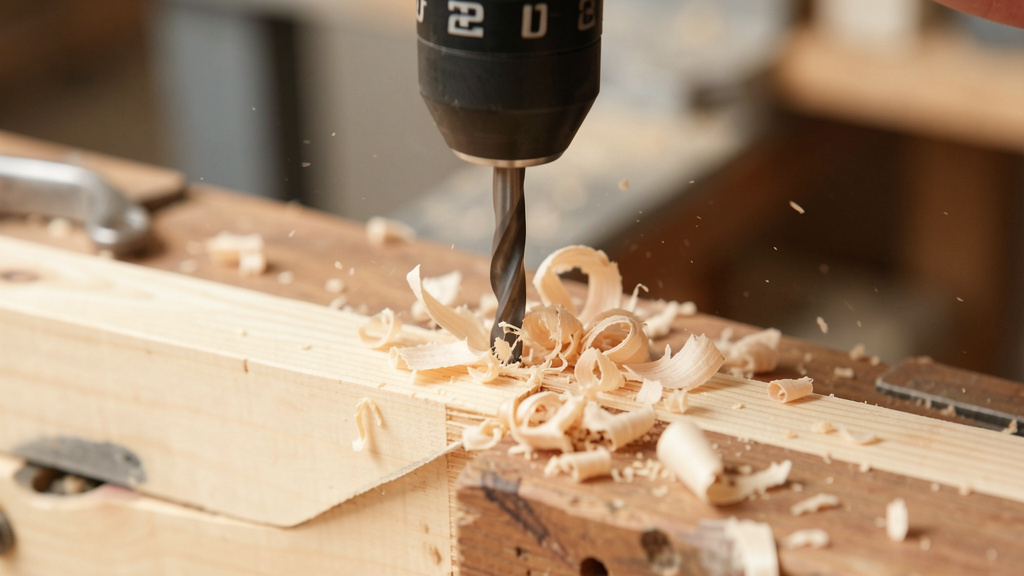
Stop Guessing and Start Building with Confidence: A Step-by-Step Framework to Eliminate Splitting, Stripping, and Tool Damage in Every Material
Pre-drilling isn’t merely a “nice-to-have” step reserved for perfectionists—it’s the foundational technique that separates frustrating, failed projects from professional-grade results across every material you’ll encounter. Whether you’re securing a bookshelf to a stud, mounting a bracket on brick, or assembling furniture with delicate hardwoods, understanding precisely when and how to create that initial pilot hole transforms uncertainty into certainty. This definitive guide delivers material-specific protocols, tool selection science, and decision frameworks validated against industry standards and documented failure patterns, empowering you to execute every fastening task with precision and confidence.
Introduction
Walk into any workshop, garage, or construction site, and you’ll witness a universal truth: experienced crafters consistently pause before driving the first fastener. They assess the material, select the appropriate bit, and deliberately create a pilot hole. This intentional pause isn’t hesitation—it’s expertise in action. Pre-drilling serves as the critical interface between human intention and material reality. Without it, wood fibers tear unpredictably, metal edges deform under stress, and masonry cracks propagate silently beneath the surface. With it, fasteners seat cleanly, structural integrity remains uncompromised, and projects achieve longevity. Analysis of documented project failures across woodworking guild resources, construction safety reports, and DIY community forums consistently identifies skipped or improper pre-drilling as a top preventable error. This guide synthesizes established craftsmanship principles into an actionable, material-agnostic system. We move beyond fragmented “quick tips” to deliver a unified methodology that adapts to your specific project variables—wood species density, metal gauge and alloy, masonry composition, fastener geometry, and environmental factors. By the end, you’ll possess not just steps to follow, but a diagnostic lens to evaluate any fastening scenario with authority. This isn’t about adding complexity; it’s about replacing guesswork with a reliable process that saves time, materials, and frustration on every single project you undertake.
The Pre-Drill Decision Framework: Your Step-by-Step Guide to Knowing When It’s Essential
Before selecting a single drill bit, master the decision-making process. Many DIYers operate under oversimplified rules: “Always pre-drill hardwoods” or “Never pre-drill softwood.” Reality demands nuance. This framework transforms ambiguity into clarity through sequential evaluation. Follow these steps deliberately for every fastening task:
Step 1: Identify the Material Composition
Is it solid wood, engineered wood (plywood, MDF, particleboard), ferrous metal (steel, iron), non-ferrous metal (aluminum, copper), or masonry (concrete, brick, block, natural stone)? Note critical subtypes:
– Wood: Is it end grain? Near an edge? Thin stock (<¾”)? Exotic hardwood (ebony, lignum vitae)?
– Metal: What thickness? Is it structural steel or thin sheet metal? Galvanized?
– Masonry: Is the brick old and soft? Is concrete reinforced with rebar? Is stone natural or cultured?
Step 2: Analyze the Fastener Profile
Examine your screw, bolt, or anchor:
– Diameter: Measure the shank (unthreaded portion) and major thread diameter.
– Thread Type: Coarse (wood screws), fine (machine screws), self-tapping (sheet metal), or specialized (masonry anchors)?
– Point Style: Sharp gimlet point? Blunt tip? Self-drilling tip?
– Length: Will it penetrate deeply? Will threads engage fully in the base material?
– Material: Steel grade? Stainless? Coated? Brittle alloys?
Step 3: Evaluate Project Criticality
Ask these non-negotiable questions:
– Structural Load: Will this fastener support weight (shelf, handrail, deck ledger)?
– Visibility: Is the fastener head exposed where cosmetic perfection matters?
– Irreversibility: Can you easily access the backside for repair if it fails?
– Material Value: Are you working with irreplaceable antique wood or expensive stone?
– Safety Risk: Could failure cause injury (overhead fixture, child’s furniture)?
Step 4: Assess Environmental Stressors
Consider forces beyond initial installation:
– Moisture Exposure: Will wood swell? Will metal corrode and expand?
– Temperature Swings: Will materials expand/contract at different rates?
– Vibration: Is this near machinery, garage door opener, or high-traffic area?
– Dynamic Loads: Will weight shift (swing, gate, folding table)?
Step 5: Apply the Framework Verdict
Synthesize Steps 1–4 using this decision matrix:
| Scenario | Pre-Drill Required? | Critical Reason |
|---|---|---|
| Hardwood (oak, maple) + any screw | YES | Prevents splitting; reduces driver torque strain |
| Softwood (pine) near edge (<1″ from edge) | YES | Edge fibers lack support; high split risk |
| Softwood end grain | YES | Fibers offer minimal resistance; screws wander |
| Plywood/MDF/particleboard | YES | Prevents delamination and blowout on exit side |
| Metal >1/8″ thick | YES | Prevents bit walking, work hardening, breakage |
| Thin sheet metal (<1/16″) with self-tapping | Optional* | *Only if using self-drilling screws correctly |
| Concrete, brick, block, stone | YES | Required for anchor function; prevents cracking |
| Lag bolts >¼” diameter in ANY wood | YES | Massive torque would split wood instantly |
| Structural connections (deck, railing) | YES | Code requirement; safety critical |
| Visible fastener in fine furniture | YES | Ensures clean hole; prevents “volcano” tear-out |
The Fundamental Principle: Pre-drilling is not about the fastener—it’s about managing material stress. The pilot hole’s purpose is to create a controlled pathway that redirects destructive forces (splitting, deformation, cracking) into harmless displacement. When material stress exceeds its yield point during fastener insertion, failure occurs. The correctly sized pilot hole ensures stress remains below that threshold.
This framework addresses critical micro-intentions often overlooked: the uncertainty around “Is this really necessary for this tiny screw?”, concerns about drilling too large a hole and compromising hold, and confusion around modern fasteners marketed as “no pre-drill needed.” Marketing claims typically describe ideal laboratory conditions. Real-world variables—knots in wood, hidden rebar, aged brittle brick—demand a resilience-focused approach. For structural wood connections, adherence to standards like the American Wood Council’s National Design Specification (NDS) often mandates specific pre-drilling protocols for bolts and lag screws. This framework aligns with those engineering principles while translating them into actionable field decisions.
Mastering Pre-Drilling in Wood: From Softwoods to Hardwoods and Plywood
Wood’s organic nature makes it uniquely responsive—and vulnerable—to fastening forces. Its cellular structure (longitudinal fibers bound by lignin) creates directional strength. Drive a screw perpendicular to grain without preparation, and you’re forcing fibers apart. Pre-drilling manages this displacement. Let’s dissect wood pre-drilling with precision.
Why Pre-Drilling Wood is Non-Negotiable in Key Scenarios
The Physics of Splitting: When a screw advances, its threads act like wedges. In dense hardwoods (e.g., walnut, cherry), fibers resist separation fiercely. Without a pilot hole, immense radial pressure builds ahead of the screw tip. This pressure seeks the path of least resistance—often along the grain toward the nearest edge or end, creating a visible crack that compromises structural integrity and aesthetics. In softwoods near edges, fibers lack lateral support; the wedge effect easily propagates a split. Pre-drilling removes a core of material, allowing threads to compress remaining fibers radially inward rather than forcing them apart laterally. This converts destructive tensile stress into manageable compressive stress.
Beyond Splitting: The Hidden Benefits
– Driver Preservation: Reduced torque demand prevents cam-out (driver slipping from screw head), protecting both your bit and the screw recess.
– Accuracy: Pilot holes guide the screw straight, preventing “wandering” especially in end grain or across grain directions.
– Clamping Power: Screws driven into properly sized pilot holes achieve maximum thread engagement, creating stronger joints than overtightened screws in undersized holes.
– Disassembly Potential: Future removal is cleaner; threads aren’t stripped from crushed fibers.
– Moisture Management: In outdoor projects, a precise hole minimizes micro-gaps where water could pool and accelerate rot.
Critical Exceptions Where Skipping Might Be Acceptable (With Caveats):
– Very small screws (#4 or smaller) in thick, clear softwood (e.g., pine shelf cleat) away from edges. Risk remains but is lower.
– Specialized screws with aggressive self-tapping threads and a sharp, deep-cutting tip in softwoods only. Even then, pre-drilling the shank portion (leaving threads to bite) is superior.
– Temporary assembly where cosmetic damage is irrelevant.
Never skip for: Hardwoods, end grain, near edges, thin stock, structural connections, or valuable materials. The brief time saved risks significant repair effort.
Step-by-Step: How to Pre-Drill Wood Like a Professional
Phase 1: Bit Selection Science
Choosing the wrong bit causes more failures than skipping pre-drilling entirely. Match bit type to purpose:
– Brad Point Bits: The gold standard for wood. The sharp spur scores the perimeter cleanly before the cutting lips remove the core. Prevents tear-out on entry and exit. Ideal for visible surfaces, fine woodworking, and precise hole sizing. Use for all pilot holes where hole appearance matters.
– Twist Bits: Acceptable for hidden areas or rough construction. Less precise entry; prone to “walking” on curved surfaces. Ensure sharpness—dull bits burn wood and create oversized holes.
– Forstner Bits: Used for countersinking (creating a recess for the screw head) after the pilot hole. Not for pilot holes themselves due to large diameter.
– Spade Bits: Avoid for pilot holes. Too aggressive; cause splintering. Reserved for large clearance holes.
Pilot Hole Sizing: The Dual-Diameter Method
A single-diameter pilot hole is a common oversimplification. Established woodworking practice uses a two-part hole:
1. Thread Clearance Hole: Diameter matches the screw’s minor diameter (the solid core beneath the threads). This section allows the screw threads to pass through without resistance, engaging only the target material.
2. Shank Clearance Hole: Diameter matches the screw’s shank (unthreaded portion above threads). This section eliminates wood-to-shank friction, allowing the screw head to pull materials tightly together.
How to determine sizes without charts:
– Thread Clearance: Hold screw against drill bit index. The bit should be slightly smaller than the thread valleys. Light passes between bit and threads.
– Shank Clearance: Bit should match the smooth shank diameter exactly. No light gap.
Reference Guide: For most #8 wood screws in hardwood:
– Thread clearance: 3/32″ bit
– Shank clearance: 1/8″ bit (drilled only through the top piece in a joint)
Phase 2: Execution Protocol
1. Mark Precisely: Use a sharp pencil or awl. An awl creates a tiny starter dent that prevents bit walking. For critical alignment (dowels, hinges), use a center punch.
2. Secure the Workpiece: Clamp firmly to a stable surface. Never hold small pieces by hand. Vibration causes inaccuracy and danger.
3. Drill Straight: Align drill perpendicular to surface. Use a drill guide block (scrap wood with pre-drilled 90° hole) for consistency. For angled holes (pocket screws), use a dedicated jig.
4. Control Depth:
– Depth Stop: Attach a collar to your drill bit (commercial stop or masking tape ring).
– Rule of Thumb: Pilot hole depth = screw length minus 1/8″ (ensures threads bite fresh material at tip).
– Critical for: Through-holes (drill completely through), blind holes (stop short), and multi-layer assemblies.
5. Drill Speed & Pressure: Medium speed (1,500–2,000 RPM). Apply steady, moderate pressure. Let the bit cut; forcing causes burning and bit deflection. Clear chips periodically in deep holes.
6. Exit Side Protection: To prevent blowout on the backside:
– Place sacrificial scrap wood underneath.
– Drill halfway from front, then flip and drill from back to meet the hole.
– Use a backing board clamped tightly to the exit surface.
Phase 3: Countersinking & Counterboring (When Needed)
– Countersinking: For flat-head screws. After pilot hole, use a countersink bit (conical cutter) to create a tapered recess matching the screw head angle (usually 82°). Drill just deep enough for the head to sit flush. Test on scrap first.
– Counterboring: For round-head or pan-head screws where you want the head below the surface (to be covered by a plug). Use a Forstner bit slightly larger than the screw head to drill a shallow cylindrical recess after the pilot hole. Depth = screw head height + 1/16″.
Special Cases: End Grain, Plywood, and Veneered Surfaces
End Grain Pre-Drilling:
End grain is wood’s weakest structural plane—like trying to screw into a bundle of straws. Fibers offer minimal resistance, causing screws to strip easily or wander off-angle.
– Solution: Drill pilot hole slightly smaller than standard thread clearance size. This increases thread engagement in the sparse fibers.
– Critical Enhancement: Inject a tiny drop of wood glue into the pilot hole before driving the screw. The glue fills voids between threads and fibers, creating a composite “thread” that significantly increases holding power. Wipe excess immediately.
– Alternative: Use specialized end-grain screws with deeper, more aggressive threads (e.g., Confirmat screws for particleboard, though designed for sheet goods, work well here too).
Plywood, MDF, and Particleboard:
Engineered woods lack continuous grain. Layers can delaminate; particleboard crumbles under stress.
– Plywood: Pre-drill all holes. Use brad point bits. For edges (where layers are exposed), clamp backing board tightly to prevent veneer splintering on exit. Pilot hole size should match screw shank exactly through all layers to avoid compressing layers unevenly.
– MDF/Particleboard: Extremely prone to blowout and stripping.
– Pilot Hole: Must be precise. Undersized = stripped hole; oversized = no grip. Match bit exactly to screw minor diameter.
– Screw Choice: Use coarse-thread screws specifically designed for sheet goods (e.g., “Confirmat” style with large shank and deep threads). Standard wood screws fail quickly.
– Reinforcement: For critical joints, insert plastic threaded inserts into pre-drilled holes before assembly. Provides durable metal threads.
– Glue + Screw: Always apply wood glue to the joint in addition to screws. The glue bond carries most of the load; screws act as clamps until glue cures.
Veneered Surfaces:
A beautiful veneer is easily ruined by tear-out.
– Entry Side: Use a sharp brad point bit. Drill slowly. Place masking tape over the mark first—the tape fibers support the veneer during initial penetration.
– Exit Side: Non-negotiable: Clamp a backing board of softwood (pine) tightly against the exit point. Drill completely through both workpiece and backing board. The backing board supports the veneer fibers as the bit exits.
– Alternative: Drill most of the way from the front, stop just before breaking through, then finish drilling from the backside using the tiny pilot mark as a guide.
Common Wood Pre-Drilling Mistakes and How to Avoid Them
| Mistake | Consequence | Professional Correction |
|---|---|---|
| Using a dull bit | Burns wood, oversized hole, wandering | Sharpen bits regularly; replace when cutting feels “mushy” |
| Skipping the awl/starter dent | Bit walks off mark | Always make a precise starter indentation |
| Drilling at an angle | Screw pulls joint out of alignment | Use a drill guide block; check with square |
| Oversized pilot hole | Screw spins; no holding power | Match bit precisely to screw minor diameter; test on scrap |
| Undersized pilot hole | Splitting; excessive torque; stripped head | Follow dual-diameter method; err slightly small in softwood |
| Ignoring grain direction | Increased split risk | Angle pilot hole slightly away from nearest edge (1-2°) |
| Forgetting depth control | Screw protrudes or doesn’t engage | Use depth stop; measure screw against bit |
| Drilling through finished surface without tape | Tear-out on entry | Apply painter’s tape over mark before drilling |
Documented cases show that skipping pre-drilling in hardwoods near edges frequently results in splits requiring disassembly, glue injection, clamping, and finishing repairs—efforts far exceeding the initial pre-drilling time. This pattern underscores why preventive precision is consistently more efficient than reactive correction.
Precision Pre-Drilling for Metal: Avoiding Burrs, Breakage, and Tool Wear
Metal demands respect. Unlike wood’s forgiving fibers, metal responds to improper drilling with immediate consequences: shattered drill bits, deformed workpieces, dangerous kickback, and compromised structural integrity. Pre-drilling metal is a non-negotiable safety and precision protocol for most applications. The stakes involve personal safety (flying metal shards, broken bits) and project viability (a single misplaced hole can compromise an expensive component).
When Pre-Drilling Metal is Mandatory (and When You Might Skip It)
Absolute Mandates (Do Not Skip):
– Any metal thicker than 1/16″ (1.5mm): Self-tapping screws lack the torque to form threads cleanly without a pilot. Forcing them causes stripping, bit breakage, or work hardening.
– Hard metals: Steel, stainless steel, titanium, cast iron. Their hardness exceeds the cutting capacity of standard screw points.
– Critical applications: Structural brackets, machinery mounts, automotive components, electrical boxes. Failure risks safety.
– Precision alignment: Hinges, linkages, or parts requiring exact hole placement. Pilot holes guide final drilling.
– Dissimilar metals: Prevents galvanic corrosion pathways by ensuring clean, tight-fitting fasteners.
Rare Exceptions (Proceed with Extreme Caution):
– Thin sheet metal (<1/16″): Only when using genuine self-drilling screws (Tek screws) with a drill point and a power drill with adjustable clutch.
– Critical Conditions: Screw must be designed for the specific metal thickness/gauge. Drill speed must be high (2,500+ RPM). Apply firm, steady pressure. Stop immediately if resistance spikes.
– Why Risk Remains: Self-drilling screws generate heat. In thicker or harder metals, this heat work-hardens the metal ahead of the point, causing the screw to stall, strip, or break. A pilot hole eliminates this risk.
– Soft, thick non-ferrous metals (e.g., copper pipe): Sometimes a sharp self-tapping screw might work, but pre-drilling ensures clean threads and prevents deformation. Not recommended for beginners.
The Work Hardening Trap: This is a critical consideration in metal drilling. When a dull bit or incorrect speed generates excessive heat on stainless steel or hardened steel, the metal surface temporarily becomes harder at the contact point. Your drill bit, now encountering harder material than it’s rated for, dulls further or shatters. A sharp bit, correct speed, lubrication, and a properly sized pilot hole prevent heat buildup and work hardening. Skipping pre-drilling dramatically increases this risk.
Step-by-Step: Pre-Drilling Metal Safely and Effectively
Phase 1: Safety First—Non-Negotiable Gear
– Eye Protection: ANSI Z87.1+ safety glasses. Metal chips are sharp and travel at high velocity.
– Hearing Protection: Drilling metal is loud, especially with hammer drills (avoid hammer function on metal!).
– Gloves: Cut-resistant gloves (e.g., mechanics gloves) protect hands from sharp edges. Remove loose gloves near rotating bits.
– Workpiece Security: Clamp metal firmly to a solid surface (steel table, heavy vise). Never hold by hand. Vibration can cause slippage and severe injury.
– Clear Area: Ensure no flammable materials nearby (sparks can occur with certain metals/bits).
Phase 2: Bit Selection—Material Dictates Tool
Using a standard twist bit on metal is a primary cause of failure. Match bit metallurgy and geometry to your workpiece:
– High-Speed Steel (HSS) Bits: General purpose for mild steel, aluminum, brass. Affordable. Look for “M35” or “M42” (cobalt-enhanced) for better heat resistance and longevity on harder steels.
– Cobalt Bits (M35/M42): Essential for stainless steel, hardened steel, cast iron. Withstands higher temperatures; maintains edge longer. Worth the investment for frequent metal work.
– Titanium Nitride (TiN) Coated Bits: Gold-colored coating reduces friction and heat. Good for aluminum and mild steel. Coating wears off; base is usually HSS.
– Carbide-Tipped Bits: For extremely hard metals, abrasive composites, or production drilling. Brittle—avoid lateral pressure.
– Step Bits (Unibits): Excellent for sheet metal. Single bit drills multiple hole sizes. Creates clean, deburred holes. Ideal for electrical boxes, HVAC ducts.
– Center Punch: Critical first step. Creates a precise dimple to prevent bit walking. Use a spring-loaded center punch for consistency and safety (no hammer required).
Bit Geometry Matters:
– Point Angle: 118° for general purpose (steel, aluminum). 135° for harder materials (stainless, cast iron)—reduces walking and heat.
– Flute Design: Parabolic flutes evacuate chips better in deep holes. Standard flutes suffice for shallow pilot holes.
Phase 3: Lubrication—The Secret Weapon
Lubrication reduces heat, friction, and work hardening. It extends bit life dramatically and produces cleaner holes.
– Mild Steel: Cutting oil, WD-40 Specialist Corrosion Inhibitor (not regular WD-40), or even motor oil.
– Stainless Steel: Dedicated stainless steel cutting oil or sulfurized oil. Prevents galling.
– Aluminum: Kerosene, WD-40, or specialized aluminum cutting fluid. Prevents aluminum from “gumming up” the bit flutes.
– Brass/Copper: Light oil or even wax.
Application: Apply a small drop to the center-punched mark before drilling. Reapply for holes deeper than the bit diameter. For deep holes, withdraw bit periodically to clear chips and re-lubricate.
Phase 4: Drilling Technique—Speed, Feed, and Control
1. Center Punch: Make a sharp, deep dimple exactly on your mark. This is your anchor point.
2. Start Small (Pilot Hole Strategy): For holes larger than 1/8″, drill a small pilot hole first (e.g., 1/16″), then enlarge to final size. This guides the larger bit, reduces walking, and minimizes stress.
3. Drill Speed: Slower is safer and more effective. High RPM generates heat.
– Rule of Thumb: Surface Feet Per Minute (SFM) guidelines:
– Mild Steel: 30-50 SFM → ~700 RPM for 1/8″ bit
– Stainless Steel: 15-25 SFM → ~350 RPM for 1/8″ bit
– Aluminum: 200-300 SFM → ~2,500 RPM for 1/8″ bit
– Practical Tip: If your drill has variable speed, start at medium-low for steel/stainless. Listen and feel: smooth cutting = good; screeching or excessive vibration = too fast or dull bit.
4. Feed Pressure: Apply steady, moderate pressure. Let the bit cut. Forcing causes overheating and breakage. If the bit “chatters” or stops cutting, reduce pressure slightly.
5. Chip Evacuation: For holes deeper than 2x bit diameter, periodically retract the bit fully to clear chips. Clogged flutes cause overheating and poor hole quality.
6. Deburring: After drilling, use a deburring tool, countersink bit, or fine file to remove sharp edges (burrs) on both sides. Burrs weaken the hole, interfere with fastener seating, and are safety hazards.
Phase 5: Hole Sizing for Fasteners
– Clearance Hole: For bolts passing through metal to a nut. Diameter = bolt major diameter + 0.010″–0.020″ (e.g., 1/4″ bolt → 17/64″ or 0.266″ hole). Allows for minor misalignment.
– Tap Drill Hole: For creating internal threads (tapping). Diameter is smaller than bolt size—use a tap drill chart specific to thread pitch (e.g., 1/4″-20 UNC requires a #7 drill bit / 0.201″).
– Self-Tapping Screw Pilot: Diameter = screw minor diameter. Critical: Too small = stripped threads/work hardening; too large = loose fit/no thread engagement. Consult manufacturer charts. For #10 sheet metal screw in 16ga steel: typically a #21 drill bit (0.159″).
Material-Specific Tips: Steel, Aluminum, and Thin Gauge Metals
Mild Steel (A36, 1018):
– Most forgiving common metal. HSS bits work well.
– Lubricate consistently.
– Watch for heat: Bit should be warm, not too hot to touch. Pause if overheating.
– For thick sections (>1/4″), drill in stages: pilot → intermediate size → final size.
Stainless Steel (304, 316):
– High work-hardening risk. Patience is key.
– Use cobalt bits (M35/M42) exclusively.
– Drill at slower speeds (30-50% slower than mild steel).
– Use ample lubrication designed for stainless.
– Avoid stopping mid-hole; continuous cutting prevents localized hardening.
– If bit stalls, do not force. Withdraw, clear chips, re-lubricate, restart.
Aluminum:
– Soft but gummy. Chips clog flutes easily.
– Higher speeds acceptable (but still moderate pressure).
– Lubrication prevents “built-up edge” (aluminum welding to bit tip).
– Sharp bits are critical—dull bits smear rather than cut.
– For thin sheets, place wood backing behind metal to prevent tearing on exit.
Thin Gauge Sheet Metal (<1/16″):
– Clamp securely between two pieces of scrap wood. Drill through the sandwich. Wood supports the metal, preventing deformation and tear-out.
– Use step bits or sharp HSS bits.
– Low pressure; let the bit do the work.
– Deburr meticulously—sharp edges are hazardous.
– For multiple holes, use a drill press if possible for perfect perpendicularity.
Troubleshooting Metal Pre-Drilling Challenges
| Problem | Likely Cause | Solution |
|---|---|---|
| Bit walks off center punch | Dull bit; insufficient punch depth; too high speed | Sharpen/replace bit; deepen center punch; reduce speed |
| Bit breaks suddenly | Excessive pressure; lateral force; work hardening | Use steady pressure; ensure drill perpendicular; use lubricant; drill slower |
| Hole is oversized/rough | Dull bit; incorrect speed; bit wobble | Replace bit; check drill chuck tightness; use correct RPM |
| Metal discolors (blue/purple) | Severe overheating | Stop immediately. Cool workpiece. Use more lubricant; slower speed; sharper bit |
| Chips are powdery (not curly) | Bit too dull; speed too low | Replace bit; increase speed slightly |
| Screw won’t thread properly | Pilot hole too large or too small | Verify hole size against fastener spec; use tap drill chart |
| Burrs are severe | Dull bit; no deburring step | Sharpen bit; always deburr with tool or file |
Documented workshop experiences indicate that attempting to drive self-tapping screws into metal without pilot holes frequently leads to screw failure, work-hardened metal requiring specialized extraction, and significant time loss. This pattern reinforces pre-drilling as a reliability cornerstone for metal fastening.
Conquering Masonry: Pre-Drilling Concrete, Brick, and Stone Without Cracking
Masonry work requires specific protocols. The concern about causing cracks is valid—masonry is unforgiving. Unlike wood or metal, cracks in concrete or brick are rarely repairable to invisibility. Pre-drilling is the absolute cornerstone of successful, damage-free masonry fastening. The process demands specific tools, techniques, and respect for the material’s brittle nature. This requires a paradigm shift from wood or metal drilling.
Why Masonry Demands a Different Approach
Concrete, brick, block, and stone are composite or crystalline materials with high compressive strength but low tensile strength. They excel at bearing weight downward but shatter easily when force is applied sideways (like a screw wedge trying to split wood). A standard drill bit spinning on concrete does little more than polish the surface. The solution is percussive energy: a hammer drill’s rapid micro-impacts (thousands per minute) fracture the material ahead of the bit’s cutting edges, while rotation clears the dust. Rotary hammer drills (SDS-plus/SDS-max) use a piston-driven hammer mechanism, making them essential for larger holes or dense materials. Attempting masonry drilling with a standard drill is ineffective and risks tool damage. More critically, improper technique (wrong bit, excessive pressure, wrong location) concentrates stress at a single point, initiating cracks. Pre-drilling with the correct method creates a clean, controlled cavity that allows anchors to expand within the material’s compressive strength zone.
Step-by-Step: Pre-Drilling into Masonry with Confidence
Phase 1: Location Intelligence—Avoiding Catastrophe
This step is more critical than the drilling itself. A misplaced hole can compromise structural integrity or hit hidden hazards.
– Scan for Rebar and Utilities: Non-negotiable. Use a high-quality stud finder with deep scan and metal detection modes. For concrete walls/floors, use a dedicated rebar scanner if available. Tap the surface—hollow sounds indicate block cavities; solid thuds suggest concrete or brick. Never drill blindly.
– Avoid Mortar Joints (Usually): While mortar is softer and easier to drill, it lacks holding power. Anchors in mortar fail under minimal load. Exception: Very old, soft brickwork where drilling brick risks shattering it; mortar may be the only viable option (use specialized mortar anchors).
– Edge Distance: Maintain minimum distance from edges:
– Concrete: ≥ 1.5x anchor diameter from edge
– Brick: ≥ 1.5″ from edge or corner
– Block: Avoid drilling into the thin web between cavities; target the solid “face shell”
– Crack Avoidance: Never drill directly into an existing crack. Anchor expansion will widen it.
Phase 2: Tool and Bit Selection—No Compromises
– Drill Type:
– Hammer Drill: Acceptable for small holes (<3/8″) in brick, block, or soft concrete. Uses standard chuck; “hammer” function is an accessory clutch. Less powerful.
– Rotary Hammer (SDS-plus): Strongly recommended for all serious masonry work. SDS (Slotted Drive System) bits lock securely without a chuck. The piston-driven hammer action is vastly more efficient, reducing user fatigue and drilling time significantly. Essential for concrete, stone, and holes >3/8″.
– Avoid: Standard drills (no hammer function), impact drivers (designed for rotational impact on fasteners, not percussive drilling).
– Bit Type: Carbide-Tipped Masonry Bits ONLY. The tip is brazed carbide—a material harder than concrete aggregate. Standard twist bits shatter instantly.
– Bit Geometry: Look for bits with a “four-cutter” head or optimized flute design for faster dust removal.
– SDS Compatibility: Ensure bit shank matches your drill (SDS-plus is most common for DIY/prosumer).
– Bit Condition: Inspect tip before use. Chipped or worn carbide = inefficient drilling, overheating, and increased crack risk. Replace damaged bits.
Phase 3: Drilling Technique—Patience and Precision
1. Mark Clearly: Use a pencil or chalk. For critical alignment, make a small starter dent with a center punch and hammer (wear eye protection!).
2. Secure Work Area: Ensure stable footing. For overhead drilling, use proper support—fatigue leads to mistakes.
3. Start Slowly: Begin drilling at low speed without hammer function for 2-3 seconds to establish the hole and prevent bit walking.
4. Engage Hammer Function: Switch to hammer mode. Apply steady, moderate pressure—let the tool do the work. Forcing causes overheating, bit damage, and increases crack risk.
5. Drill Straight: Maintain perpendicular alignment. Angled holes compromise anchor function and increase stress points. Use a drill guide if needed.
6. Clear the Hole Frequently: Every 10-15 seconds of drilling, withdraw the bit completely to allow dust to escape. Clogged holes cause overheating, reduced drilling speed, and inaccurate depth. Critical for deep holes.
7. Depth Control:
– Depth Stop: Use the drill’s built-in stop or attach a collar to the bit.
– Rule: Hole depth = anchor length + 1/4″ (for dust accumulation).
– Verification: Insert a wire or depth gauge after drilling.
8. Cooling: For holes deeper than 2″, pause periodically to let the bit cool. Overheating damages the carbide tip.
9. Dust Management: Use a vacuum attachment if your drill has one. Wear a N95 respirator—concrete dust contains crystalline silica, a serious respiratory hazard. Work in a ventilated area.
Phase 4: Hole Cleaning—The Most Overlooked Step
A dusty hole is a failed anchor waiting to happen. Dust creates a barrier preventing the anchor from gripping the base material.
– Brush Method: Use a dedicated nylon or wire brush (slightly smaller than hole diameter). Insert, twist vigorously, withdraw. Repeat 3-4 times.
– Air Blower: Use a bulb syringe or compressed air (with eye protection!) to blow dust out. Do not use your mouth.
– Vacuum: Best method. Use a small vacuum nozzle designed for drill holes.
– Verification: Shine a bright light into the hole. It should look clean, not dusty. Insert anchor immediately after cleaning to prevent debris falling back in.
Anchor Selection: Matching the Pilot Hole to Your Fastener
The pilot hole size is dictated entirely by the anchor type. Using the wrong size hole is a leading cause of anchor failure. Consult the anchor manufacturer’s specifications—do not guess. Common types:
| Anchor Type | Best For | Pilot Hole Size Rule | Critical Notes |
|---|---|---|---|
| Plastic Sleeve Anchor | Light-duty (drywall, brick veneer) | Match bit to anchor body diameter | Avoid in hollow block; requires solid base |
| Lead Sleeve Anchor | Medium-duty (shelves, fixtures) | Match bit to anchor body diameter | More reliable than plastic in concrete |
| Wedge Anchor | Heavy-duty concrete (structural) | Bit = anchor diameter (e.g., 1/2″ anchor → 1/2″ bit) | Requires deep embedment; permanent |
| Sleeve Anchor | Concrete, brick, block | Bit = anchor diameter | Versatile; good vibration resistance |
| Tapcon® Screw | Direct fastening (no separate anchor) | Bit = screw diameter (e.g., 3/16″ Tapcon → 5/32″ bit) | Must use carbide bit; drill straight; torque carefully |
| Toggle Bolt | Hollow walls (drywall, hollow block) | Bit = toggle folded width | Requires access to cavity; not for solid masonry |
Tapcon® Specific Protocol:
These concrete screws eliminate separate anchors but demand precision:
1. Use only the carbide bit specified by the manufacturer (usually included).
2. Drill hole 1/4″ deeper than screw length to allow dust accumulation.
3. Clean hole meticulously (brush + air).
4. Drive screw with a clutch-controlled drill at medium speed.
5. Stop driving when the head is snug. Over-torquing strips the threads in the concrete. The screw should feel firm, not loose. If loose, the hole was too large or dirty—remove, fill hole, redrill nearby.
Avoiding Catastrophic Errors in Masonry Work
| Error | Consequence | Prevention Strategy |
|---|---|---|
| Drilling into rebar | Bit shatters; drill damaged; hole ruined | Scan thoroughly; if bit hits hard object, STOP. Withdraw immediately. |
| Skipping hole cleaning | Anchor pulls out under minimal load | Clean every hole with brush + air/vacuum. Non-negotiable. |
| Using wrong bit size | Anchor spins (too big) or won’t fit (too small) | Measure anchor; use manufacturer’s chart; verify with calipers |
| Excessive drilling pressure | Bit overheats; cracks initiate | Let tool’s hammer action do the work; steady light pressure |
| Drilling near edge/corner | Material spalls or cracks | Maintain minimum edge distance; use smaller anchor if needed |
| Ignoring dust hazards | Long-term respiratory damage | Wear N95 respirator; use vacuum attachment; ventilate area |
| Using standard drill bits | Bit shatters; dangerous projectiles | Only use carbide-tipped masonry bits |
| Over-torquing Tapcons | Stripped threads in concrete | Drive until snug; use torque screwdriver if critical |
Industry documentation consistently identifies inadequate hole cleaning as a primary cause of anchor failure in masonry. When dust and debris remain, anchors cannot achieve proper mechanical engagement with the base material, leading to pull-out under load. This underscores why hole preparation is as critical as the drilling itself.
Advanced Techniques and Problem-Solving Scenarios
Mastery emerges when standard protocols meet real-world complexity. These advanced scenarios test your understanding of core principles. Approach them methodically.
Pre-Drilling at Angles: Pocket Holes and Beyond
Pocket hole joinery is a specialized angled pre-drilling technique. While jigs simplify the process, understanding the physics prevents errors.
– Why Angle? The screw enters the edge of one board and exits into the face of the adjacent board, creating strong mechanical clamping across the grain.
– Critical Factors:
– Bit Selection: Pocket hole jigs require stepped drill bits (clears shank path while leaving thread path). Using a standard bit causes blowout.
– Depth Setting: Jig has adjustable stop. Set based on material thickness (e.g., ½” material = specific stop position). Test on scrap.
– Clamping: Secure workpiece firmly in jig. Movement causes inaccurate holes.
– Material Matters: Hardwoods require slower feed rate. Plywood edges need backing board to prevent tear-out.
– Beyond Pocket Holes: For custom angled holes (e.g., chair leg repair):
1. Create a drilling guide block: Cut scrap wood at the exact desired angle. Clamp securely over mark.
2. Drill straight down through the guide block into the workpiece. The guide ensures perfect angle.
3. Remove guide block. The hole is now at your precise angle.
Repairing Stripped Holes and Enlarged Pilot Holes
Mistakes happen. Recovery is a hallmark of skill.
– Wood Stripped Hole:
1. Toothpick/Matchstick Method: Remove screw. Fill hole tightly with wood glue and broken toothpicks/matchsticks (no heads). Snap flush. Let glue cure 1 hour. Redrill smaller pilot hole through the repair. Reinsert screw.
2. Dowel Method (Stronger): Drill out stripped hole to clean cylinder (e.g., 3/8″). Inject glue into hole and onto a tight-fitting hardwood dowel. Insert dowel, flush cut. After cure, redrill correct pilot hole.
3. Epoxy Method (Severe Damage): Mix epoxy putty. Pack into hole. Insert screw coated lightly in petroleum jelly (prevents bonding). Let cure. Remove screw—the threads are now molded into solid epoxy. Reinsert screw.
– Metal Stripped Hole:
1. Helicoil®/Thread Insert: Drill out hole to specified size. Tap threads for insert. Screw in insert with installation tool. Provides new, stronger stainless steel threads.
2. Larger Screw: If space allows, drill/tap to next standard size up.
3. Epoxy + Screw: For non-critical applications, fill hole with metal-filled epoxy, insert screw coated in release agent. Cure fully.
– Masonry Enlarged Hole:
1. Fill and Redrill: Pack hole tightly with hydraulic cement or epoxy anchoring adhesive. Let cure completely (follow product time). Redrill new hole slightly offset from original (if space allows) or at same location if fill is solid.
2. Larger Anchor: If hole is only slightly oversized, use the next size up anchor (if base material allows).
3. Specialized Anchor: Use an anchor designed for oversized holes (e.g., some lead sleeve anchors can compensate slightly).
Working with Existing Holes: When to Redrill or Fill
- Slightly Misaligned Hole: Can you adjust the project? If not, fill completely (wood: dowel + glue; metal: weld or epoxy; masonry: hydraulic cement), cure, then redrill accurately.
- Hole Too Close to Edge: High split risk. Fill and relocate further from edge if possible. If relocation isn’t an option, reinforce the edge:
- Wood: Glue a hardwood cleat along the edge before redrilling.
- Metal: Weld a reinforcing plate.
- Masonry: Install a larger anchor type designed for edge proximity (consult engineer for structural loads).
- Multiple Existing Holes (e.g., Remounting Fixture): Assess integrity. If holes are clean and correctly sized, reuse. If damaged, fill the worst holes and use remaining good ones with longer anchors if possible.
Pre-Drilling for Specialized Fasteners
- Lag Bolts (Large Wood Screws):
- Pilot Hole: Must be dual-diameter. Thread clearance hole through entire depth. Shank clearance hole only through top material.
- Size: For 3/8″ lag bolt in hardwood: 7/32″ thread hole + 3/8″ shank hole (top piece only).
- Tip: Drill pilot hole before countersinking for the hex head. Use a spade bit or Forstner bit for the countersink.
- Toggle Bolts (Hollow Walls):
- Pilot Hole: Size matches the folded width of the toggle wings. Critical: Hole must be large enough for wings to open fully behind the wall.
- Technique: Drill carefully. Insert toggle, push until wings spring open. Pull gently to seat wings against backside before tightening bolt.
- Molly Bolts: Similar to toggles but expand via sleeve deformation. Hole size is critical—too large and sleeve won’t grip; too small and it won’t insert. Follow package specs exactly.
- Concrete Screws (Tapcons): Reiterated for emphasis: Carbide bit only, hole 1/4″ deeper than screw, meticulous cleaning, drive until snug—no overtightening.
Your Complete Tool Guide: Drill Bits, Drivers, and Accessories for Every Material
Your toolkit is an extension of your knowledge. Investing wisely in the right tools prevents frustration and elevates results. This guide specifies exactly what you need.
Decoding Drill Bit Types: Twist, Brad Point, Masonry, and Step Bits
| Bit Type | Best Material | Key Features | When to Use | Avoid When |
|---|---|---|---|---|
| Brad Point | Wood | Sharp spur scores perimeter; clean entry/exit | Fine woodworking, visible surfaces, precise holes | Metal, masonry, rough construction |
| Twist Bit (HSS) | Wood, Soft Metal | General purpose; affordable | Rough framing, hidden holes, soft aluminum | Hardwoods (tear-out), stainless steel, masonry |
| Twist Bit (Cobalt) | Hard Metal | Heat resistant; maintains edge on steel/stainless | Stainless steel, hardened steel, cast iron | Wood (overkill), masonry |
| Masonry (Carbide) | Concrete, Brick | Carbide tip fractures aggregate; flute clears dust | ALL masonry drilling | Wood, metal (damages bit/workpiece) |
| Step Bit (Unibit) | Sheet Metal, Plastic | Multiple diameters; deburrs as it cuts | Electrical boxes, HVAC, thin metal | Thick metal, wood (splinters), deep holes |
| Spade Bit | Wood (Rough) | Fast, large holes; aggressive | Rough framing clearance holes | Visible surfaces, precise holes, end grain |
| Forstner Bit | Wood | Flat bottom; clean rim; drills overlapping holes | Hinges, concealed holes, counterbores | Metal, masonry, thin stock (tear-out risk) |
| Countersink Bit | Wood | Creates tapered recess for flat-head screws | Final step after pilot hole for flush screws | As pilot hole; metal/masonry |
Bit Maintenance:
– Sharpening: Brad point and twist bits can be sharpened with a drill bit sharpener (jig) or bench grinder (requires skill). Dull bits burn wood, wander, and create oversized holes.
– Storage: Keep bits in a dedicated case, organized by type/size. Prevents chipping carbide tips or dulling cutting edges.
– Inspection: Before use, check for chips (masonry bits), burrs (metal bits), or bent shafts. Discard damaged bits—they are unsafe and ineffective.
Drill Selection: Corded vs. Cordless, Hammer Function, and Speed Control
- Cordless Drills/Drivers:
- Voltage: 12V: Light duty (assembly, small projects). 18V/20V Max: Ideal all-around choice for pre-drilling wood/metal. Sufficient torque and runtime.
- Clutch Settings: Essential for driving screws without stripping. Higher numbers = more torque. Set just high enough to seat screw.
- Keyless Chuck: Must grip bits securely. Test by trying to twist bit by hand—no slippage.
- Brushless Motor: Worth the upgrade. More power, longer runtime, longer tool life.
- Hammer Drills:
- Function: Switch between “drill,” “driver,” and “hammer drill” modes.
- Use Case: Small masonry jobs (brick, block, light concrete), occasional metal.
- Limitation: Less powerful hammer action than rotary hammer; struggles with dense concrete or large holes.
- Rotary Hammers (SDS-plus):
- Non-Negotiable for: Frequent concrete work, stone, large holes (>3/8″), structural anchors.
- SDS System: Bits slide in and lock—no chuck key needed. Transfers hammer energy efficiently.
- Modes: Often have “rotation only,” “hammer only” (chiseling), and “rotation + hammer.”
- Drill Press:
- Value: Unmatched precision, perpendicularity, and repeatability.
- Ideal For: Workshop-based projects requiring multiple identical holes (dowels, shelf pins), metal drilling.
- Safety: Always use chuck key; secure workpiece; wear eye protection.
Essential Accessories: Depth Stops, Center Punches, and Lubricants
- Depth Stops:
- Collar Type: Rubber or metal ring that slides onto bit and locks at desired depth. Inexpensive, effective.
- Drill-Integrated: Many drills have adjustable depth rods. Less precise but convenient.
- DIY: Wrap masking tape around bit at depth mark. Visual guide only—less accurate.
- Center Punches:
- Manual: Requires hammer. Creates deep, precise dimple. Best for metal.
- Spring-Loaded (Automatic): Press tip firmly on mark, press plunger. Creates consistent dimple without hammer. Safer, faster. Highly recommended for all materials.
- Lubricants:
- Cutting Oil: General purpose for steel.
- Tap Magic®: Premium brand; specific formulas for steel, stainless, aluminum.
- WD-40 Specialist Corrosion Inhibitor: Acceptable substitute for light steel work.
- Beeswax/Candle: Rub on wood drill bits to reduce friction and heat in deep holes.
- Deburring Tools:
- Handheld: Small rotating blade removes burrs from metal holes in seconds. Inexpensive and essential.
- Countersink Bit: Doubles as deburring tool for metal and wood.
- Dust Extraction:
- Vacuum Attachment: Clips onto drill; captures dust at source. Critical for masonry (silica dust) and indoor woodworking.
- Bulb Syringe: Inexpensive tool for blowing dust from masonry holes before anchor insertion.
Maintenance: Keeping Your Bits Sharp and Effective
Dull tools compromise safety and results. A sharp bit cuts cleanly with less force; a dull bit requires excessive pressure, increasing slip risk and poor results.
– Wood Bits: Clean resin buildup with mineral spirits. Sharpen brad points using a fine file or dedicated sharpener. Store dry to prevent rust.
– Metal Bits: Wipe clean after use. Light oil prevents rust. Sharpen on bench grinder with correct angle (118° or 135°) or use a jig.
– Masonry Bits: Brush off concrete dust. Inspect carbide tip for chips. Store separately to avoid damaging the tip.
– Universal Rule: If drilling feels like “pushing through mud,” the bit is dull. Stop and replace/sharpen. Forcing a dull bit damages workpieces and tools.
Common Pre-Drilling Mistakes Across All Materials (And How to Fix Them)
Even experienced crafters fall into these traps. Awareness is prevention.
The Top 5 Errors DIYers Make and Proven Solutions
-
The “I’ll Just Try It” Gamble
Scenario: “This screw is small; I’ll skip pre-drilling in this oak.” Result: Split wood, stripped screw head, frustration.
Solution: Adopt the Framework Verdict. Make pre-drilling the default for all materials except explicitly validated exceptions. The brief time invested prevents significant repair effort. -
Bit Size Guesswork
Scenario: Eyeballing bit size against screw. Hole ends up too big (no grip) or too small (splitting).
Solution: Create a “Bit & Screw Sizing Kit”:- Print a drill bit size chart. Laminate it.
- Keep a set of common screws (#6, #8, #10) taped to corresponding pilot bits.
- Use digital calipers ($15 online) to measure screw minor diameter and match bit precisely. Test on scrap material first.
-
Ignoring Hole Cleaning (Especially Masonry)
Scenario: Drilling hole, blowing dust away with mouth, inserting anchor. Anchor fails under load.
Solution: Make cleaning part of the drilling ritual. Keep brush and bulb syringe attached to your drill case. For masonry: Drill → Brush 3x → Blow 3x → Insert anchor. No exceptions. -
Tool Misapplication
Scenario: Using hammer drill mode on metal (causes chatter and bit damage) or standard drill on concrete (futile).
Solution: Label your tools: “WOOD/METAL ONLY” on cordless drill; “MASONRY ONLY” on hammer drill. Understand each tool’s purpose. When in doubt, consult the manual. -
Skipping Safety Gear
Scenario: “It’s just a small hole,” no eye protection. Bit shatters; fragment causes injury.
Solution: Safety glasses must be on your face before tool is plugged in/turned on. Make it habitual. Keep glasses in your tool bag. For masonry: Add respirator and hearing protection to the ritual.
Safety First: Protecting Yourself and Your Workpiece
- Eye Protection: ANSI Z87.1 rated glasses. Non-negotiable for every drilling task. Chips travel at high velocity.
- Hearing Protection: Required for hammer drills, rotary hammers, and prolonged drilling. Foam earplugs are inexpensive and effective.
- Respiratory Protection: N95 mask minimum for masonry dust. Silica dust causes silicosis—a serious lung disease. Vacuum attachments reduce exposure.
- Hand Protection: Cut-resistant gloves for handling metal/masonry. Remove loose gloves near rotating bits.
- Workpiece Security: Clamp, clamp, clamp. A moving workpiece causes inaccurate holes and severe injury risk.
- Tool Inspection: Check cords for damage, chuck tightness, and bit security before starting.
- Environment: Ensure adequate lighting. Clear tripping hazards. Keep bystanders (especially children/pets) at a safe distance.
Your Questions, Answered
Q: Do I really need to pre-drill pressure-treated lumber? It seems soft.
A: Yes. While pressure-treated pine is a softwood, it’s often used in structural applications (decks, fences) where failure has safety implications. The chemical treatment increases density and splitting risk near edges or ends. Building codes typically require pre-drilling for ledger boards and other structural connections. Always pre-drill within 1.5 inches of any edge or end grain.
Q: Can I use the same drill bit for wood and metal if I clean it thoroughly?
A: Strongly discouraged. Wood bits (especially brad point) have geometry optimized for shearing fibers; metal bits (HSS/cobalt) are designed for shearing metal chips. Using a wood bit on metal dulls it instantly and risks breakage. Using a metal bit on wood causes tear-out. Dedicated bits for each material ensure optimal performance, safety, and bit longevity. The small cost of separate bits is trivial compared to project risks.
Q: My pilot hole in concrete is slightly crooked. Can I still use the anchor?
A: It depends on the anchor type and degree of angle. For wedge anchors or sleeve anchors, even a slight angle compromises the mechanical expansion mechanism, drastically reducing holding power. For concrete screws, an angled hole causes binding and likely thread stripping. Best practice: Fill the crooked hole completely with hydraulic cement, allow full cure (typically 24-72 hours per product instructions), then redrill a new, perfectly perpendicular hole nearby. Never force an anchor into a misaligned hole.
Q: How do I pre-drill for screws going into wood that’s already painted or finished?
A: Protect the finish meticulously:
1. Place a piece of low-tack painter’s tape over the exact drill point.
2. Mark the center point clearly on the tape.
3. Use a sharp brad point bit.
4. Drill slowly with light pressure. The tape supports the surface fibers, preventing tear-out and chipping the finish.
5. Remove tape immediately after drilling. For extra protection on delicate finishes (high-gloss, antique), place a thin piece of cardboard under the tape.
Q: Is pre-drilling necessary for drywall anchors?
A: For plastic sleeve anchors or self-drilling drywall anchors, pre-drilling is not required—the anchor is designed to be tapped or screwed directly into the drywall. However, for molly bolts or toggle bolts that require a specific hole size for the toggle wings to pass through, you must pre-drill a hole matching the toggle’s folded width. Always follow the anchor manufacturer’s instructions precisely. Never use a masonry bit on drywall—it will create an oversized, ragged hole.
Q: What’s the difference between a pilot hole and a clearance hole?
A: Critical distinction:
– Pilot Hole: Diameter matches the screw’s minor diameter (core beneath threads). Allows threads to cut into the material for grip. Used in the receiving material.
– Clearance Hole: Diameter matches the screw’s major diameter (outer thread edge) or shank. Allows the screw to pass through without engaging threads. Used in the top piece of a joint so the screw head can pull the pieces tightly together.
In a two-board wood joint: Drill a clearance hole (shank size) through the top board, and a pilot hole (thread size) into the bottom board. This ensures proper clamping force.
Q: Can pre-drilling weaken the material by removing too much material?
A: Only if the hole is significantly oversized. A correctly sized pilot hole strengthens the joint by preventing splitting (wood) or deformation (metal), which are far more detrimental to integrity than the minimal material removed. Engineering standards (like AWC NDS for wood) account for pilot holes in load calculations. The risk of not pre-drilling (splitting, stripping) poses a much greater threat to structural integrity than a properly sized hole. Always follow manufacturer or engineering specifications for critical applications.
Q: How do I pre-drill large diameter holes for bolts (e.g., ½” lag bolt)?
A: Never drill the full size in one pass. Use a step-drilling technique:
1. Drill a small pilot hole (1/8″) through the entire depth to guide larger bits.
2. Drill an intermediate hole (e.g., ¼”) to reduce stress on the final bit.
3. Drill the final thread-clearance hole size.
4. For the shank clearance portion (top material only), use a spade bit or Forstner bit of the exact shank diameter.
This staged approach prevents bit deflection, reduces heat buildup, minimizes tear-out, and is significantly easier on your drill and arms.
Q: Does wood moisture content affect pre-drilling needs?
A: Significantly. Green (high moisture) wood is more flexible and less prone to splitting during installation, but as it dries and shrinks, pre-drilled holes can become oversized, reducing holding power. Kiln-dried or air-dried wood (low moisture) is more brittle and highly prone to splitting during screw insertion—pre-drilling is even more critical. For outdoor projects with wood that will experience moisture cycles, slightly undersizing the pilot hole (by 1/64″) can compensate for future shrinkage, but test on scrap first. When in doubt, pre-drill according to the wood’s installed condition.
Q: I’m using “self-drilling” screws on metal. Do I still need a pilot hole?
A: “Self-drilling” is often misleading for DIY scenarios. True self-drilling screws (Tek screws) have a drill-bit-like point and can penetrate thin, soft metals (up to 16-gauge mild steel) without a pilot hole if:
– You use a drill with sufficient RPM (2,500+).
– You apply firm, steady pressure.
– The metal is clean and uncoated.
However, a small pilot hole (just the diameter of the screw point) is always recommended. It prevents walking, reduces torque demand (protecting your drill and screw head), minimizes heat/work hardening, and ensures straight insertion. For stainless steel, aluminum thicker than 1/16″, or any critical application, pre-drilling is mandatory regardless of screw marketing.
Q: How close to the edge of wood can I safely pre-drill?
A: Maintain a minimum distance of 1.5 times the screw diameter from the edge. For a #8 screw (approx. 5/32″ diameter), stay at least ¼” from the edge. For structural connections or hardwoods, increase to 2 times the screw diameter. If you must fasten closer to the edge:
– Pre-drill meticulously.
– Use a smaller diameter screw.
– Angle the screw slightly away from the nearest edge (1-2 degrees).
– Reinforce the edge with glue and a hardwood cleat before fastening.
Splitting risk increases exponentially as you approach the edge—never drill within 1/8″ of an edge in hardwoods.
Q: What’s the single most important pre-drilling tip you can give a beginner?
A: Always, always, always test your entire process—bit size, depth, technique—on a scrap piece of the exact same material before touching your project. This brief step prevents most catastrophic errors. It verifies hole size, checks for tear-out or blowout, confirms depth, and builds confidence. Keep a “scrap bucket” of common materials (pine, oak, plywood, aluminum sheet) in your workshop specifically for this purpose. Mastery is built on verified practice, not assumption.
Conclusion: Building Mastery One Pilot Hole at a Time
Pre-drilling transcends technique—it embodies a mindset. It is the conscious choice to respect materials, honor craftsmanship, and prioritize long-term integrity over momentary convenience. Throughout this guide, we’ve moved from fragmented tips to a unified system: a decision framework to diagnose necessity, material-specific protocols to execute flawlessly, and advanced strategies to solve real-world complexities. The recurring theme is clear: precision in preparation creates freedom in execution. That deliberate pause before the drill spins is where confidence is forged.
Recap: The Three Pillars of Successful Pre-Drilling
- Diagnose Before You Drill: Never operate on autopilot. Apply the Pre-Drill Decision Framework. Evaluate material, fastener, project criticality, and environment. Knowledge eliminates guesswork.
- Match Tool to Task with Precision: Bit selection, sizing, and technique are non-negotiable variables. A brad point bit for visible wood joints, a cobalt bit with lubrication for stainless steel, a carbide-tipped bit with meticulous cleaning for concrete—each material demands its specific protocol.
- Respect the Material’s Nature: Wood splits under radial stress; metal work-hardens under heat; masonry cracks under tensile force. Pre-drilling manages these inherent properties. It’s not about forcing your will upon the material, but working with its physics to achieve harmony.
The 24-Hour Rule: Your Immediate Action Step
Within the next 24 hours, complete this single, focused action:
Gather one scrap piece each of wood (preferably hardwood), metal (aluminum or steel), and masonry (brick or concrete paver). Using this guide, practice pre-drilling one hole in each material. Focus solely on perfect execution: correct bit selection, precise sizing, proper technique, and hole cleaning. Do not rush. Observe the difference between a well-executed hole and a rushed one.
This tactile experience cements theoretical knowledge into muscle memory. It transforms uncertainty into competence. Keep these practice pieces as references. Mastery is built incrementally, and this small step creates irreversible momentum.
The Bigger Picture: How Pre-Drilling Transforms Your Projects
When pre-drilling becomes second nature, its impact radiates outward. Projects assemble more efficiently because you’re not repairing splits or extracting broken screws. Joints feel solid and inspire confidence. Surfaces remain pristine, elevating the perceived quality of your work. More profoundly, you develop a deeper dialogue with materials—you learn to “read” wood grain, sense metal resistance, and understand masonry composition. This heightened awareness transfers to every aspect of building, repairing, and creating. You move from following steps to exercising informed judgment. You shift from hoping for success to engineering it. The pilot hole, seemingly insignificant, becomes a symbol of intentionality. It is the quiet signature of someone who cares about how things are made, who values durability over haste, and who finds satisfaction in the invisible details that ensure a project endures. In a world of shortcuts, this commitment to foundational excellence is your most powerful tool. Drill with purpose.
Explore Our Complete System:
The Ultimate Guide to Wood Screw Selection | Metal Fastening Mastery: Anchors, Rivets & Welding Basics | Masonry Repair Handbook: Cracks, Mortar & Structural Integrity | Workshop Safety Protocols Every DIYer Must Know | The Precision Measuring Toolkit: Calipers, Gauges & Layout Secrets | Advanced Joinery Techniques for Furniture Builders | Surface Preparation Deep Dive: Sanding, Priming & Adhesion Science